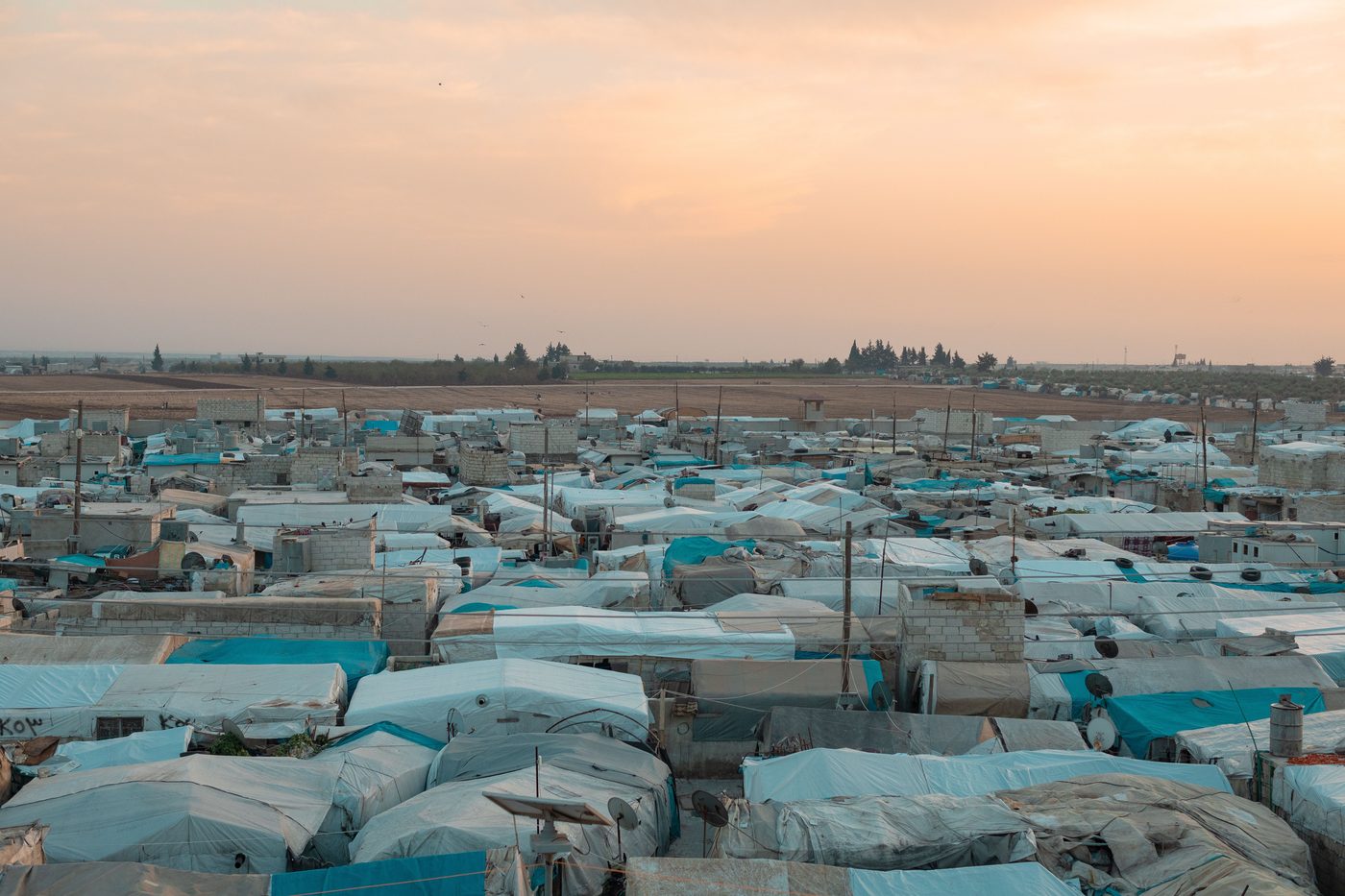
Omar El Akkad spent a decade reporting from actual war zones before writing about a fictional one, and it shows. American War imagines a second American civil war breaking out in the 2070s over a federal ban on fossil fuels, then follows one girl's radicalization into a suicide bomber over the following decades, told with the specific, unglamorous texture of a journalist who has watched real refugee camps and real war crimes tribunals up close. It landed on year-end best-of lists at The New York Times, The Washington Post, GQ, NPR, and Esquire, and picked up several regional and genre-crossing awards. This review covers what the novel actually does, what critics genuinely said about it, the real reader numbers, and the specific craft weaknesses reviewers flagged even while praising the book overall.
What American War Actually Is
Set mostly between 2074 and 2095, American War imagines a United States torn apart by a second civil war after the federal government bans fossil fuels, prompting several southern states to secede in protest. The novel follows Sarat Chestnut, a child in a Louisiana border town when the war begins, through her displacement into a sprawling refugee camp, her recruitment and radicalization by a rebel operative, and her eventual transformation into one of the conflict's most effective and most damaged instruments of violence. Structurally, El Akkad interweaves Sarat's chapters with fictional historical documents -- oral history excerpts, government reports, journal entries -- that widen the novel's scope beyond a single perspective and lend it the texture of a future history rather than just one girl's story.
The book deliberately borrows the visual and political language of conflicts El Akkad actually covered as a reporter -- refugee camps that echo real ones, a detention facility standing in for Guantanamo Bay, drone warfare, and radicalization narratives that track uncomfortably close to accounts of real extremist recruitment. The effect is a speculative novel that reads less like typical dystopian fiction and more like a journalist's field notes relocated a century into the future and onto American soil, forcing American readers to sit inside the kind of conflict most only encounter as distant news footage.
About Omar El Akkad and Why He Wrote This
El Akkad was born in Cairo, Egypt, grew up in Doha, Qatar, and later moved to Canada, where he studied computer science at Queen's University before becoming a journalist. He spent roughly ten years as a reporter for The Globe and Mail, and his coverage of a 2006 terror plot earned him Canada's National Newspaper Award for investigative reporting. Over that decade he also reported directly from the NATO-led war in Afghanistan, covered military trials at Guantanamo Bay, reported on the Arab Spring uprising in Egypt, and covered the Black Lives Matter protests in Ferguson, Missouri -- a run of firsthand conflict and unrest reporting that reads almost like source material for the novel he'd eventually write.
El Akkad wrote fiction during his off-hours throughout his years at the Globe, completing four full novels before American War, the first he felt was actually good enough to show anyone outside his own circle. He's been direct that the book grew out of frustration with how comfortably Western readers can consume news about war and displacement elsewhere without ever imagining those same forces landing on their own soil, and American War is built specifically to close that distance -- relocating refugee camps, radicalization, and asymmetric warfare into a recognizably American future. His subsequent books, the novel What Strange Paradise (winner of the 2021 Scotiabank Giller Prize) and the nonfiction book One Day, Everyone Will Have Always Been Against This (winner of the 2025 National Book Award for Nonfiction), have continued to draw directly on this same journalistic background.
How It Compares to The Things They Carried
Tim O'Brien's The Things They Carried renders war from deep inside a single unit's lived experience in Vietnam, built from fragmented, semi-fictionalized memory; American War imagines an entirely fictional future conflict but grounds it in the same instinct -- that war's real damage is best understood through specific, individual human cost rather than geopolitical summary. Where O'Brien writes from direct experience filtered through memory and invention, El Akkad writes from years of reported observation redirected into invented character. Readers who found The Things They Carried's close, personal focus on how war reshapes an individual psychologically will recognize the same project in Sarat's slow radicalization, even though American War's setting is speculative rather than autobiographical.
What Critics Actually Said
Rather than inventing a verdict, here's what was actually published about it:
“El Akkad smartly makes it hard . . . to line up political imperatives and personal motives.”— The New York Times Book Review (Justin Cronin)
That review situated the book as, in the Times' own description, "an unlikely mash-up of unsparing war reporting and plot elements familiar to readers of the recent young-adult dystopian series The Hunger Games and Divergent" -- a genuinely mixed but substantive framing rather than a simple rave. The book went on to real, verifiable recognition beyond that one review: a spot on year-end best-of lists at The New York Times, The Washington Post, GQ, NPR, and Esquire, plus wins for the Pacific Northwest Booksellers' Award, the Oregon Book Award for fiction, and the Kobo Emerging Writer Prize, with more than ten additional award nominations.
And the aggregate reader picture, for what it's worth:
Where Real Reviews Pushed Back
Even reviewers who liked the book overall flagged specific, concrete craft issues rather than staying vague. Critics pointed to melodramatic dialogue in places, and at least one reviewer described some of the novel's fictional primary-document sections -- the oral histories and reports interspersed between Sarat's chapters -- as flat and "dishwater dull" rather than illuminating, arguing they leaned too heavily on the original 1861 Civil War for parallels without doing quite enough new work with them. Plot mechanics came in for criticism too: reviewers noted contrived coincidences, including one where the protagonist happens to encounter her closest childhood friend again despite the vastness of the war-torn setting, a plot convenience that strains credibility even within a speculative frame. Character development was flagged as uneven as well -- reviewers argued Sarat herself sometimes functions more as a vehicle for the book's larger political argument than as a fully independent character, and that a key childhood friend, Marcus, remains comparatively thin throughout. None of this derailed the book's overall reception, but it's real, specific criticism worth knowing rather than glossing over.
On Radicalization and How Ordinary People Become Weapons
The novel's central arc -- Sarat's transformation from a curious, headstrong child into a rebel operative and eventually a suicide bomber -- is deliberately slow and incremental rather than sudden, tracking specific losses, betrayals, and a recruiter's patient manipulation across years. El Akkad's reporting background is most visible here: the radicalization process in the novel closely tracks patterns documented in real extremist recruitment, refusing the easier narrative of a character simply being evil or broken, and instead showing a series of individually reasonable-seeming choices that add up to something monstrous. It's the book's most journalistically grounded, and most unsettling, achievement.
On Climate, Secession, and an America Turned Inward
The novel's inciting event -- a federal fossil fuel ban triggering secession -- reframes climate politics as the fault line for a future domestic conflict rather than the more commonly imagined triggers of dystopian fiction like resource scarcity or authoritarian takeover. El Akkad uses this specific premise to explore how quickly regional identity can calcify into tribal loyalty once a shared national story breaks down, and how easily people on both sides of the conflict convince themselves of their own righteousness. Reviewers who praised the book's political intelligence pointed to this as its sharpest insight: that the mechanics of civil war don't require foreign villains, just a country that's stopped being able to talk to itself.
Key Takeaways
- This is speculative fiction, not alternate history -- set roughly a century in the future, not a retelling of the actual US Civil War
- It made real, verifiable year-end best-of lists at The New York Times, The Washington Post, GQ, NPR, and Esquire
- El Akkad's decade as a war correspondent, including Guantanamo Bay and Afghanistan coverage, directly shapes the novel's texture and detail
- Critics flagged specific, real weaknesses -- melodramatic dialogue, a contrived reunion, thinner secondary characters -- even within largely positive reviews
- The radicalization arc at the novel's center closely tracks real documented patterns rather than a simplified villain narrative
Who This Book Is Actually For
Readers who want literary speculative fiction grounded in real journalistic detail rather than genre convention -- particularly anyone interested in how ordinary people become radicalized, or in climate politics rendered as human drama rather than abstract policy debate. It suits readers who appreciated The Hunger Games' dystopian structure but want the prose and moral complexity aimed at adults.
Who Should Read Something Else Instead
If contrived plot coincidences and occasionally melodramatic dialogue are dealbreakers for you, the documented critical pushback above is worth weighing before you commit. Readers who want war fiction grounded in direct lived experience rather than speculative extrapolation might prefer Tim O'Brien's The Things They Carried instead, which draws on the author's own service in Vietnam.
Pros and Cons
Pros:
- Genuine year-end best-of-2017 placements at The New York Times, The Washington Post, GQ, NPR, and Esquire
- Written by a former war correspondent whose firsthand reporting gives the fiction real, uncommon texture
- Won the Pacific Northwest Booksellers' Award, the Oregon Book Award for fiction, and the Kobo Emerging Writer Prize
- A genuinely unsettling, well-researched portrait of radicalization rather than a simplified villain arc
- Reframes climate politics as human drama with real narrative stakes, not abstract policy debate
Cons:
- Reviewers flagged melodramatic dialogue in places, even within otherwise positive notices
- At least one significant plot coincidence strains credibility even for a speculative setting
- Secondary characters, including a key childhood friend, are underdeveloped relative to Sarat
Frequently Asked Questions
Is American War based on a real second US civil war?
No -- it's speculative fiction set roughly a century in the future, imagining a second American civil war triggered by a federal ban on fossil fuels. It draws heavily, and deliberately, on the language and imagery of real conflicts El Akkad covered as a journalist, including Guantanamo Bay and the war in Afghanistan.
What's the actual Goodreads rating?
Around 3.80 out of 5 from roughly 23,600 ratings as of this writing -- solid and consistent for literary speculative fiction, reflecting a book that connected with a wide readership beyond just critics.
Did this book win any major awards?
It won the Pacific Northwest Booksellers' Award, the Oregon Book Award for fiction, and the Kobo Emerging Writer Prize, and was named a best book of the year by The New York Times, The Washington Post, GQ, NPR, and Esquire. It has also been reported as a favorite among some US military readers, an unusual crossover for literary fiction.
Is Omar El Akkad a journalist as well as a novelist?
Yes. He spent roughly a decade as a reporter for The Globe and Mail, covering the war in Afghanistan, military trials at Guantanamo Bay, the Arab Spring, and the Black Lives Matter protests in Ferguson, Missouri, before American War became the first of his four completed novels that he felt was ready to publish.
Sources & Further Reading
- Goodreads — American War (aggregate rating, reader reviews)
- The New York Times Book Review — review by Justin Cronin
- Wikipedia — Omar El Akkad biography and journalism career
- Wikipedia — American War (novel), awards and honors
- PositiveLifes.com — free inspirational and life-changing PDF books
Final Verdict
American War earns its reputation with real, verifiable substance -- placements on five separate year-end best-of lists, multiple regional and genre awards, and a level of journalistic specificity about war and radicalization that most speculative fiction never attempts. The documented craft criticism, particularly around dialogue and a few contrived plot turns, is fair and worth knowing going in, but it didn't stop the book from becoming one of the more talked-about literary debuts of its year, including among readers who don't usually gravitate toward speculative fiction. For readers who want their dystopia grounded in a reporter's eye for real human cost rather than genre spectacle, it delivers exactly that.
Buy Day rating: 8.0/10