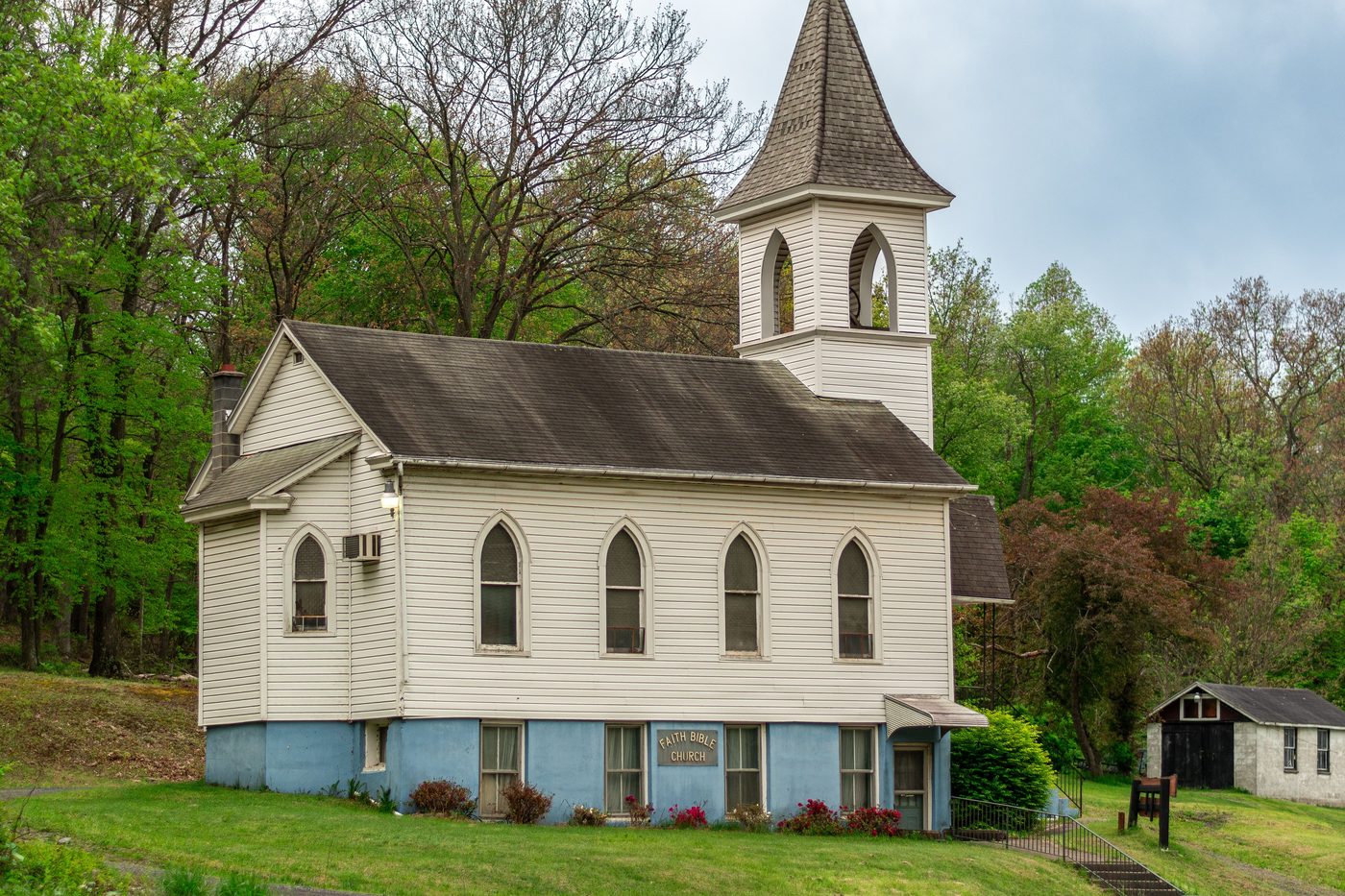
In 2009, a rabbi in his eighties asked Mitch Albom to deliver his eulogy someday. Albom agreed, on one condition: he wanted to actually get to know the man first, not just summarize him after the fact. That agreement turned into eight years of monthly visits, and eventually into Have a Little Faith, a book that pairs Rabbi Albert Lewis's story with that of Pastor Henry Covington, a former drug dealer running a leaking, half-collapsed Detroit church for the homeless. Both men are real. Both conversations happened. This review works through what the book actually is, what critics and roughly 93,500 Goodreads raters actually said about it, and where the recurring criticisms of Albom's writing apply here too, so you can decide for yourself whether it's worth the few hours it takes to read.
What Have a Little Faith Actually Is
This is nonfiction, not a parable dressed up as one -- a distinction worth stating up front because Albom's fiction (The Five People You Meet in Heaven, The Time Keeper) gets shelved right next to it and the tone can blur together in memory. The book alternates between two threads: Albom's long-running conversations with Rabbi Albert L. Lewis, the spiritual leader of the New Jersey synagogue where Albom grew up, and his parallel relationship with Pastor Henry Covington, who leads a small, financially struggling congregation called I Am My Brother's Keeper Ministries in Detroit, in a building with an actual hole in its roof. Albom moves back and forth between Judaism and Christianity, between a comfortable suburban childhood synagogue and an inner-city storefront church, using the structure to ask the same question from two very different angles: what does it actually mean to have faith, and does it hold up when life gets hard.
About Mitch Albom and Why He Wrote This
Albom spent years as a sports columnist for the Detroit Free Press before Tuesdays with Morrie, his 1997 memoir about visiting his dying college professor, became a publishing phenomenon that has since sold more than 18 million copies worldwide and spent four straight years on the New York Times bestseller list. Have a Little Faith followed a string of successful novels -- The Five People You Meet in Heaven, For One More Day -- and represented a return to the nonfiction, mentor-driven format that made him famous in the first place. The origin here is specific and undramatic: Rabbi Lewis, whom Albom had known since childhood and who had officiated at his bar mitzvah decades earlier, made the eulogy request directly during a visit home, and Albom's counter-condition -- that he actually interview the man properly first, rather than assemble a eulogy from secondhand memory -- is what generated the book. Rabbi Lewis died on February 10, 2008, at 90, and Albom did deliver the eulogy he'd spent years preparing for.
The Detroit half of the book has its own real-world afterlife that says something about how seriously Albom took the material. He was moved enough by Covington's crumbling church, and by the congregation's habit of worshiping under plastic sheeting through Michigan winters rather than closing the doors, that he later helped raise money to repair its roof. That effort grew into the Hole in the Roof Foundation, which Albom still runs and which has gone on to fund repairs to other houses of worship serving low-income congregations well beyond the original Detroit church. It's worth knowing this going in, because it changes how you read the book's ending: this isn't a case of an author extracting a good story and moving on, but one where the reporting relationship visibly continued past the last page. Albom has also spent decades running charitable operations in Detroit through S.A.Y. Detroit and, later, an orphanage and medical clinic in Haiti -- context that helps explain why a sports columnist ended up writing four consecutive nonfiction and inspirational bestsellers about mortality, faith, and obligation to other people.
How It Compares to Tuesdays with Morrie
The structural DNA is nearly identical: Albom visits an older mentor figure repeatedly over an extended period, extracts hard-won wisdom, and frames his own spiritual or emotional growth around those visits. Tuesdays with Morrie compresses this into a single relationship and a terminal-illness countdown, which gives it a tighter emotional clock. Have a Little Faith doubles the structure and stretches it across nearly a decade, trading some of that urgency for breadth -- two faiths, two very different American communities, two men who never meet each other in the book but who Albom keeps in conversation with the reader simultaneously. If you found Morrie's ticking-clock intimacy the most affecting part of that book, know that this one is more patient and more diffuse by design.
What Critics Actually Said
Rather than inventing a verdict, here's what was actually published and documented about it:
“[Albom] brings his two protagonists — an elderly rabbi and an African-American pastor — to vivid life and conveys their messages of faith with sensitivity and respect.”— Publishers Weekly, reviewing the audio edition
Beyond that critical notice, the book's reception is documented through concrete accolades rather than a wide field of major-outlet reviews: it debuted at No. 1 on the New York Times bestseller list, was named Oprah.com's Best Nonfiction Book of 2009, and won a 2010 Wilbur Award from the Religion Communicators Council, which recognizes work that examines matters of faith with honesty and craft.
And the aggregate reader picture, for what it's worth:
Where Real Reviews Pushed Back
The most consistent complaint leveled at Albom's nonfiction, and this book is no exception, is that it follows a recognizable formula almost too neatly: the folksy, direct-address prose, the short punchy chapters, the tendency to resolve emotional beats with a tidy, uplifting turn rather than letting them stay unresolved. Some readers and reviewers find that comforting; others find it manipulative, or at least predictable once you've read more than one of his books. A smaller but real strand of criticism points out that Covington's story, involving addiction, incarceration, and violence, gets somewhat softer treatment than its subject matter might support, in service of the book's overall hopeful arc. That's a legitimate reservation if you're looking for grittier, less redemptive nonfiction about faith and hardship.
There's also a more structural criticism worth naming: because Albom is both narrator and interviewer, the book necessarily runs everything through his own perspective and his own spiritual reawakening, which means Rabbi Lewis and Pastor Covington are, to some degree, characters in Albom's story rather than fully independent subjects telling their own. Readers who prefer straight oral history or biography with the author's presence minimized sometimes find that framing intrusive. It's a fair trade-off to be aware of rather than a flaw exactly -- the book is explicitly framed as Albom's spiritual journey using these two men as guides, not a neutral dual biography, and it delivers on the promise it actually makes.
On Two Faiths Told Side by Side
The book's most distinctive choice is refusing to pick a side between Judaism and Christianity, or even to treat them as needing reconciliation. Rabbi Lewis and Pastor Covington never meet, and Albom doesn't force a false unity between their traditions. Instead he lets the parallel structure do quieter work: showing that a Reform rabbi in an affluent New Jersey suburb and a formerly incarcerated Pentecostal pastor in a struggling Detroit neighborhood are, in Albom's telling, wrestling with recognizably similar questions about doubt, mortality, and obligation to a community. It's an unusual pairing for a mainstream bestseller, and it's the specific reason the book gets recommended across religious lines rather than filed strictly as Christian or Jewish inspirational writing.
On Redemption, and What the Roof Actually Meant
Covington's church literally had a hole in its roof for years, patched with plastic sheeting through Michigan winters, because the congregation couldn't afford real repairs. Albom uses that detail as the book's most concrete symbol: faith practiced under genuinely difficult material conditions, not as a metaphor but as a fact of the building. Covington's own backstory -- drug dealing, prison time, a period of homelessness before he found ministry -- gives the redemption arc real stakes rather than an abstract inspirational gloss. The real-world consequence -- Albom's later fundraising effort, which became a foundation still repairing houses of worship for low-income congregations -- gives the book's central argument an unusually verifiable follow-through. Few inspirational memoirs can point to an actual, ongoing charitable outcome tied directly to their subject matter, and it's the detail that most separates this book from a purely feel-good read.
On Grief, Eulogies, and the Question "Did I Live Right?"
The book's framing device -- an old man asking a writer to prepare his eulogy years in advance -- does more work than it might first appear to. It reframes a eulogy from something written in a rush of grief into a conversation the subject gets to participate in, correcting the record and clarifying what actually mattered to him while he's still alive to do it. Albom leans on this device to ask a blunter question underneath all the faith material: not just what do you believe, but did you live in a way that will hold up when someone tries to sum it up in ten minutes at your funeral. It's a simple structural idea, but it's the reason the book reads less like a theology primer and more like two extended character studies of men actively taking stock of their own lives before it's too late to adjust course.
Key Takeaways
- The story is documented and real, not composite -- both men's names, congregations, and circumstances are verifiable, which matters if you're the type of reader who checks
- Faith, in this book's framing, isn't primarily about certainty -- both men openly wrestle with doubt well into old age
- A congregation's material poverty and its spiritual seriousness aren't presented as contradictions; Covington's church is treated with the same respect as the affluent suburban synagogue
- Eulogies, and the questions they force you to ask about a person while they're still alive to answer, are treated as a genuinely useful exercise, not just a literary device
- The book argues that religious traditions that look very different on the surface are often answering the same underlying human questions
Who This Book Is Actually For
Readers who liked the mentor-and-lesson shape of Tuesdays with Morrie and want more of it, especially anyone interested in a genuinely interfaith, non-preachy treatment of faith that doesn't require agreeing with either man's theology to find value in their stories. It also suits readers who want a short, emotionally direct nonfiction read rather than a long, demanding one, and anyone currently caring for or processing the loss of an older relative or mentor figure, since the book's central question -- what do you actually say about someone once they're gone -- tends to land harder for readers in that situation.
Who Should Read Something Else Instead
If you find Albom's tidy, uplifting resolutions grating rather than comforting, this book won't convert you -- it has the same tendency as his other work. Readers looking for a harder-edged, less redemptive account of poverty, addiction, and urban ministry will likely find this too gentle, and should look toward more journalistic treatments of the same subject matter instead. Readers who want rigorous theology or comparative religious scholarship should also look elsewhere; this is a personal, narrative account, not an academic one, and it doesn't pretend otherwise.
Pros and Cons
Pros:
- Both central figures are real people whose stories were independently verifiable, not composites or fictionalized amalgams
- Debuted at No. 1 on the New York Times bestseller list and won the 2010 Wilbur Award for excellence in communicating matters of faith
- Genuinely interfaith structure that treats a rabbi and a Pentecostal pastor with equal seriousness
- Short, accessible chapters that make it easy to finish in a few sittings
- Tied to a real, ongoing charitable outcome (the Hole in the Roof Foundation) rather than ending as just a story
Cons:
- Follows a recognizable, formulaic Albom structure that some readers find repetitive across his books
- Tends toward tidy, uplifting resolutions rather than sitting with harder or more ambiguous moments
- Covington's history with addiction and incarceration receives comparatively gentle treatment given its seriousness
Frequently Asked Questions
Is Have a Little Faith a true story?
Yes. Both men in the book are real: Rabbi Albert L. Lewis of Albom's childhood synagogue in New Jersey, and Pastor Henry Covington of a Detroit ministry serving homeless congregants. Albom spent roughly eight years interviewing both before Rabbi Lewis's death in February 2008.
What's the actual Goodreads rating?
4.20 out of 5 from roughly 93,500 ratings as of this writing, one of the higher aggregate scores among Albom's nonfiction titles. Check the live number yourself, since it will keep moving.
Do I need to read Tuesdays with Morrie first?
No, the two books are unrelated in plot and can be read in either order. They do share a structure -- Albom learning life lessons from an older mentor figure he visits regularly -- so readers who loved one tend to know quickly whether the other will work for them.
What's the most common criticism of this book?
That it follows the same sentimental, dual-narrative formula as Albom's other bestsellers, and that some chapters lean toward tidy, uplifting conclusions rather than sitting with harder questions -- a recurring critique across his body of work, not unique to this title.
Sources & Further Reading
- Goodreads — Have a Little Faith (aggregate rating, reader reviews)
- Publishers Weekly — review of the audio edition
- Oprah.com — Best Nonfiction Book of 2009
- Religion Communicators Council — 2010 Wilbur Award recipients
- MitchAlbom.com — book background and the Hole in the Roof Foundation
- PositiveLifes.com — free inspirational and life-changing PDF books
Final Verdict
Have a Little Faith earns its reputation as one of Albom's stronger nonfiction efforts by leaning into a genuinely interfaith structure and grounding it in two real, well-documented lives rather than composite characters. The formula will feel familiar if you've read his other work, and the tidy resolutions won't satisfy everyone, but the book's specificity -- a literal hole in a literal roof, a eulogy actually delivered, a foundation still funding repairs years later -- gives it more staying power than a generic inspirational memoir. Best suited to readers who want a short, sincere read on faith across two very different American communities.
Buy Day rating: 8.4/10