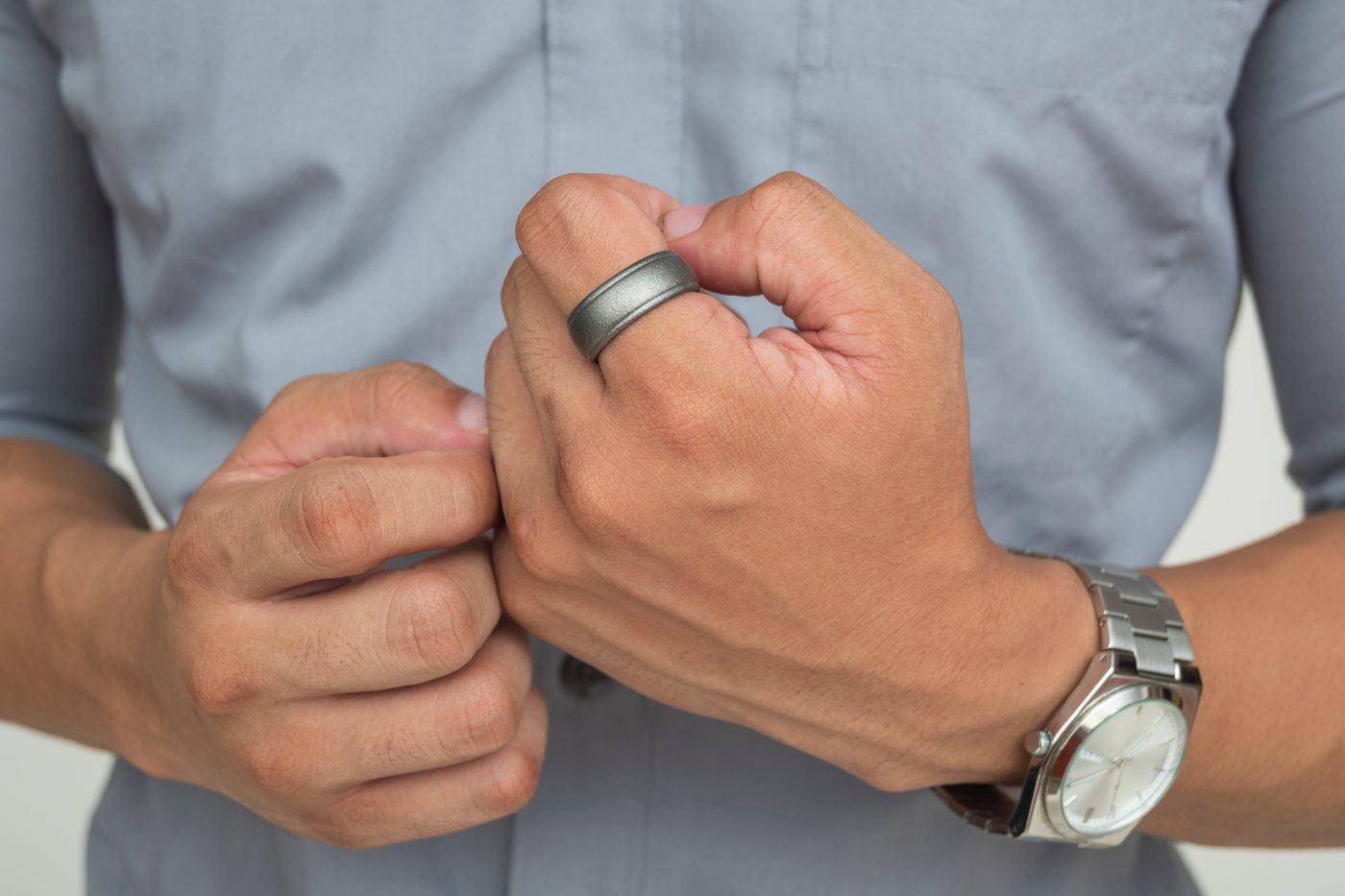
I've abandoned two previous sleep-tracking devices, both because I got tired of charging a bulky wristband or found a chest strap genuinely uncomfortable to sleep in. The ring form factor is the specific reason I've now worn this one continuously for months without the usual abandonment.
The Ring Form Factor Is the Actual Feature
This is the single biggest reason the Oura succeeds where other sleep trackers have failed for me: wearing a slim ring is genuinely unobtrusive in a way a wristband or chest strap simply isn't, particularly for side sleepers who find wrist-worn devices pressing uncomfortably during the night. The form factor is precisely why continuous, genuinely comfortable wear — the actual precondition for accurate long-term sleep data — has stuck for me in a way it never did with previous trackers I eventually just stopped wearing to bed.
Gen4 Specifically: Real, Meaningful Improvements
This generation brings a noticeably slimmer, more comfortable profile than earlier Oura rings, along with improved sensor accuracy and battery life. Having tried an earlier generation ring previously, the comfort improvement alone is immediately noticeable — earlier models had a more pronounced internal ridge that some users found uncomfortable over long-term wear, and Gen4's redesign genuinely addresses that specific complaint.
Sleep Staging Accuracy
Oura's sleep stage detection (light, deep, REM) has been validated reasonably well against clinical polysomnography in independent research compared to many consumer wearables, and in my own experience it tracks consistently with how rested I actually feel, which is ultimately the more useful practical validation than chasing perfect clinical-grade precision. Like any consumer sleep tracker, treat the night-to-night specifics as directionally useful trend data rather than a medical-grade diagnostic tool.
Readiness Score: The Daily Habit That Actually Stuck
The daily Readiness score, combining sleep quality, heart rate variability, body temperature trends, and recent activity load into a single actionable number, has become a genuine part of my morning routine for deciding whether to push a hard workout or actively prioritize recovery that day. Having this single, quick signal rather than needing to interpret several raw metrics myself is exactly the kind of simplification that's made the data genuinely actionable rather than just interesting to look at.
Temperature Trend Tracking Caught Something Real
The ring's continuous body temperature tracking flagged a noticeable deviation from my baseline a full day before I felt any conscious symptoms of getting sick, which gave me a genuine, actionable early warning to actually rest rather than push through a workout I'd otherwise have done. This kind of trend-based early signal, rather than a single-point measurement, is one of the more genuinely useful practical applications I've gotten from any wearable.
The Subscription Reality
Similar to other health-tracking devices in this category, full app functionality requires an ongoing membership subscription beyond the hardware purchase, and this is a real, ongoing cost worth factoring into your total budget rather than treating the upfront ring price as the complete cost of ownership. Check current subscription pricing directly before buying, since this is the detail most likely to catch new buyers off guard.
Sizing Matters More Than You'd Expect
Oura sends a free sizing kit before you order the actual ring, and using it rather than guessing your size is genuinely worth the extra few days' wait — an ill-fitting ring produces measurably worse sensor accuracy and comfort, and this step is easy to want to skip but shouldn't be.
Who Should Buy This
If you've previously abandoned a wrist-based sleep tracker specifically due to comfort during sleep, this form factor genuinely solves that problem in a way worth the investment. If comfort was never your issue and you want a broader set of fitness-tracking features beyond sleep and recovery, a smartwatch may actually serve you better and more cost-effectively for that wider scope.
Pros and Cons
Pros:
- Ring form factor genuinely solves the comfort problem that ends most sleep-tracker habits
- Gen4's redesign meaningfully improves on earlier generations' comfort complaints
- Readiness score simplifies complex data into a genuinely actionable daily signal
- Temperature trend tracking provides real, useful early illness warning
Cons:
- Requires an ongoing subscription for full app functionality, a real added cost
- Less full-featured for general fitness tracking than a dedicated smartwatch
- Requires using the sizing kit properly for accurate results, an easy step to skip incorrectly
Frequently Asked Questions
Do I need the subscription to use the ring at all?
Basic functionality works without it, but full historical trends and detailed insights require an active Oura membership subscription.
How accurate is the sleep tracking compared to a clinical sleep study?
It performs reasonably well in independent validation studies compared to other consumer wearables, though it should be treated as directionally useful trend data, not a medical-grade diagnostic tool.
Final Verdict
This is the first sleep tracker where the form factor itself, not just the data, was the actual reason I kept wearing it long enough for the data to become genuinely useful.
Rating: 8.9/10 — The tracker I've actually kept wearing, which turns out to be the whole game.