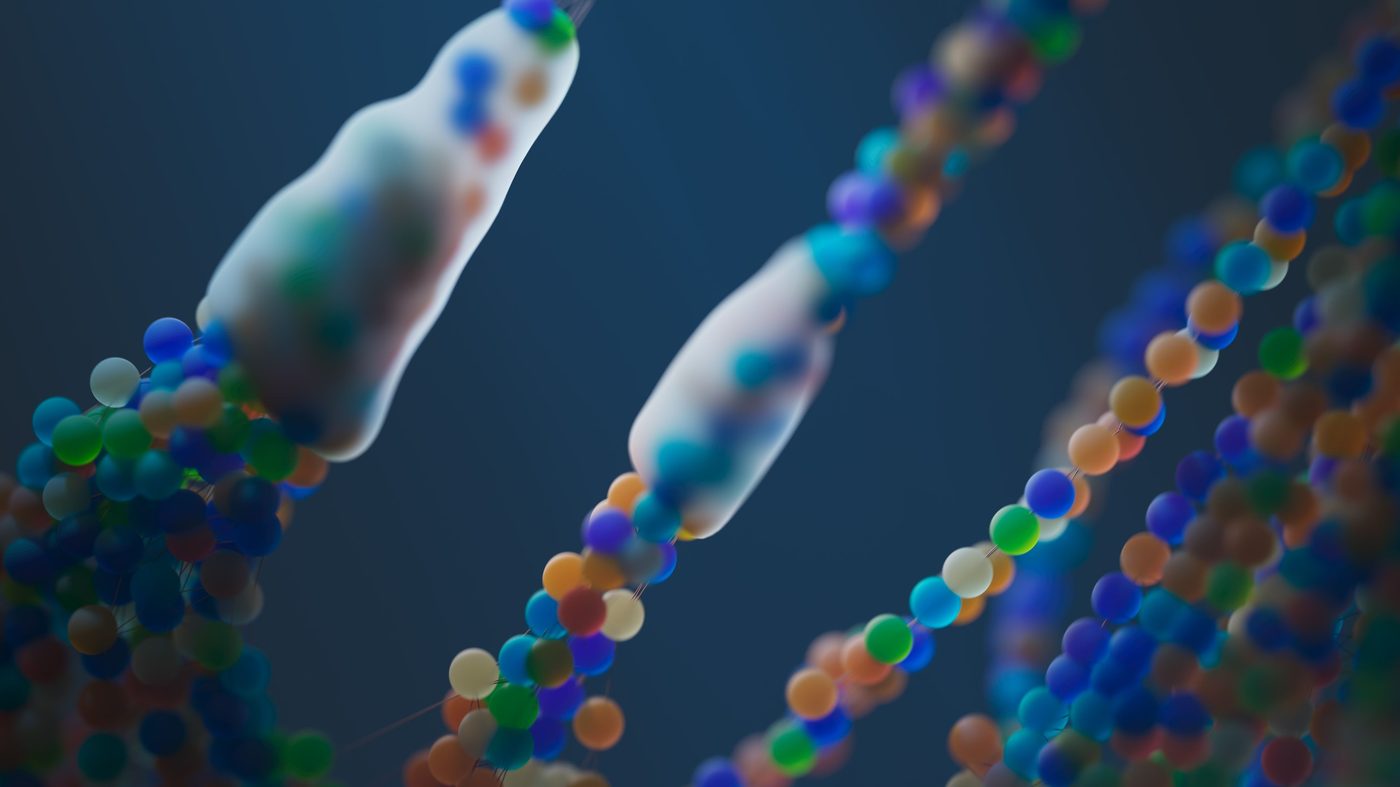
In 2009, Elizabeth Blackburn shared the Nobel Prize in Physiology or Medicine for discovering telomerase, the enzyme that maintains the protective caps on the ends of our chromosomes. Eight years later, she and health psychologist Elissa Epel published The Telomere Effect, a New York Times bestseller that translates two decades of lab and field research into a practical case for how stress, sleep, exercise, diet, relationships, and even your zip code appear to influence how fast your cells age. This isn't a book written by wellness influencers borrowing scientific language — it's written by the scientist who found the mechanism, working with the psychologist who spent years studying how it plays out in real human lives. That pedigree earns the book real attention, but it doesn't exempt it from scrutiny, and this review covers both the sourced praise and the specific, documented pushback the underlying science has received, so you can decide whether it belongs on your shelf with clear eyes rather than marketing copy.
What The Telomere Effect Actually Is
It's worth being clear about the book's shape before diving into the science, because it isn't structured like a typical health memoir with a narrative arc. It reads more like a long-form explainer organized by theme, moving from foundational cell biology into progressively more applied territory, with each chapter functioning almost as a self-contained essay you could read out of order without losing much. Readers who prefer a story-driven nonfiction book with a clear beginning, middle, and end may find the structure more textbook-like than they expect, even though the prose itself stays conversational and avoids jargon wherever the authors can manage it.
The book opens with the biology: telomeres are repetitive DNA sequences that cap the ends of chromosomes, protecting genetic material the way a plastic tip keeps a shoelace from fraying. Every time a cell divides, telomeres shorten slightly, and once they get too short, the cell stops dividing or dies. Blackburn and Epel's core argument is that this shortening process isn't simply a fixed genetic clock — it's measurably influenced by lifestyle and psychological factors, and telomerase can, under the right conditions, rebuild some of that length back. From there, the book moves chapter by chapter through the evidence: chronic stress and telomere wear, the specific effects of different exercise types, sleep quality, processed versus whole foods, the biological cost of pessimism and rumination, the protective effect of strong relationships, and finally the social and environmental factors — pollution, neighborhood safety, poverty — that shape telomere health at a population level, not just an individual one. It reads less like a diet book and more like a long-form translation of a research career into something a general reader can act on.
About Elizabeth Blackburn and Elissa Epel and Why They Wrote This
Blackburn earned her PhD at Cambridge, spent her career at UC Berkeley and then UCSF, and later served as president of the Salk Institute for Biological Studies. Her 2009 Nobel Prize, shared with Carol Greider and Jack Szostak, recognized work she began in the late 1970s and 1980s identifying telomere structure and, with Greider, co-discovering telomerase itself. Epel, a health psychologist and professor in UCSF's Department of Psychiatry who now directs UCSF's Aging, Metabolism and Emotion Center, met Blackburn in the late 1990s and the two began a collaboration that produced one of the more widely cited findings in the field: a 2004 study showing that mothers under chronic caregiving stress had telomeres that looked, biologically, roughly a decade older than their chronological age. That finding is the seed the entire book grows from. In interviews and in the book's own framing, both authors describe wanting to move telomere science out of academic journals and into a form ordinary readers could actually use — not to sell a supplement or a diet plan, but to make the stress-aging connection concrete enough to act on.
How It Compares to David Sinclair's Lifespan
David Sinclair's Lifespan, published two years later, approaches the same broad subject — why we age and what might slow it — from a different angle: Sinclair frames aging itself as a treatable disease and leans heavily into speculative future interventions like reprogramming and specific molecules such as NMN and resveratrol. The Telomere Effect is more restrained by comparison. Blackburn and Epel stick close to what their own and closely related research actually supports, and the interventions they recommend — exercise, sleep, stress reduction, whole foods, social connection — are unglamorous and already broadly endorsed by mainstream medicine. If you want a more speculative, moonshot vision of radically extending lifespan, Sinclair's book delivers that appetite. If you want a Nobel laureate's more conservative, evidence-first case for cellular aging as something everyday behavior actually touches, this is the steadier read.
What Critics Actually Said
Rather than inventing a verdict, here's what was actually published about it and said about it by name:
“It is hard to overstate this book's importance . . . the best book on how to have long-term health that I have read in a very long time.”— Dean Ornish, MD, founder and president, Preventive Medicine Research Institute
Ornish's praise carries specific weight here: he's a physician-researcher who has run his own peer-reviewed studies on lifestyle interventions and telomere length, including work published with Blackburn's group, so his endorsement isn't a generic celebrity blurb — it comes from someone with direct research overlap with the book's subject matter. Chemistry World, a publication of the Royal Society of Chemistry, also reviewed the book, engaging with its science directly rather than treating it as a lifestyle title. Reader reception, gathered across independent reviews, splits along a predictable line: praise for how clearly the book explains genuinely complex cell biology to a lay audience, alongside complaints that later chapters repeat earlier points and lean further into self-help territory than the opening science-forward chapters promised. The book also carried enough weight to be excerpted and discussed across major outlets covering health and aging research at the time of its release, which is unusual for a book built this heavily around citations rather than personal narrative — most bestselling health books lean on one or the other, and this one leans almost entirely on the former.
And the aggregate reader picture, for what it's worth:
Where Real Reviews Pushed Back
The most substantive pushback doesn't come from a random internet reviewer — it comes from science journalism scrutinizing the broader claims that grew up around Blackburn's research. Forbes contributor Larry Husten published a piece titled “No, Dean Ornish And Elizabeth Blackburn Have Not Discovered The Fountain Of Youth,” directly challenging the way earlier Ornish-Blackburn research on lifestyle changes and telomerase activity got amplified in the press into something closer to an anti-aging miracle than the modest, small-sample findings the underlying study actually supported. That's a fair caution to carry into the book itself: telomere length is a real, measurable biomarker correlated with several aging-related outcomes, but it is not a clean, single dial for aging overall, and reducing a genuinely multifactorial process to one measurable structure risks overselling what any single intervention can promise. Independent reader reviews echo a milder version of the same concern — several note that later chapters drift from careful science communication toward broader wellness advice that isn't always as tightly sourced as the opening chapters on the biology itself, and some wanted a more explicit discussion of just how much of telomere length is genetically fixed versus behaviorally modifiable, since the book's own cited studies show real but generally modest effect sizes.
On Stress, and Why It Gets Its Own Third of the Book
Stress isn't treated as an abstract wellness buzzword here — it's the chapter with the most direct research backing, growing straight out of Epel and Blackburn's original caregiver study. The book distinguishes between acute stress, which appears to have minimal lasting telomere effect, and chronic, unresolved stress paired with a pessimistic or threat-focused mindset, which is where the shortening effect shows up most consistently across the studies they cite. Practically, this section pushes toward mindfulness-based stress reduction and cognitive reframing rather than stress avoidance, on the reasoning that stressful events themselves are largely unavoidable, but how a person's nervous system processes and recovers from them is where the real biological cost or protection gets determined.
On Exercise, Sleep, and the Body's Baseline
A second cluster of chapters covers the more physical levers: exercise, where the book notes moderate, consistent aerobic activity shows the strongest telomere associations in the cited research, more so than occasional intense exertion; and sleep, where both duration and quality — not just hours logged — correlate with telomere measurements in several of the studies discussed. Diet gets its own chapter too, favoring whole foods, omega-3s, and reduced processed meat and sugar consumption, broadly consistent with general nutritional science rather than proposing anything telomere-specific or exotic. None of this will surprise anyone who already follows mainstream health advice; the book's real contribution is connecting these familiar behaviors to a specific, named cellular mechanism rather than a vague appeal to feeling better.
On Neighborhoods, Toxins, and Aging as a Social Issue
Before getting into the specific findings here, it's worth flagging why this section stands out relative to most books in the aging and longevity category: the vast majority of popular titles on this shelf frame aging almost entirely as a matter of personal choices — what you eat, how you move, how you sleep — while treating your surrounding environment as background noise. Blackburn and Epel spend real space arguing that framing is incomplete.
The book's later chapters push past individual behavior into population-level factors: air pollution, neighborhood safety, discrimination, and socioeconomic stress, each linked in cited research to measurably shorter telomeres independent of individual habits. This is arguably the book's most distinctive section, since it explicitly argues that telomere health isn't purely a matter of personal discipline — that some people are working against a heavier structural load before diet and exercise choices even enter the picture. It's also the section most likely to get skipped in summary versions of the book's advice, which tend to flatten everything down to a supplement-adjacent listicle of individual habits.
On Relationships, Mindset, and What the Book Calls “Telomere-Friendly” Thinking
One of the more surprising throughlines, especially for readers expecting a purely physical health book, is how much space Blackburn and Epel give to relationships and cognitive habits. The book cites research linking secure, supportive relationships and a sense of purpose to slower telomere attrition, and conversely links social isolation and hostile, cynical thinking patterns to faster shortening — effects the authors argue are on a similar order of magnitude to some of the physical factors covered earlier in the book. They introduce the idea of “telomere-friendly” versus “telomere-unfriendly” thinking, distinguishing between the kind of momentary worry that's a normal part of processing a real problem and the kind of looping, catastrophizing rumination that keeps the stress response activated long after the triggering event has passed. This isn't presented as pop psychology dressed up in scientific language; each claim is tied back to a specific cited study, usually one involving actual telomere or telomerase measurements rather than self-reported wellbeing alone, which is part of what separates this book from more generic mindset-and-longevity titles on the same shelf.
The practical advice that follows is deliberately modest: structured worry time instead of constant low-grade anxiety, brief daily mindfulness practice rather than hour-long retreats, and specific language for reframing stressful appraisals in the moment. None of it requires special equipment or a subscription, which is consistent with the book's broader refusal to sell readers anything beyond the argument itself. Critics of the self-help genre broadly have noted that this kind of advice can feel repetitive across many wellness books; what's different here is the authors keep returning to the same underlying biomarker across chapters, so stress management, exercise, sleep, and relationships all get tied back to one measurable, common mechanism rather than being pitched as independent, disconnected tips.
Key Takeaways
- Telomere length is a real, measurable biomarker linked to aging, but it is one factor among many, not a single dial that controls how fast you age
- Chronic, unresolved stress paired with a pessimistic mindset shows the most consistent link to telomere shortening across the studies the authors cite
- Moderate, consistent aerobic exercise and quality sleep correlate more strongly with telomere health than occasional intense effort or simple hours logged
- Social and environmental factors — pollution, neighborhood stress, discrimination — shape telomere health at a population level, not just an individual one
- Treat any single “fountain of youth” framing of this research with real skepticism, as science journalists have specifically and publicly pushed back on that framing
Who This Book Is Actually For
Readers who want the actual biological mechanism behind familiar health advice — not just another book saying exercise and sleep matter, but one explaining, with citations, roughly why and how much at the cellular level. It particularly suits people managing chronic stress, caregivers, and anyone who wants a scientifically grounded rebuttal to the idea that aging is purely a fixed genetic sentence. It also works well for readers who've been frustrated by lower-quality wellness books that cite “a study” without ever naming it; Blackburn and Epel's academic habits carry over into the writing, with a genuine notes section and specific studies referenced throughout rather than vague appeals to unnamed research. Anyone who enjoys nonfiction that treats them as capable of following real evidence, rather than being talked down to with oversimplified rules, will likely find the density of citation a feature rather than a burden.
Who Should Read Something Else Instead
If you want a punchier, more radical vision of life extension, David Sinclair's Lifespan will scratch that itch more directly. And if the underlying science interests you but you don't want three hundred pages of it, a shorter summary or the authors' own peer-reviewed papers will get you the core findings faster — this book is built for readers who want the full case, not the highlight reel. Readers specifically looking for a structured eating plan should also look elsewhere; despite touching on diet, this isn't a recipe book or a meal-timing protocol, and anyone expecting the specificity of a book like The Longevity Diet will find the nutrition chapter comparatively general.
Pros and Cons
Pros:
- Written by the Nobel laureate who actually discovered the mechanism, not a science communicator paraphrasing someone else's research
- Grounded in cited, peer-reviewed studies rather than anecdote, including the authors' own original findings
- Endorsed directly by physician-researcher Dean Ornish, who has independently studied the same biomarker
- Covers social and environmental factors most aging books ignore, not just individual habits
- Practical, familiar recommendations that don't require buying supplements or specialized products
Cons:
- Science journalism has directly challenged the “fountain of youth” framing that surrounds this research in press coverage
- Later chapters lean more into general wellness advice and repeat earlier points, per multiple independent reviews
- Effect sizes in the cited studies are real but generally modest, a nuance that can get lost in summary
Frequently Asked Questions
Is Elizabeth Blackburn actually a Nobel Prize winner?
Yes. Blackburn shared the 2009 Nobel Prize in Physiology or Medicine with Carol Greider and Jack Szostak for discovering how chromosomes are protected by telomeres and the enzyme telomerase. That prize predates the book by eight years and isn't a marketing claim.
What's the actual Goodreads rating for The Telomere Effect?
Roughly 3.78 out of 5 across its combined editions on Goodreads, from several thousand ratings as of this writing. Check the live number yourself via the source link below, since it moves over time.
Did this book really discover a fountain of youth for aging?
No, and the authors themselves don't claim that. Forbes contributor Larry Husten directly challenged the broader “fountain of youth” framing that surrounds Blackburn's telomere research, and independent readers have raised similar concerns about oversimplifying a genuinely complex, multi-factor aging process.
Do I need a science background to read this book?
No. It's written for a general audience, though it leans more heavily into cited studies and mechanism than a typical self-help wellness book, which some readers find is exactly the point and others find slows the pacing down.
Sources & Further Reading
- Goodreads — The Telomere Effect (aggregate rating, reader reviews)
- Forbes — “No, Dean Ornish And Elizabeth Blackburn Have Not Discovered The Fountain Of Youth”
- Chemistry World — independent review
- The Nobel Prize in Physiology or Medicine 2009 — official Nobel Prize facts page
- UCSF Profiles — Elissa Epel, PhD faculty profile
- PositiveLifes.com — free inspirational and life-changing PDF books
Final Verdict
The Telomere Effect earns its bestseller status on real credentials, not hype — a genuine Nobel laureate and a respected UCSF researcher translating their own peer-reviewed work into something readers can act on, backed by a named endorsement from a physician who has run parallel research. The science-journalism pushback on the surrounding “fountain of youth” framing is legitimate and worth carrying with you, but it's a caution about how this research gets marketed, not a debunking of the book's core, carefully cited claims. If you want the actual mechanism behind familiar health advice, explained by the person who found it, this delivers; if you're chasing a more radical life-extension pitch, look elsewhere first. Nine years on from its original publication, the underlying science has largely held up in the broader literature even as the field has moved forward, which is more than can be said for a lot of health books from the same era — a decent sign that this one was built on something sturdier than a passing trend.
Buy Day rating: 8.0/10