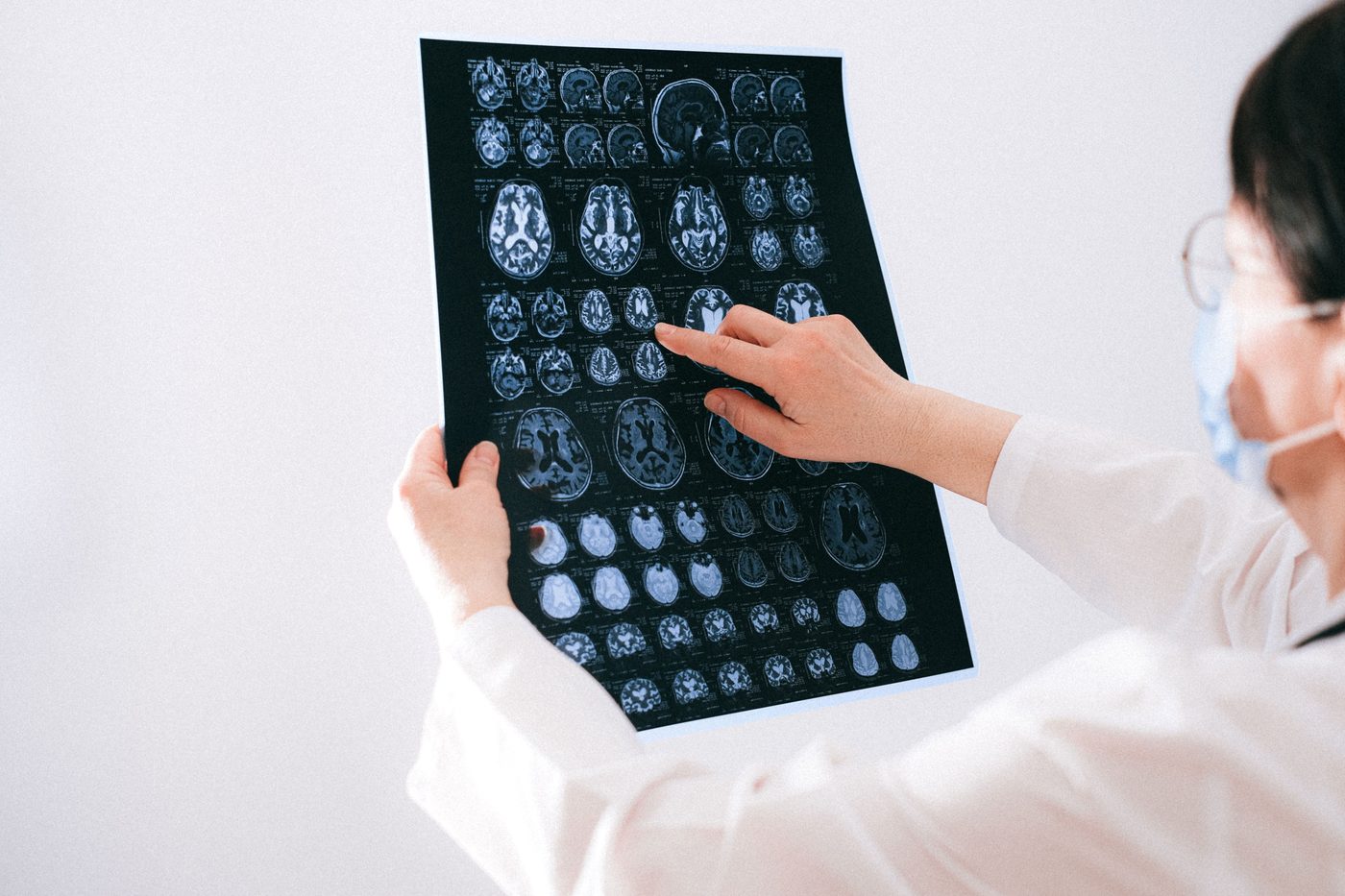
V.S. Ramachandran built a career on an unusual method: instead of expensive brain-imaging studies, he often used simple, almost improvised experiments — cotton swabs, mirrors, cold water — to test sharp hypotheses about how the brain constructs the body, the self, and reality itself. Phantoms in the Brain, co-written with New York Times science writer Sandra Blakeslee in 1998, is the book where he laid out that method and its results for a general audience, most famously the mirror box he invented to treat phantom limb pain. It became a bestseller, was adapted into a two-part UK television series and a PBS special, and holds a 4.27 average on Goodreads, one of the stronger ratings in the entire popular neuroscience genre. This review covers what critics actually said, including a splendid-book verdict from The New York Times, and where fellow scientists have pushed back on how far Ramachandran's small-sample, high-concept experiments can really reach.
What Phantoms in the Brain Actually Is
Before getting into the specific cases, it's worth naming what makes this book's structure distinctive within its genre: most popular neuroscience books either march through brain anatomy region by region, or profile patients primarily as human-interest stories with the science folded in secondarily. This book does neither. Each chapter opens with a genuinely strange clinical puzzle, walks through Ramachandran's reasoning as he designs a way to test a specific hypothesis about it, and closes with what the result implies about ordinary brain function — a format closer to a scientific mystery novel than either a textbook or a biography collection.
The book moves through a series of genuinely strange neurological phenomena — phantom limbs, a woman convinced her own paralyzed arm belongs to someone else, patients who deny being paralyzed at all, people who insist their parents have been replaced by impostors, temporal lobe epilepsy and its effects on religious experience — using each case as a way into a bigger question about how the brain builds a coherent, stable sense of self and body out of fragmented, sometimes contradictory sensory information. Ramachandran's method throughout is to design a simple, elegant experiment for each phenomenon rather than only describing it: the mirror box, for instance, uses a mirror positioned to create a visual illusion of a missing limb, letting the brain effectively watch a phantom hand open and close, which for many patients measurably reduces phantom limb pain. The book presents each case as a small detective story, walking the reader through the hypothesis, the improvised experiment, and what the result implies about the underlying architecture of the brain, before moving to the next mystery.
About V.S. Ramachandran and Why He Wrote This
It's worth noting how unusual Ramachandran's academic path was even before this book made him a household name in popular science: he trained first as a physician in India, then pivoted toward pure research through a Cambridge PhD, before landing in the psychology department at a major American research university rather than a medical school, giving him an institutional home that let him pursue behavioral experiments unconstrained by a traditional clinical practice's demands.
Ramachandran earned his medical degree at Stanley Medical College in Madras, India, then a PhD at Trinity College, Cambridge, before eventually settling at UC San Diego, where he is a distinguished professor and directs the Center for Brain and Cognition. His early research was in visual perception, but he became best known for behavioral neurology experiments that, despite their apparent simplicity, reshaped how researchers think about body representation in the brain — the mirror box chief among them, now a standard, evidence-supported clinical treatment for phantom limb pain used well beyond Ramachandran's own lab. Co-author Sandra Blakeslee spent decades as a science writer for The New York Times, and her involvement shows in the book's clarity and pacing; the collaboration pairs a researcher known for generating unusually testable, intuitive hypotheses with a writer skilled at making those hypotheses legible to readers without a neuroscience background. Ramachandran has described his broader approach as favoring cheap, fast, clever experiments that can be run in an afternoon over years-long imaging studies, on the reasoning that a sharp question asked the right way can reveal more than an expensive scan asked the wrong one.
How It Compares to Oliver Sacks's Case-Study Books
Ramachandran and Blakeslee explicitly work in a tradition Oliver Sacks helped popularize — using individual, striking neurological cases as a window into how the brain works — and Sacks himself contributed a blurb to the book's cover. The key difference is emphasis: Sacks's case studies, including those in An Anthropologist on Mars, foreground the patient's full life and identity, with the neuroscience woven through a broader human portrait. Ramachandran centers the science and the experiment more directly, using each patient's case primarily as a launching point for a hypothesis he can test, with the personal biography given comparatively less space. If Sacks writes case studies that read like literary profiles, Ramachandran writes them more like detective stories with a testable theory at the end of each chapter. Readers who want the mechanism explained in more experimental depth tend to prefer Ramachandran; readers who want the fuller human portrait tend to prefer Sacks.
What Critics Actually Said
Rather than inventing a verdict, here's what was actually published about it:
“A splendid book.”— The New York Times Book Review
“A quirky wonder of a book.”— Kirkus Reviews
“Entertaining, tip-of-the-neurological-iceberg sleuthing . . . this entertaining book will appeal to readers who prefer their science lighthearted and low-key.”— Publishers Weekly
Francis Crick, the Nobel laureate co-discoverer of the structure of DNA who spent his later career working on the neuroscience of consciousness, also praised the book directly — a notably weighty endorsement given Crick's own standing in exactly the field the book covers. The book went on to be translated into nine languages and adapted for television and public broadcasting, an unusually wide reach for a book built this heavily around individual case studies and improvised bedside experiments rather than a single unifying narrative.
And the aggregate reader picture, for what it's worth:
Where Real Reviews Pushed Back
The most consistent critique of Ramachandran's work, raised by fellow scientists rather than casual readers, concerns the gap between his gift for generating vivid, intuitive hypotheses and the amount of evidence needed to fully confirm them. His research style favors small numbers of striking cases and clever, fast experiments over large-sample, tightly controlled studies, and that approach, while genuinely productive at generating new ideas worth testing, has drawn documented criticism that some of his more sweeping theoretical claims — about mirror neurons and the origins of human culture and empathy, in particular, a topic he expanded on in later books and lectures — reach further than the underlying case-study evidence alone can support. This is a real, substantive scientific critique, not a dismissal of his work generally; the mirror box itself is a genuinely validated, widely used clinical tool, but readers should hold the book's more speculative theoretical leaps — and there are several — with more caution than its confident, engaging prose style might otherwise invite.
On the Mirror Box and Phantom Limb Pain
The mirror box remains the book's most concrete, most clinically significant contribution, and it's worth understanding exactly what it does and doesn't claim. Many amputees experience a phantom limb — a persistent sensation that the missing limb is still present, sometimes accompanied by real, severe pain that's notoriously difficult to treat because there's no physical limb left to address directly. Ramachandran's insight was that this pain sometimes reflects the brain's map of the body getting stuck in a distressing state, like a phantom hand perceived as clenched in an unrelaxable fist, and that providing convincing visual feedback — via a mirror reflecting the intact limb in the position where the missing one would be — can let the brain effectively watch the phantom relax, reducing the pain in many patients. Since the book's publication, mirror therapy has been studied in controlled clinical trials well beyond Ramachandran's original lab and is now a standard part of phantom limb pain treatment protocols in physical therapy and rehabilitation medicine, which is a meaningfully strong validation for an idea a researcher first demonstrated with a cardboard box and a bathroom mirror. It's a rare example in popular science writing of a low-cost, easily replicated intervention described in a general-audience book going on to become genuine standard-of-care medicine, and the book's account of how the idea developed, through trial, error, and observing what actually helped specific patients, remains a useful case study in how clinical innovation can start from a simple, well-aimed question rather than a large research budget.
On Denial, Delusion, and What Breakdown Reveals About Normal Function
A second major thread runs through the book's cases of anosognosia — patients who are paralyzed but insist, sometimes elaborately, that they are not — and Capgras syndrome, where patients believe a close family member has been replaced by an impostor. Ramachandran treats these not as simple malfunctions but as windows into the brain's normal self-monitoring processes, arguing that studying exactly how and where those processes break down reveals machinery that operates invisibly and effectively in a healthy brain. This section is where the book's detective-story structure is most effective: each delusion gets a proposed neurological mechanism, tested against what should and shouldn't be true if the theory holds, in a way that makes even deeply strange-sounding conditions feel logically graspable rather than simply bizarre.
On Temporal Lobe Epilepsy, Religion, and the Book's Most Debated Chapter
One of the book's later chapters tackles a genuinely controversial subject: the relationship between temporal lobe epilepsy and intense religious or mystical experience. Ramachandran describes patients who report profound feelings of religious significance or cosmic connection during seizure activity in specific brain regions, and uses these cases to raise a pointed, deliberately provocative question about the neurological basis of religious experience generally — not to dismiss faith as merely a seizure artifact, a reading he explicitly disclaims, but to ask what these extreme cases can reveal about how spiritual experience is generated and processed in any brain, seizure-affected or not. This chapter draws more directly on a small number of striking cases than almost any other in the book, and it's the section most frequently cited by critics as an example of Ramachandran's tendency to build a genuinely fascinating, testable hypothesis from a case base too small to settle the larger question it raises. Readers approaching this chapter should treat it as a compelling scientific provocation rather than a closed case, which is broadly consistent with how the neuroscience field itself has continued to treat the underlying question in the decades since.
Key Takeaways
- Ramachandran actually invented the mirror box, now a validated, widely used clinical treatment for phantom limb pain, not just a concept described secondhand
- The New York Times Book Review called it “a splendid book,” with Kirkus and Publishers Weekly both giving it strongly favorable reviews as well
- Nobel laureate Francis Crick praised the book directly, a significant endorsement from someone who spent his later career on neuroscience of consciousness
- Fellow scientists have raised legitimate concern that some of Ramachandran's broader theoretical claims outrun what his small-sample case studies alone can prove
- The book uses genuinely strange neurological cases — phantom limbs, denied paralysis, believed impostors — to illuminate how a healthy brain normally functions
Who This Book Is Actually For
Readers who want popular neuroscience with a strong emphasis on the actual experimental method, not just the strange phenomena themselves. It particularly suits anyone who enjoys detective-style reasoning, or who wants to understand how a genuinely novel, low-cost clinical treatment like the mirror box gets discovered and validated from a starting point of curiosity and improvisation. It's also a strong pick for readers interested in the philosophy of mind and questions of selfhood and consciousness, since Ramachandran consistently pushes each individual case back toward those bigger questions rather than treating it as an isolated medical curiosity.
Who Should Read Something Else Instead
If you want the fuller human biography behind each case, rather than the experiment-forward approach here, Oliver Sacks's case studies, including An Anthropologist on Mars, will likely feel more satisfying. And if speculative theorizing genuinely bothers you, know going in that some of the book's later chapters venture further into theory than its opening, more tightly evidenced chapters on phantom limbs and the mirror box. Readers who want a strictly cautious, hedge-every-claim style of science writing may find Ramachandran's confident, narrative-driven voice occasionally outpaces the evidentiary caveats a more conservative author would include.
Pros and Cons
Pros:
- Called “a splendid book” by The New York Times Book Review, with strong reviews from Kirkus and Publishers Weekly as well
- Directly praised by Nobel laureate Francis Crick, a rare and significant endorsement in this genre
- The mirror box is a genuinely validated, clinically significant invention, not just an interesting anecdote
- Exceptionally strong 4.27 out of 5 Goodreads rating from more than 20,000 readers
- Written with real narrative momentum, making dense neuroscience feel like an accessible detective story
Cons:
- Fellow scientists have raised legitimate concerns that some theoretical claims reach beyond what small case studies can fully support
- Published in 1998, meaning some specific details have been refined or revised by more recent research
- Case studies get less biographical depth than in Sacks's work, since the science takes clear priority
Frequently Asked Questions
What is the mirror box, and did Ramachandran actually invent it?
Yes. Ramachandran developed mirror therapy, a simple low-tech device using a mirror to trick the brain into visually replacing a missing limb, originally to treat phantom limb pain. It's now a widely used, evidence-backed clinical technique, not just an idea described in the book.
What's the actual Goodreads rating for Phantoms in the Brain?
4.27 out of 5 from more than 20,000 ratings as of this writing, one of the higher-rated popular neuroscience books in print. Check the live number yourself via the source link below, since it moves over time.
Is this book scientifically outdated since it was published in 1998?
Some specific details have been refined by later research, as happens with any twenty-five-plus-year-old science book, but its central case studies and the mirror-box technique itself remain widely cited and clinically relevant today.
What's the most common criticism of this book?
That Ramachandran's talent for generating vivid, testable hypotheses from small numbers of case studies sometimes outruns what those case studies alone can actually prove — a criticism other scientists have raised about his broader body of work, not unique to this book.
On the Book's Lasting Influence in Popular Science Writing
Beyond its individual findings, Phantoms in the Brain helped establish a template that a lot of subsequent popular neuroscience writing still follows: open with a genuinely strange clinical anomaly, walk the reader through a testable hypothesis rather than just a description, and use the result to illuminate something about ordinary cognition. Writers who came after Ramachandran, across both scientific and journalistic backgrounds, have leaned on variations of that same structure, and the book's commercial and critical success likely helped publishers see an appetite for neuroscience writing that treated general readers as capable of following real experimental reasoning rather than only anecdote. That influence is harder to footnote than a specific clinical claim, but it's a real part of the book's legacy alongside the mirror box itself.
Sources & Further Reading
- Goodreads — Phantoms in the Brain (aggregate rating, reader reviews)
- The New York Times Book Review
- Kirkus Reviews — PHANTOMS IN THE BRAIN review
- Publishers Weekly — review
- UC San Diego Center for Brain and Cognition — V.S. Ramachandran faculty page
- PositiveLifes.com — free inspirational and life-changing PDF books
Final Verdict
Phantoms in the Brain earns its reputation as one of the essential entries in popular neuroscience, backed by a splendid-book verdict from The New York Times, direct praise from Nobel laureate Francis Crick, and a mirror-box invention that's gone on to real, validated clinical use decades after publication. The pushback from fellow scientists about how far Ramachandran's theorizing sometimes reaches is worth carrying with you, especially in the book's more speculative later chapters, but it doesn't undercut the book's central, well-earned achievement: making the brain's strangest failures legible, and using them to explain how the healthy brain actually works. More than twenty-five years after publication, the mirror box alone would justify the book's place on any serious popular-science shelf, and the surrounding cases give it a genuine intellectual momentum that few books in the genre have matched since.
Buy Day rating: 9.0/10