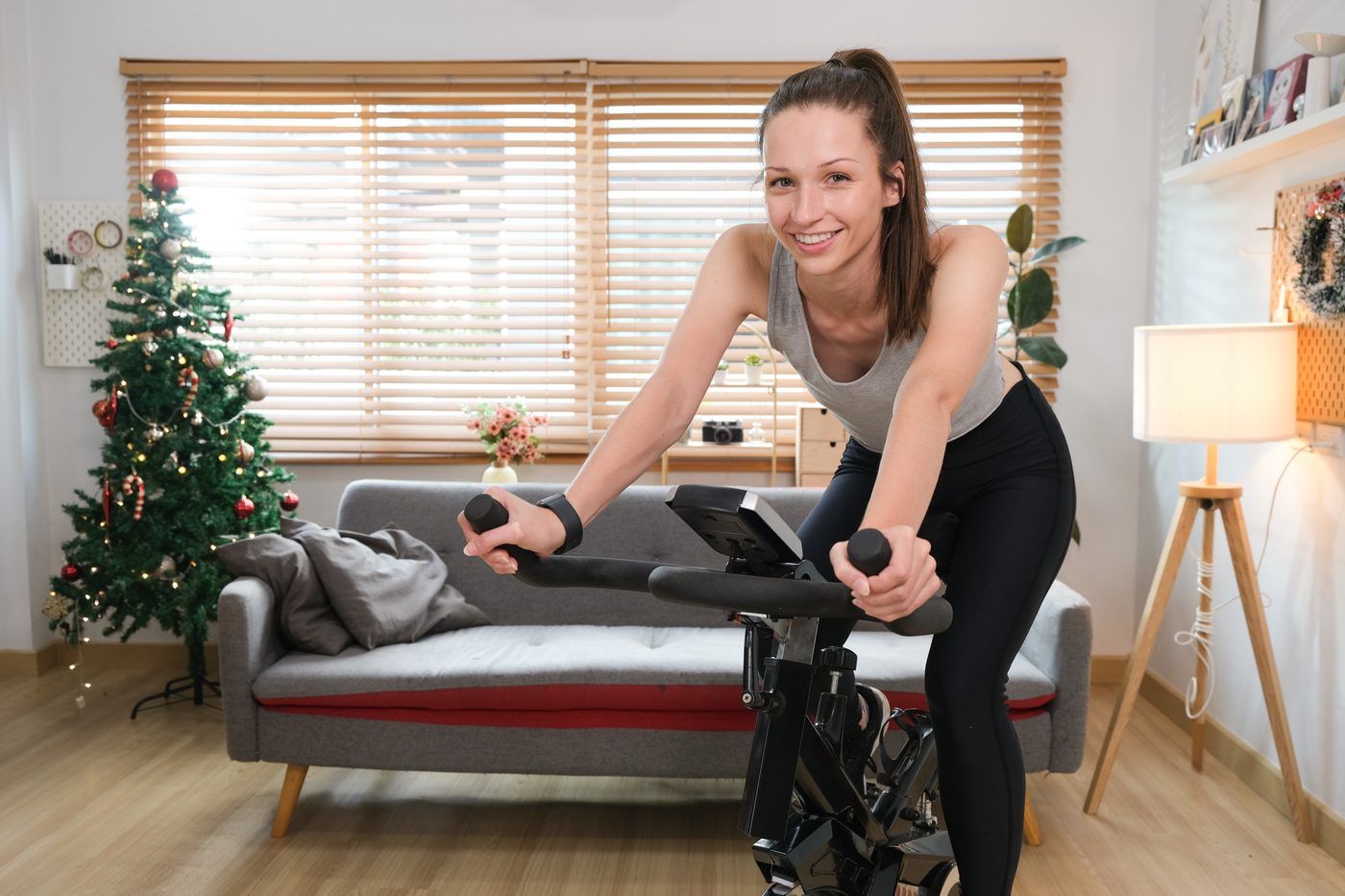
For years my fitness cratered every winter as outdoor riding became impossible and I lost interest in a trainer clamped to my actual road bike. The KICKR Bike is the first indoor setup I've genuinely looked forward to riding, and this is the first winter in five years I haven't lost my base fitness.
A Bike Built for the Trainer, Not a Trainer Bolted to a Bike
The fundamental idea behind the KICKR Bike is different from a traditional smart trainer: instead of clamping your actual road bike to a resistance unit, this is a purpose-built stationary bike with a fully adjustable frame, integrated power meter, and its own flywheel and resistance system. That means no wear on your real bike's drivetrain, no swapping cassettes or dealing with quick-release compatibility, and a setup that's ready to ride in seconds rather than requiring you to mount and dismount your outdoor bike every session. If you only own one bike and don't want two separate machines to maintain, this convenience alone is a meaningful quality-of-life upgrade over a standard trainer.
Automatic Grade Simulation and Incline
This is the feature that actually changed how I train. The KICKR Bike physically tilts up to a 20% incline and down to a -15% decline automatically, synced in real time with the route you're riding in Zwift or similar apps, so climbing a virtual mountain actually shifts your body weight and riding position the way a real climb would. Combined with road-feel resistance that simulates cobblestones or descents, it's a genuinely different experience from a flat trainer that just changes resistance — you're using stabilizer muscles and adjusting body position the way you would outdoors, which makes long structured workouts far less mentally tedious.
Fit Adjustability Across Multiple Riders
The bike's geometry adjusts electronically to match your specific road or gravel bike's stack, reach, saddle height, and handlebar position, with settings that save per rider profile. My partner and I share this bike, and switching between our two very different fits takes seconds via the app rather than a wrench and guesswork — something that would be a genuine hassle with a standard trainer and two different bikes.
Power Accuracy and Data You Can Actually Trust
The dual-sided power meter is accurate to within 1%, which matters enormously if you're doing structured, threshold-based training rather than just casual riding — inaccurate power data undermines the entire point of interval training built around specific wattage targets. I've cross-checked it against a separate pedal-based power meter and the numbers track closely and consistently, which gave me confidence to actually build a structured training block around the numbers this bike reports.
App Ecosystem and Compatibility
It connects via Bluetooth and ANT+ to Zwift, TrainerRoad, Wahoo's own SYSTM app, and most major training platforms, and the automatic incline and road-feel features specifically shine within Zwift's route data. If you're planning to primarily use a different app with less rich terrain data, you'll still get an excellent smart trainer, just without the incline feature getting fully leveraged the way it does on Zwift specifically.
The Space and Noise Reality
This is a large, heavy, permanently-assembled piece of equipment — it's not something you fold up and put in a closet between rides the way you might with a trainer and a spare bike. It needs a dedicated spot in a garage, basement, or spare room. It's reasonably quiet for a direct-drive trainer, quieter than most cheaper flywheel trainers, but the incline motor does add a small amount of mechanical noise during grade changes that a flat trainer simply doesn't have.
Who Should Buy This
If you ride indoors only occasionally, a standard smart trainer paired with your existing bike is far more cost-effective and space-efficient. This earns its price for serious indoor training — winter-bound cyclists, triathletes, or anyone doing structured, high-volume indoor sessions where the realism, convenience of not swapping bikes, and shared-household fit adjustability genuinely change whether you'll actually do the workout on a dark, cold morning.
Pros and Cons
Pros:
- Automatic incline and road-feel resistance meaningfully improve training realism
- No wear on your outdoor bike's drivetrain, ready to ride instantly
- Highly accurate dual-sided power meter for structured training
- Electronic fit adjustment makes multi-rider households painless
- Broad compatibility across major training apps
Cons:
- Very expensive relative to a standard smart trainer plus your existing bike
- Large, heavy, and needs a permanent dedicated space
- Incline feature is most fully realized specifically within Zwift
Frequently Asked Questions
Do I need Zwift to use the incline feature?
The incline and road-feel features work with several compatible apps, but Zwift's detailed route data provides the richest, most accurate terrain simulation.
Can multiple people with different bike fits share one KICKR Bike?
Yes, saved rider profiles let you switch fit settings electronically in seconds, which is one of its biggest advantages for households with more than one cyclist.
Final Verdict
This is a genuine investment in not losing fitness every winter, and after a full season of consistent indoor training I actually looked forward to, I think it's earned every dollar of that investment for the specific problem it solves.
Rating: 9.0/10 — The first winter in years I came out the other side stronger, not weaker.