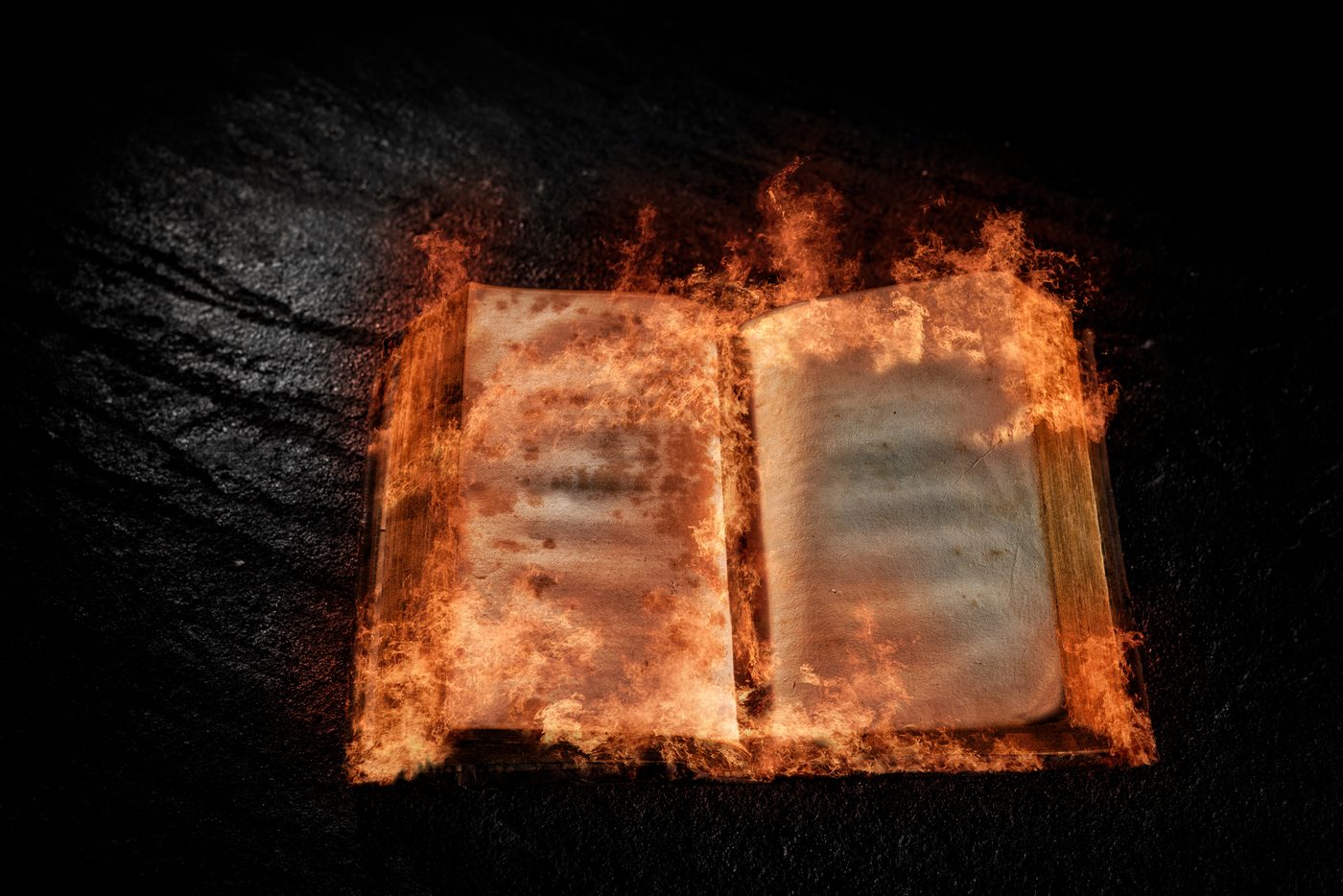
Most readers remember this as a novel about government censorship, and that's how it's overwhelmingly taught - but Bradbury himself repeatedly insisted, later in life, that he was more concerned with a culture voluntarily choosing distraction and shallow media over reading than with a totalitarian state imposing book bans from above. Reading it with that context changes what the novel is actually warning about.
Bradbury's Own Stated Intent, Worth Taking Seriously
In later interviews and afterwords, Bradbury was explicit that he considered the novel's core concern to be a society that willingly abandons deep reading and reflection for constant entertainment and technology-mediated distraction, with the state's book-burning as almost a downstream symptom rather than the root cause. This authorial framing is genuinely worth taking seriously alongside the more common censorship-focused classroom reading, since it changes which parts of the novel carry the most weight.
Written in a Rented Typewriter in a Library Basement
Bradbury famously wrote the novel's first draft in the basement of UCLA's Powell Library, renting a typewriter by the hour because he couldn't afford one of his own, completing the entire draft for a total cost of under ten dollars in rental fees - a fitting, well-documented origin story for a novel that is, at its core, a passionate defense of libraries and the physical act of reading.
Mildred and the Parlor Walls as the Real Warning
Guy Montag's wife Mildred, absorbed constantly in her room-sized interactive television "family" and barely present in her actual marriage, is arguably a more central figure to Bradbury's actual concern than the book-burning firemen themselves. Her particular kind of disengagement - not forbidden from reading, simply uninterested, endlessly distracted - reads as considerably more prescient about certain aspects of media consumption than a straightforward censorship narrative would.
Clarisse as the Novel's Genuine Turning Point
Montag's brief, formative encounters with his young neighbor Clarisse McClellan, who asks genuine questions and pays attention to the actual world around her, function as the spark for his gradual awakening, more than any political argument does. Her role, though relatively brief in terms of page count, is structurally central to the novel's emotional logic.
Captain Beatty as a Genuinely Persuasive Antagonist
Fire Captain Beatty, Montag's superior, is given surprisingly sophisticated, well-informed arguments for the book-burning system he enforces - including a genuine, historically grounded account of how the public itself gradually demanded simpler, less controversial media before the state formalized the practice. Giving the novel's chief antagonist real intellectual coherence, rather than cartoonish villainy, is part of what makes the book's argument more unsettling than a simpler dystopia would manage.
Firemen as Enforcers of a Wanted Order, Not Unwanted Tyranny
One of the novel's more unsettling ideas, easy to miss on a first reading, is that the book-burning fire department serves a genuinely popular social consensus rather than purely top-down oppression - most citizens in Bradbury's world aren't secretly desperate to read forbidden books, they've largely embraced the shallow, distracted culture on offer. This complicates any simple reading of the novel as purely about resisting external state censorship.
The Mechanical Hound as a Specific, Dread-Inducing Invention
Bradbury's invented Mechanical Hound - a robotic tracking device used to hunt down book-hoarders - is rendered with enough specific, unsettling sensory detail that it functions as one of the novel's most effective standalone images, and its particular blend of biological menace and mechanical precision has proven a durable, frequently referenced piece of dystopian imagination independent of the novel's larger themes.
The Ending's Cautious, Specific Hope
The novel's final section, following Montag's escape to a community of wandering exiles who've each memorized entire books to preserve them, offers a genuinely specific and grounded vision of cultural preservation through individual memory and community, rather than vague optimism. This concrete final image is part of what keeps the novel from reading as pure despair.
A Later Coda Bradbury Added Himself
In subsequent editions, Bradbury added his own reflective afterword and, controversially, later objected publicly when publishers had quietly censored profanity from student editions of a novel specifically about censorship - a real, documented irony he addressed directly and forcefully once he discovered it, restoring the original text.
Who Should Read This
Anyone who read this only as a school assignment focused narrowly on censorship and wants to revisit it with Bradbury's own broader intent in mind, and anyone interested in a classic dystopia that's arguably more relevant to media and attention than to government book bans specifically.
Pros and Cons
Pros:
- Bradbury's own stated intent about media and distraction adds real depth beyond the censorship reading
- Mildred's storyline is a genuinely prescient portrait of chosen disengagement
- Short, tightly constructed, and rewards a focused rereading
- The ending offers a specific, grounded vision of preservation rather than vague hope
Cons:
- Common classroom framing around censorship can undersell Bradbury's actual broader intent
- Some of the mid-century technology depictions require reading past dated specifics to their underlying point
Frequently Asked Questions
Is this really just about government censorship?
That's the common classroom reading, but Bradbury himself said his larger concern was a culture choosing shallow distraction over reading, with censorship as one downstream symptom.
Is the novel dated given how old the technology references are?
Some specifics are dated, but the underlying concern about distraction and disengagement reads as strikingly relevant regardless.
Is it true this novel was itself censored in some editions?
Yes - Bradbury discovered some student editions had quietly removed profanity without his knowledge, and he publicly objected and had the original text restored.
How long did it take Bradbury to write the first draft?
He wrote it remarkably quickly in the basement of UCLA's library, renting a typewriter by the hour for a total cost of under ten dollars.
Final Verdict
Read with Bradbury's own stated intent in mind rather than the standard censorship-only classroom framing, this short novel becomes a considerably sharper and more specific warning than its popular reputation suggests.
Rating: 9.0/10