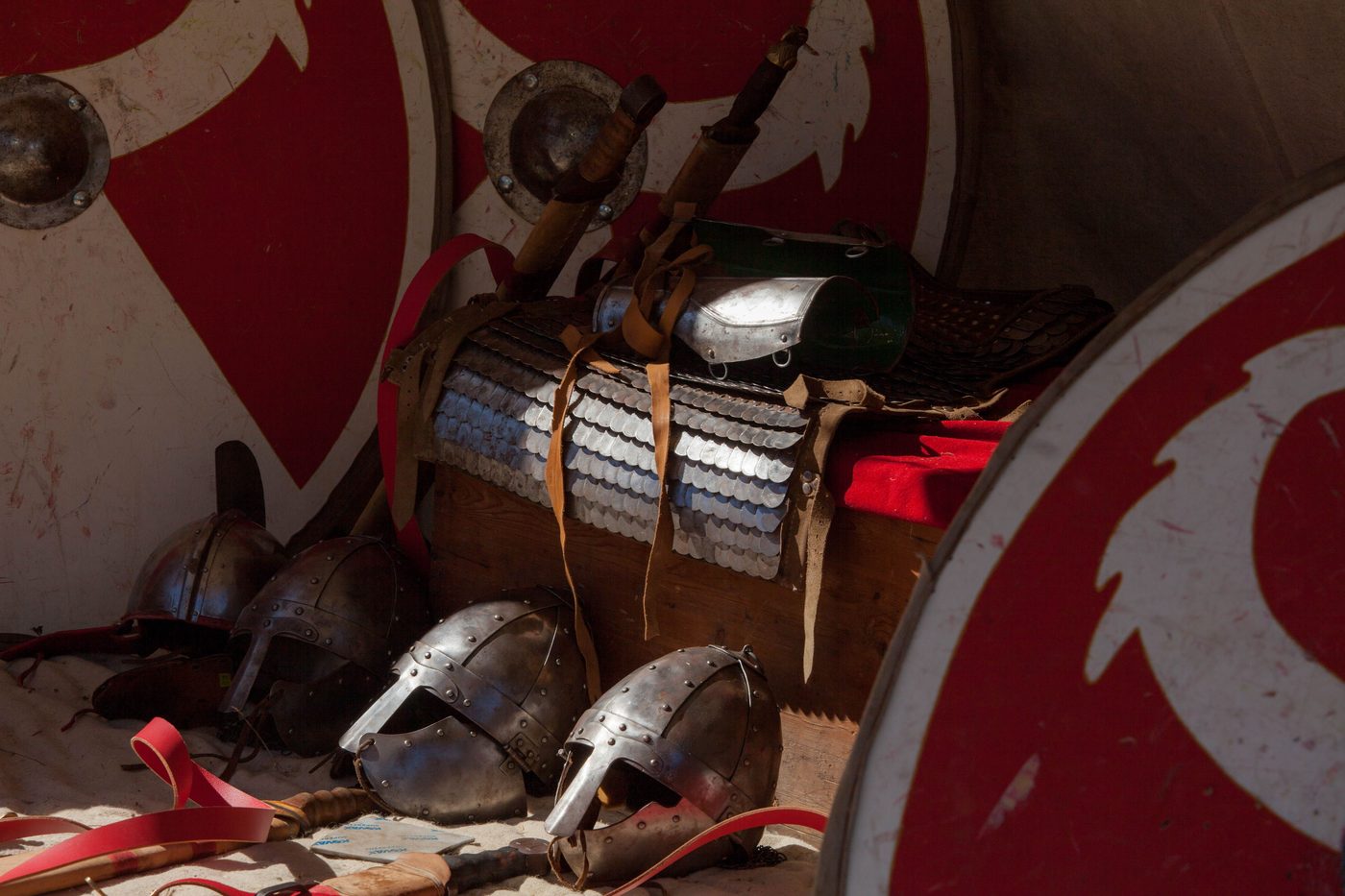
Steven Pressfield spent over two decades scraping by as a struggling writer before Gates of Fire, published in 1998, finally landed. What it landed as wasn't just a commercial hit -- it became, and remains, official reading for United States Marines. The novel retells the last stand of the 300 Spartans at Thermopylae through the eyes of a fictional squire who survives the battle and later recounts it to the Persian king's own historian. Since 2002 it has sat on the Commandant of the Marine Corps' Professional Reading List, and it's taught at West Point, Annapolis, and the Marine Corps Basic School at Quantico. This review works through the real critical reception, the actual military adoption record, and where the book's unrelenting focus on combat and honor leaves some readers cold.
What Gates of Fire Actually Is
The novel is framed as an interrogation transcript. Xeones, a Spartan squire, is found near death after the Battle of Thermopylae in 480 BCE and is the only Greek survivor the Persian army can locate. King Xerxes, curious why 300 Spartans and their allies held off his enormous invading force for three days at a mountain pass, orders his royal historian to record Xeones' account before he dies. What follows is Xeones' full life story -- his childhood after his home city is destroyed, his years training to become a Spartan warrior's attendant, his integration into Spartan military culture, and finally his eyewitness account of the battle itself, delivered in unflinching, close-quarters detail. The structure lets Pressfield build an entire world of Spartan training, discipline, and social hierarchy (the agoge, the phalanx, the culture of the warrior-citizen) before the battle even arrives, so that when Thermopylae finally happens, the reader understands exactly what the Spartans are fighting to embody, not just what they're fighting against.
About Steven Pressfield and Why He Wrote This
Pressfield was born in Port of Spain, Trinidad in 1943 while his father served in the US Navy, and he graduated from Duke University in 1965. In 1966 he joined the US Marine Corps as an infantryman, a stint that shaped his lifelong interest in military discipline and the psychology of combat even though his unit itself was never deployed into direct action. What followed was decades of drifting through jobs -- advertising copywriter, schoolteacher, truck driver, bartender, oilfield roustabout, mental hospital attendant, fruit picker -- while he tried and mostly failed to make a living as a writer, a stretch that at one low point left him effectively homeless, living out of the back of his car. He'd been fascinated by the ancient Greek stand at Thermopylae for years, drawing on Herodotus and other classical sources, and set out to write a novel that treated the 300 Spartans not as legend but as working soldiers, filtering his own Marine Corps background and his years of hard-won discipline directly into how he wrote about theirs. Gates of Fire, published when Pressfield was 55, was the book that finally broke through.
How It Compares to The War of Art
Pressfield's nonfiction book The War of Art, published a few years after Gates of Fire, takes the same core idea -- Resistance, discipline, showing up for the hard work even when it's terrifying or thankless -- and applies it explicitly to the struggle of creative work rather than combat. Gates of Fire is where that philosophy gets demonstrated through fiction: the Spartans train obsessively, endure humiliation and pain as a matter of course, and hold their position not because they're fearless but because their training has made showing up non-negotiable. If The War of Art is Pressfield's direct sermon on professional discipline, Gates of Fire is the same idea dramatized at the highest possible stakes, and reading them back to back makes the throughline in Pressfield's worldview hard to miss.
What Critics Actually Said
Kirkus Reviews called it "a triumph in historical fiction" and praised its "stirring account of the famous battle of Thermopylae." Publishers Weekly gave it a starred review, commending its "vividly clear depiction of classical infantry battle" and its detailed treatment of Spartan social structure, family bonds, and the psychological strain of combat. The New York Times Book Review praised its "soldier's-eye view" of Thermopylae, highlighting how the novel renders both the "blood and stench of carnage" and the camaraderie forged through shared suffering and the Greek emphasis on facing fear with honor intact. That's a strong critical sweep for a historical war novel, matched by an even more unusual form of validation: sustained adoption by actual military institutions.
And the aggregate reader picture, for what it's worth:
Where Real Reviews Pushed Back
The most consistent reservation across reader reviews isn't about the writing quality, which is rarely disputed, but about intensity and pacing: the novel is relentlessly focused on combat, military hierarchy, and the psychological grind of soldiering, and readers who want a broader story with more political intrigue, romance, or lighter pacing between battle sequences report the book feeling narrow and unyielding by design. Some readers also find the framing device -- Xeones dictating his entire life story to a Persian scribe in what would realistically be an impossibly long, detailed oral account -- a bit of a stretch to sustain credibility across 400-plus pages, even as they acknowledge it's a necessary device to hold the novel's structure together. Neither of these is a fringe complaint; they show up repeatedly in reader reviews as the tradeoff for a book this singularly focused on its subject.
On Spartan Training, the Agoge, and What Discipline Actually Costs
A large stretch of the novel is devoted to the agoge, the brutal Spartan training system boys were subjected to from childhood, and Pressfield doesn't romanticize it. The training is shown as genuinely cruel -- deliberate deprivation, public humiliation, physical punishment used as a teaching tool -- and the novel is explicit that this cruelty is precisely what produces soldiers capable of holding a mountain pass against overwhelming numbers without breaking. That's arguably the book's sharpest idea: that the discipline modern readers admire from a safe distance was built on a foundation most people, transported back to witness it firsthand, would find genuinely disturbing. The novel doesn't ask you to endorse the agoge; it asks you to understand what it actually produced.
On the Phalanx, Camaraderie, and the Reality of Ancient Combat
Pressfield's battle sequences are built around the mechanics of phalanx warfare specifically -- shield-wall formation, the physical press of men fighting shoulder to shoulder, the total dependence each soldier has on the man beside him not breaking ranks. That's the detail multiple critics singled out as the book's strongest technical achievement, and it's also the emotional core of the novel: the bond Xeones describes among the Spartans isn't abstract patriotism, it's the specific, physical trust of men who know their lives depend on the soldier next to them holding the line. Combat here is rendered as claustrophobic, exhausting, and viscerally brutal rather than glorified from a distance, which is part of why the novel reads as convincing to actual service members rather than as armchair war-fantasy.
Key Takeaways
- It's historical fiction grounded in Herodotus, not a strict history -- the narrator and much of the personal drama are Pressfield's invention
- Real, verifiable military adoption: on the Marine Corps Commandant's Reading List since 2002, taught at West Point, Annapolis, and Quantico
- Critical reception was strong across Kirkus, a starred Publishers Weekly review, and The New York Times Book Review
- The agoge sections are deliberately uncomfortable -- the novel wants you to see what Spartan discipline actually cost, not just what it produced
- This is a relentlessly combat-and-discipline-focused novel by design, which is either its greatest strength or its main limitation depending on what you want from it
Who This Book Is Actually For
Readers who want historical fiction that takes military life, training, and combat seriously and in granular detail -- especially anyone with a personal connection to military service, an interest in ancient Greek history, or a taste for stories built around discipline, sacrifice, and honor under extreme pressure. Its sustained real-world adoption by military institutions makes it a particularly strong fit for readers who want fiction that's been vetted by people who've actually served.
Who Should Read Something Else Instead
If you want a historical novel with more political maneuvering, romance, or variation in pacing between action sequences, the documented reader pushback above is worth taking seriously -- this book is narrow and intense by design, not broad. Readers who want Pressfield's core philosophy about discipline without the war-novel packaging might prefer The War of Art instead.
Pros and Cons
Pros:
- Real, documented adoption by the US Marine Corps, West Point, Annapolis, and the Marine Corps Basic School at Quantico
- Starred Publishers Weekly review plus strong notices from Kirkus and The New York Times Book Review
- Exceptionally strong 4.40 out of 5 Goodreads rating with 57% of raters at five stars
- Technically detailed, convincing phalanx combat sequences that read as authentic rather than romanticized
- A clear-eyed, unflinching look at what Spartan discipline actually required, not a sanitized legend
Cons:
- Relentlessly focused on combat and military discipline, with little space for romance, political intrigue, or lighter pacing
- The framing device of a single oral account covering an entire lifetime asks a lot of the reader's suspension of disbelief
- Readers looking for a broader historical epic rather than a soldier's-eye account may find it narrow
Frequently Asked Questions
Is Gates of Fire historically accurate?
It's historical fiction, not a history text. Pressfield builds the novel on Herodotus and other ancient sources for the Battle of Thermopylae's broad outline, but the narrator, most named Spartans besides Leonidas, and much of the personal drama are invented to fill gaps the historical record leaves open.
What's the actual Goodreads rating?
4.40 out of 5 from roughly 44,100 ratings as of this writing, with 57% of raters giving it five stars, per Goodreads. Check the live number yourself, since it will keep climbing.
Is it really required reading in the military?
Yes. It has been on the US Marine Corps Commandant's Professional Reading List since 2002 and is used at institutions including West Point, the US Naval Academy, and the Marine Corps Basic School at Quantico — documented, verifiable facts, not marketing claims.
Do I need to know Greek history to follow it?
No. Pressfield explains Spartan customs, training, and battlefield tactics as the story goes, through the narrator's own explanations to his Persian captors, so no prior background in ancient history is required.
Sources & Further Reading
- Goodreads — Gates of Fire (aggregate rating, reader reviews)
- Kirkus Reviews — Gates of Fire
- Publishers Weekly — starred review
- The New York Times Book Review
- StevenPressfield.com — author and publisher page
- PositiveLifes.com — free inspirational and life-changing PDF books
Final Verdict
Gates of Fire backs up its reputation with something most historical fiction never gets: sustained, real-world adoption by the institutions whose profession it depicts. A starred Publishers Weekly review, a strong Kirkus and Times notice, and two decades on the Marine Corps Commandant's Reading List add up to a rare kind of validation. It's not a book for readers who want variety or breathing room -- it's narrow, intense, and unrelenting by design -- but for readers who want to understand what discipline and sacrifice actually cost, few novels deliver it as convincingly.
Buy Day rating: 9.0/10