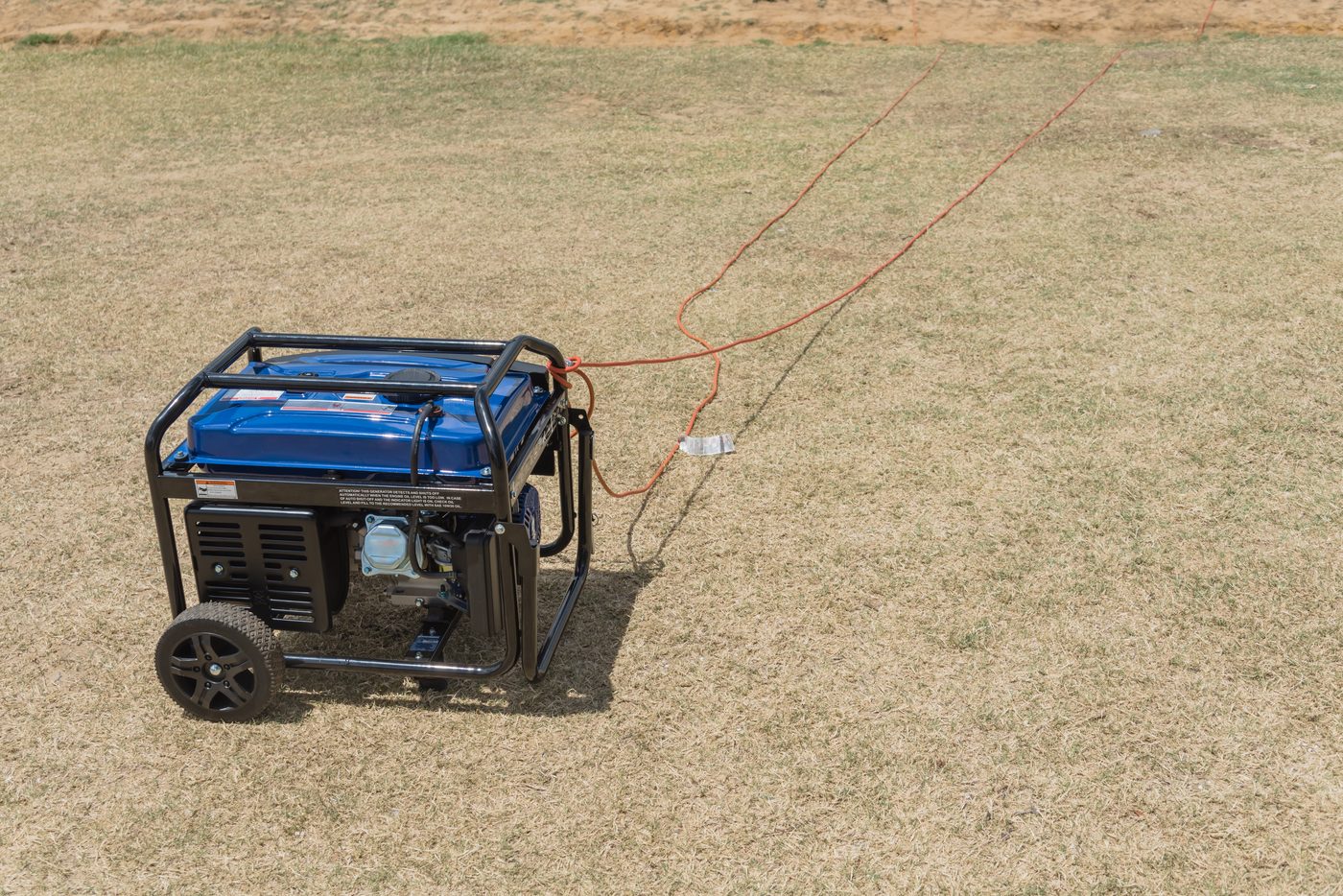
We lost power for four days after an ice storm two winters ago, lost most of a full freezer, and I swore I'd never go through that again unprepared. The GP8000E has since gotten us through three outages, and the freezer has survived every one of them.
8,000 Running Watts Is a Real Number, Not a Marketing Number
Generac rates this unit at 8,000 running watts with a 10,000-watt starting surge, and in practice that's enough to run a well pump, refrigerator, freezer, sump pump, several lights, and a window AC unit simultaneously — the actual essentials during a multi-day outage, not just a phone charger and a lamp. I ran the numbers before buying using a simple wattage worksheet (adding up the running and starting watts of what I actually needed powered), and the GP8000E gave real headroom above my calculated need, which matters because starting surges from motors like a well pump or fridge compressor can spike well above their running wattage for a second or two.
Electric Start Matters More Than It Sounds
Pull-start generators are cheaper, and I almost bought one to save money. In practice, starting a generator with cold hands during a winter outage, possibly at 2 AM when the power first drops, is exactly the situation where a reliable electric start with a battery backup earns its keep. The GP8000E starts with a key turn every time it's been maintained properly, and that reliability during the actual moment of need is worth more than the price difference over a pull-start model.
Fuel Consumption and Runtime
At 50% load, the GP8000E runs roughly 10 hours on its built-in tank, which in real outage use means waking up once overnight to refuel if you're running it continuously, or running it on a schedule (a few hours on, a few hours off) to stretch fuel and reduce noise and wear. I keep stabilized fuel on hand specifically for this generator rather than relying on being able to get to a gas station during a wider regional outage, which is a lesson learned the hard way during the ice storm before I owned this unit.
Noise Level and Neighbor Considerations
This is not a quiet inverter generator — it's a traditional open-frame unit, and it's loud enough that running it at 2 AM will be noticed by anyone nearby. If your primary concern is running sensitive electronics quietly, an inverter generator is the better category. This unit trades quiet, portable convenience for raw output and a lower price per watt, which is the right trade for whole-essentials backup power rather than camping or RV use.
Manual Transfer Switch: Budget for It Separately
The GP8000E doesn't come with a transfer switch, and running extension cords to individual appliances during an outage is inefficient and, done wrong, genuinely dangerous. I had an electrician install a manual transfer switch tied into the home's electrical panel, which lets me power selected circuits — the furnace blower, well pump, fridge, key outlets — directly through the existing wiring by flipping breakers rather than running a tangle of cords. This is an additional cost beyond the generator itself, typically a few hundred to over a thousand dollars depending on your panel and local electrician rates, and I'd consider it close to mandatory for serious whole-home backup use rather than an optional accessory.
Who Should Buy This
If you live somewhere with reliable grid power and rare, short outages, this is more generator and more expense than you need — a smaller inverter unit for occasional use would serve better. If you've been through a multi-day outage, live somewhere prone to storms, or have a well pump and a family member with medical equipment dependent on power, this is the category of generator worth owning, properly installed with a transfer switch, rather than improvised at the last minute.
Pros and Cons
Pros:
- 8,000 running watts genuinely covers full essential-circuit backup, not just basics
- Reliable electric start when it matters most, at 2 AM in bad weather
- Reasonable fuel efficiency at partial load for extended outages
- Rugged build that's held up to repeated real-world outage use
Cons:
- Loud open-frame design, not neighbor-friendly at night
- Transfer switch is a required additional cost for safe whole-circuit use
- Heavy and bulky to move without the wheel kit
- Requires stored fuel and regular maintenance to be ready when needed
Frequently Asked Questions
Do I need an electrician to use this generator?
Not to simply run it with extension cords, but for safe, efficient whole-circuit backup power, a professionally installed manual transfer switch is strongly recommended.
How often does it need maintenance?
Regular oil changes and periodic test-running (even when there's no outage) are essential — a generator that hasn't been maintained is the most common reason one fails to start during an actual emergency.
Final Verdict
This isn't a generator you buy for fun. It's the one you buy after the first time you genuinely needed one and didn't have it, and mine has already paid for itself in saved groceries and peace of mind across three outages.
Rating: 8.8/10 — Loud and heavy, but it's done exactly what I bought it to do, every time.