At 22, Amanda Gorman became the youngest inaugural poet in U.S. history, reading five minutes of verse at the January 2021 presidential inauguration that instantly went viral -- and within weeks, that poem was a printed keepsake hardcover with a foreword by Oprah Winfrey, sitting near the top of bestseller lists. This review covers what critics and roughly 29,800 Goodreads raters actually said about The Hill We Climb as a physical book, not just as a performance, including the real, documented pushback about paying for 32 pages of a poem most people already watched for free.
What The Hill We Climb Actually Is
Stripped down, this is a single poem -- the one Gorman wrote for and performed at Joe Biden's inauguration -- packaged as a standalone hardcover gift book. The edition runs about 32 pages total: the poem itself, a foreword by Oprah Winfrey, and a short author's note from Gorman explaining some of her intentions and process. It's not a collection in the way most poetry books are; there's no second or third poem waiting after this one. What you're buying is a keepsake object built around five minutes of spoken-word performance that had already been watched by tens of millions of people live and online before the book existed.
That distinction matters for how to think about the price. Publishers Weekly and other trade coverage treated its release less as a typical poetry-collection launch and more as a cultural artifact moment -- the physical, ownable version of something people had already experienced. Whether that's worth the cover price depends entirely on what you're looking for: a text you can hold, reread, and give as a gift, or new material you haven't already encountered.
About Amanda Gorman and Why She Wrote This
Gorman grew up in Los Angeles and was diagnosed with an auditory processing disorder in kindergarten -- not a stutter, by her own account, but difficulty pronouncing whole categories of sounds, including "r" and "sh." She's said she couldn't reliably say the letter R until just a couple of years before the inauguration, an irony she's noted herself given she attended Harvard, a word with two of them. As a child she used songs, including "Aaron Burr, Sir" from the musical Hamilton, and poetry performance as a kind of speech therapy, deliberately choosing words that avoided the sounds she struggled with until she'd practiced enough to include them. She's since described that impediment as, in her words, one of her greatest strengths as a writer, because it forced her to think unusually hard about the sound and rhythm of every word she chose. In 2017, at 19, she became the first National Youth Poet Laureate; now-First Lady Jill Biden saw her read at the Library of Congress and later recommended her for the inauguration slot, making Gorman, at 22, the youngest inaugural poet in the country's history, following Maya Angelou, Robert Frost, and Elizabeth Alexander in that role.
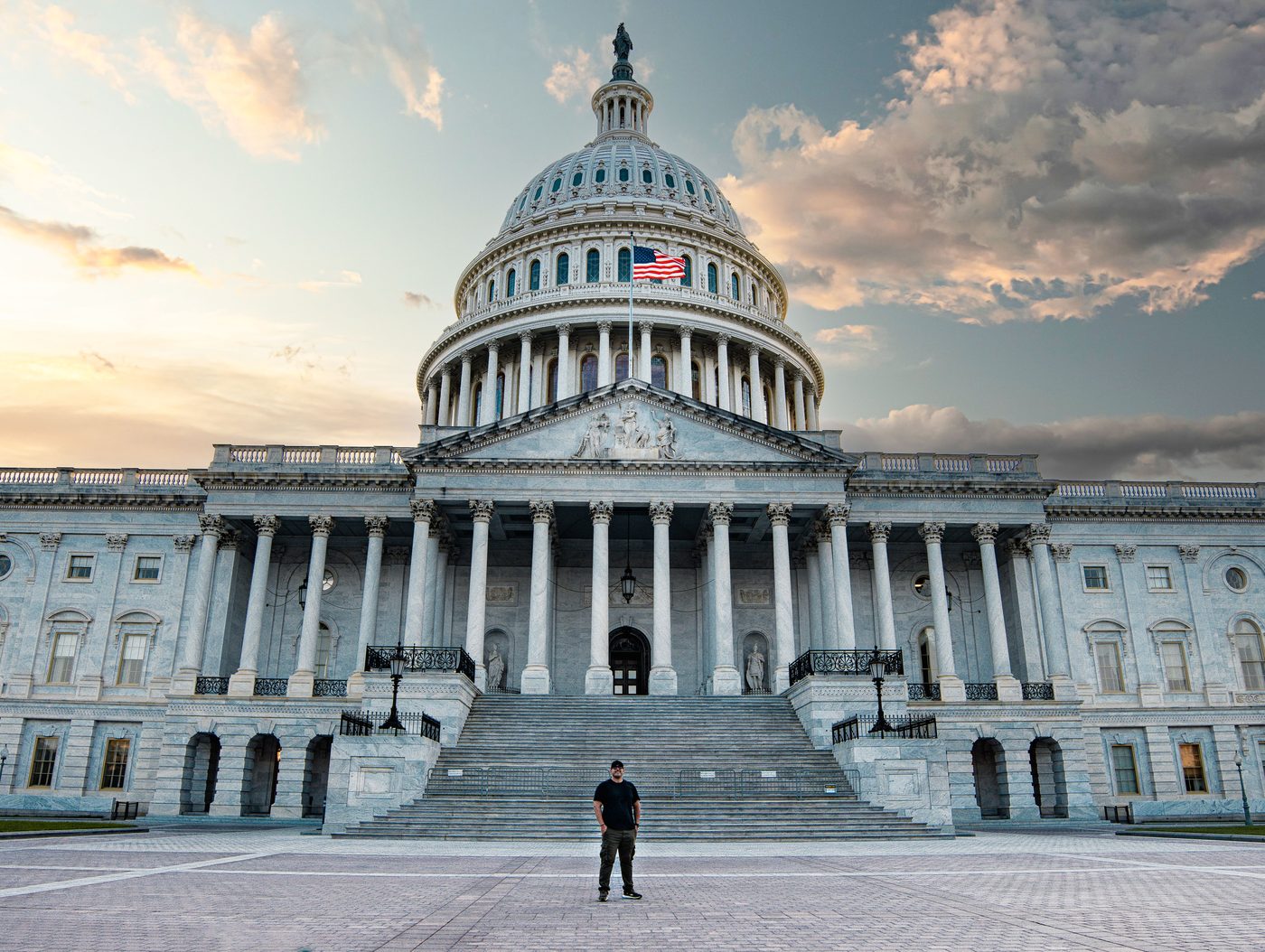
Gorman has said the inauguration's stated theme, "America United," gave her a clear starting point, and she drew directly on the rhetorical tradition of Abraham Lincoln, Martin Luther King Jr., and Frederick Douglass while writing it. What she hasn't downplayed is when she actually finished the poem: the night of January 6, 2021, hours after a mob stormed the U.S. Capitol -- the same building she'd perform in front of two weeks later. She's said she felt she couldn't write around that event or gloss over it, and chose instead to write directly toward it, which is why the poem explicitly names division, violence, and the difficulty of union rather than only celebrating it.
How It Compares to Call Us What We Carry
Later in 2021, Gorman released Call Us What We Carry, her full-length debut poetry collection, which includes The Hill We Climb alongside dozens of other poems written across the pandemic and its surrounding years. If what you actually want is more of Gorman's writing for a comparable price, that collection is the better value -- The Hill We Climb on its own is closer to a single chapter than a full book. This keepsake edition makes more sense as a specific, standalone gift -- for a graduation, an inauguration-watcher, a classroom -- than as an introduction to her work as a poet more broadly.
What Critics Actually Said
Rather than inventing a verdict, here's what was actually said about the poem and the book built around it:
“For there is always light, if only we're brave enough to see it. If only we're brave enough to be it.”— widely quoted closing lines, cited across major outlets covering the reading
National coverage at the time, including from NPR and CBS News, described the reading itself as a standout moment of the inauguration -- widely praised in real time for its clarity, its direct address to the Capitol attack, and Gorman's performance. That immediate reaction is a large part of why the book sold as fast as it did.
And the aggregate reader picture, for what it's worth:
Where Real Reviews Pushed Back
Not every review was warm. Some readers and critics pushed back specifically on the poem's language, calling stretches of it cliché-heavy or, in blunter terms from a handful of harsher reviews, closer to competent student verse than major literary achievement -- a genuinely contested, documented critical reaction, not a fringe complaint invented for balance. Separately, and more specific to this edition, several reviewers focused on the book-as-product question directly: the poem is identical to what was performed live and is freely available to watch or read online, the Oprah Winfrey foreword runs only a few pages, and Gorman's own author's note is brief. For readers expecting substantial new material beyond what they'd already seen on television, that combination has been a real source of disappointment reflected in the mixed end of the rating spread.
The Real History Behind the Poem's Themes
The poem's references to violence, division, and "a nation that isn't broken but simply unfinished" read very differently once you know Gorman finished writing it the night of January 6, 2021 -- after the Capitol was breached by a mob trying to stop the certification of the 2020 election, the same Capitol steps where she'd stand two weeks later. She's been direct in interviews that she made a deliberate choice not to smooth over that event in the text, because she felt confronting it honestly was necessary to write convincingly about unity afterward. Read with that timeline in mind, lines that might otherwise sound like generic inspirational language function instead as a specific, dated response to a specific attack on the institution she was standing in front of.
The Global Translation Controversy
Weeks after the inauguration, the book's international rollout became its own news story. Marieke Lucas Rijneveld, a white Dutch author and the youngest-ever winner of the International Booker Prize, was announced as the poem's Dutch translator, and the choice drew immediate public criticism -- led in part by Dutch activist and journalist Janice Deul, who publicly asked why the publisher hadn't chosen a translator who, like Gorman, was young, Black, and a spoken-word performer. Rijneveld withdrew from the project within days. A similar controversy followed with the poem's planned Catalan translator. The episode became a genuine, widely covered debate about who gets to translate work specifically rooted in a writer's identity and lived experience -- one that extended well beyond this one book into broader conversations about publishing and representation.
Key Takeaways
- This keepsake edition contains one poem, an Oprah Winfrey foreword, and a short author's note -- roughly 32 pages total, not a full collection
- Gorman finished the poem the night of the January 6, 2021 Capitol attack and has said she deliberately chose not to write around that event
- If you want more of her work for a similar price, Call Us What We Carry, her full-length 2021 collection, includes this poem alongside dozens more
- The book's international translation drew real, documented controversy over who should translate work rooted in a writer's specific identity
- Reader criticism about paying for a poem freely available online is legitimate and worth knowing going in, particularly if you already watched the original reading
Who This Book Is Actually For
Readers who want a physical, giftable keepsake of a specific historic moment -- for a graduate, a civics classroom, or anyone who found the original reading genuinely moving and wants the text to hold and revisit rather than stream.
Who Should Read Something Else Instead
If you're looking for a substantial poetry collection rather than a single-poem keepsake, or if the idea of paying for something you can already watch free doesn't sit right with you, Call Us What We Carry is the better purchase -- more material, same poet, comparable price.
Pros and Cons
Pros:
- A historically significant poem from the youngest inaugural poet in U.S. history, presented as a lasting physical keepsake
- Strong 4.56 out of 5 rating across roughly 29,800 Goodreads ratings
- Includes a foreword from Oprah Winfrey and Gorman's own author's note on her process
- Short length makes it an accessible, quick read for younger or reluctant readers
- Meaningful as a gift tied to a specific, documented historical moment
Cons:
- At about 32 pages, some readers feel the price doesn't match the amount of new material
- The poem itself is freely available to watch or read online, which several reviewers note directly
- A minority of critics and readers found the language cliché-heavy rather than exceptional as written poetry
Frequently Asked Questions
How long is The Hill We Climb, actually?
The keepsake hardcover runs about 32 pages and includes the poem itself, a foreword by Oprah Winfrey, and Gorman's own brief author's note. It's short by design -- a single inaugural poem presented as a gift book, not a full poetry collection.
What's the actual Goodreads rating?
4.56 out of 5 from roughly 29,800 ratings on the keepsake edition, as of this writing. Check the live number yourself, since it moves.
Is this the same poem I saw on TV at the inauguration?
Yes -- the text matches what Gorman performed live at the January 2021 inauguration. Some reviewers have specifically flagged this as a reason to think twice before buying: you're paying for a printed keepsake of a performance you can also watch free online, plus a short foreword.
Did Amanda Gorman write a full poetry collection too?
Yes, Call Us What We Carry, released later in 2021, is her full-length debut collection and includes The Hill We Climb alongside dozens of other poems. If you want more material for the price, that's the better starting point.
Sources & Further Reading
- Goodreads — The Hill We Climb: An Inaugural Poem for the Country (aggregate rating, reader reviews)
- Harvard Gazette — "Amanda Gorman's inauguration poem, 'The Hill We Climb'"
- CNN — coverage of the Dutch translation controversy
- CNBC — on Gorman's speech impediment and how she overcame it
- Penguin Random House — publisher page
- PositiveLifes.com — free inspirational and life-changing PDF books
Final Verdict
The Hill We Climb succeeds as exactly what it is -- a lasting, giftable keepsake of a genuinely historic five minutes, backed by a strong Goodreads rating and real critical attention, both good and bad. It's honest to say the value math is thinner than most books on this list: 32 pages, a poem you can watch for free, a short foreword. If that trade-off doesn't bother you and the moment moved you, it delivers. If you want more Gorman for your money, buy Call Us What We Carry instead.
Buy Day rating: 7.8/10