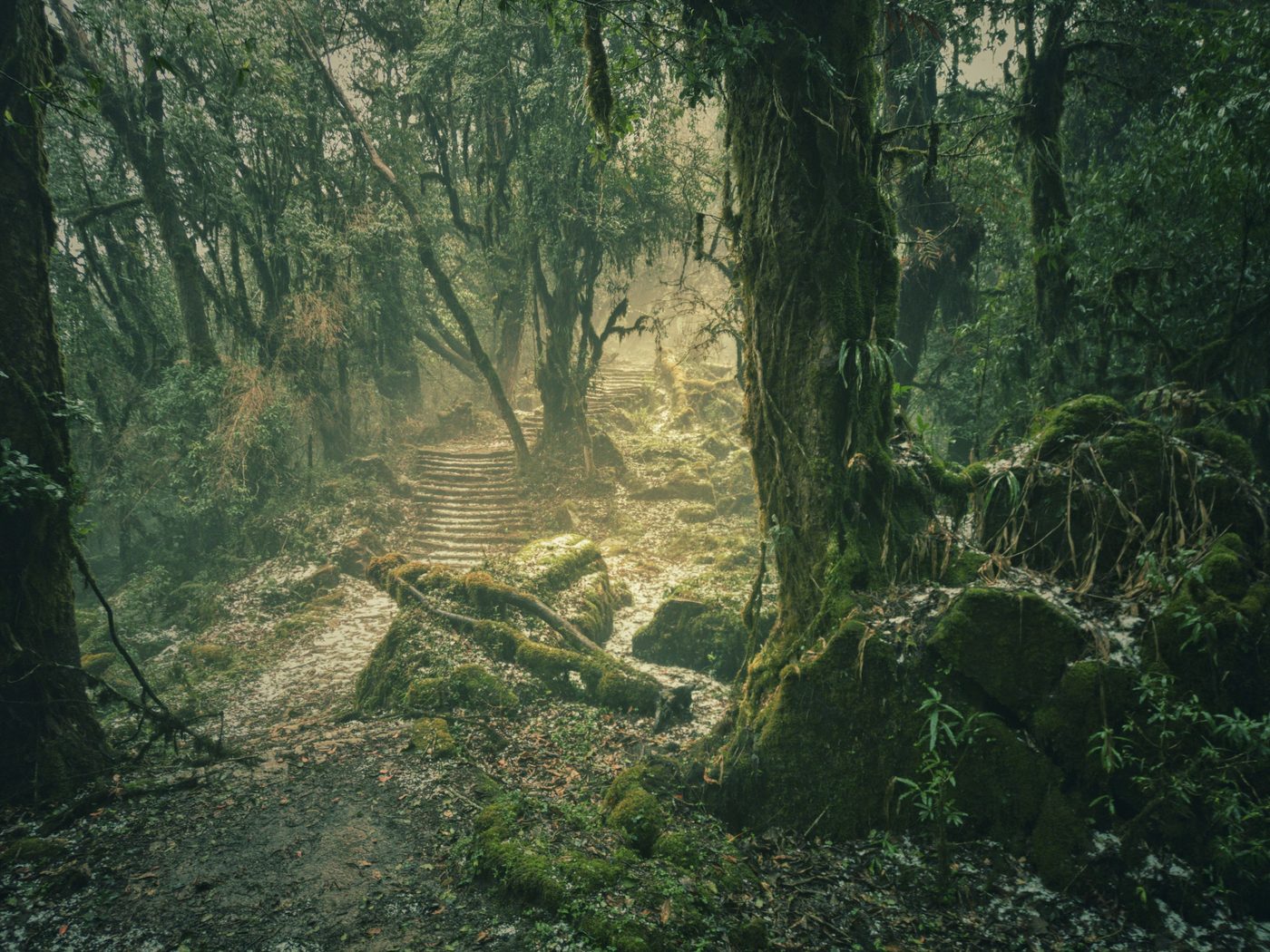
J.R.R. Tolkien began writing The Hobbit as a story to tell his children, scribbling the now-famous opening line - 'In a hole in the ground there lived a hobbit' - on a blank exam paper he was grading, with no particular plan for where it would go. That casual, almost accidental origin is easy to forget once you understand how thoroughly the book that resulted reshaped an entire literary genre. Rereading it as an adult, decades after Tolkien's more sprawling and mythologically dense Lord of the Rings became the more commonly discussed entry point to Middle-earth, reveals a tighter, warmer, and genuinely funnier book than its reputation as merely a prelude often suggests - a complete adventure story on its own terms, built around a reluctant, thoroughly unheroic hero who never stops being the story's most relatable element.
Bilbo Baggins as an Unlikely Hero
The novel's central achievement is Bilbo Baggins himself, a comfort-loving, adventure-averse hobbit who is recruited into a quest almost against his will and spends much of the early book actively regretting having left home at all. This characterization was genuinely unusual for adventure fiction at the time, and Tolkien's decision to build the story around a protagonist defined by reluctance and homesickness rather than natural heroism gives the book an emotional accessibility that more conventionally heroic fantasy protagonists often lack.
A Children's Book That Doesn't Condescend
Written explicitly for a young audience, The Hobbit maintains a playful, sometimes directly narrated tone, with an intrusive narrator occasionally addressing the reader directly, while still including genuine peril, moral complexity, and moments of real darkness. This balance, entertaining and accessible without being simplistic or safe, is part of why the book has retained multi-generational appeal well beyond its original intended child readership.
The Riddle Game With Gollum
The famous encounter between Bilbo and Gollum in the goblin tunnels, structured around a tense riddle contest with Bilbo's life as the stakes, remains one of the most memorable sequences in the book and a masterclass in tension built through wordplay rather than action. This scene also introduces the One Ring almost as an afterthought within the original novel's context, a detail whose full significance Tolkien himself hadn't yet fully developed when writing The Hobbit, later requiring revision once The Lord of the Rings expanded the ring's importance.
Thorin's Company and the Politics of a Quest
The band of thirteen dwarves accompanying Bilbo, led by the proud and increasingly obsessive Thorin Oakenshield, gives the novel a group dynamic beyond a simple hero's journey, with genuine tension, disagreement, and differing motivations among the company members. Thorin's arc in particular, from noble exiled king to a figure increasingly consumed by treasure-lust as the quest nears its goal, adds moral complexity that elevates the book beyond a straightforward adventure tale.
Smaug as a Genuinely Menacing, Intelligent Villain
The dragon Smaug, guarding the treasure hoard at the heart of the quest, is rendered with a combination of menace and dark wit that makes him one of fantasy literature's most memorable antagonists, engaging Bilbo in a genuinely tense verbal exchange before the story's climactic confrontation. Tolkien's decision to give Smaug intelligence and personality, rather than making him simply a destructive force, elevates the dragon from a plot obstacle into a genuine character with his own perspective and menace.
The Battle of Five Armies and the Cost of Greed
The novel's climax, involving multiple factions converging in conflict over the reclaimed treasure, serves as a pointed commentary on how greed and pride can undermine even a successful, hard-won quest. Thorin's transformation under the treasure's influence, and the tragic cost of the resulting battle, gives the book's triumphant ending real weight and complexity rather than a simple, uncomplicated victory.
World-Building That Laid the Foundation for an Entire Genre
Though more compact and less mythologically elaborate than The Lord of the Rings, The Hobbit establishes the foundational elements of Middle-earth's geography, races, and history that would become the template for countless subsequent fantasy works - distinct fantasy races with their own cultures, an internally consistent world with implied deep history, a quest structure organized around a journey through varied, richly imagined landscapes. Much of what readers now consider standard fantasy genre conventions trace directly back to choices Tolkien made in this relatively short novel.
Humor as an Underappreciated Quality
Compared to the more somber tone of The Lord of the Rings, The Hobbit contains substantially more comic material, including Bilbo's fussy domestic complaints, the trolls' bickering argument over how to cook their captives, and various moments of situational comedy throughout the dwarves' journey. This humor is frequently underappreciated by readers who come to the book expecting the more consistently serious tone of Tolkien's later work, and rediscovering it is one of the genuine pleasures of an adult reread.
Bilbo's Transformation Without Losing His Essential Character
Unlike a conventional hero's journey where the protagonist is fundamentally remade by their adventure, Bilbo returns home changed but recognizably himself, having gained courage and resourcefulness without losing the fundamental hobbit-ish love of comfort and home that defined him at the story's start. This restraint in Bilbo's character arc, growth without total transformation, gives the ending a groundedness that distinguishes it from more sweeping fantasy hero narratives.
Why The Hobbit Still Works as a Standalone Story
Despite functioning as a prelude to the much larger and more consequential events of The Lord of the Rings, The Hobbit remains a complete, satisfying story on its own terms, with its own self-contained stakes, character arcs, and resolution. Reading it independently, without the weight of the later trilogy's mythology, reveals a tighter, warmer, and often funnier book than its role as a prequel sometimes suggests, one that continues to work as a genuinely great introduction to fantasy fiction for readers of any age.
Pros and Cons
Pros:
- Bilbo's reluctant, unheroic characterization remains genuinely relatable and refreshing
- Balances real peril and moral complexity with warmth and playful humor
- The riddle game with Gollum remains a masterclass in tension without action
- Established foundational fantasy genre conventions still used across the genre today
- Works as a complete, satisfying standalone story independent of the larger trilogy
Cons:
- The intrusive, direct-address narrator style may feel dated to some modern readers
- Some plot elements were later retroactively adjusted to fit The Lord of the Rings' mythology
- Pacing in the middle chapters occasionally slows with episodic side adventures
Frequently Asked Questions
Do I need to read The Lord of the Rings first?
No, The Hobbit was written and can be read as a standalone story, though it was published before The Lord of the Rings and serves as a prelude to those later events.
Is The Hobbit appropriate for children?
Yes, it was originally written for children and remains widely read by young readers, though it includes genuine peril and darker moments alongside its lighter tone.
Is The Hobbit as serious in tone as The Lord of the Rings?
No, it's notably lighter and more humorous in tone, with a more directly narrated, playful style compared to the more somber, epic scope of the later trilogy.
How does the book differ from the film trilogy adaptation?
The film trilogy significantly expanded the relatively compact novel with additional characters, subplots, and material drawn from Tolkien's other writings, making the book a considerably shorter, more focused experience.
Final Verdict
The Hobbit endures not merely as a stepping stone to Tolkien's larger mythology but as a genuinely complete, warm, and often very funny adventure story in its own right. Bilbo Baggins' reluctant heroism, grounded in a very relatable love of comfort and home, gives the book an emotional accessibility that has helped it remain a beloved introduction to fantasy fiction across multiple generations. Reread as an adult, free of expectations set by its more famous sequel, it holds up remarkably well as the tightly constructed, genuinely delightful story it always was.
Rating: 4.8/10