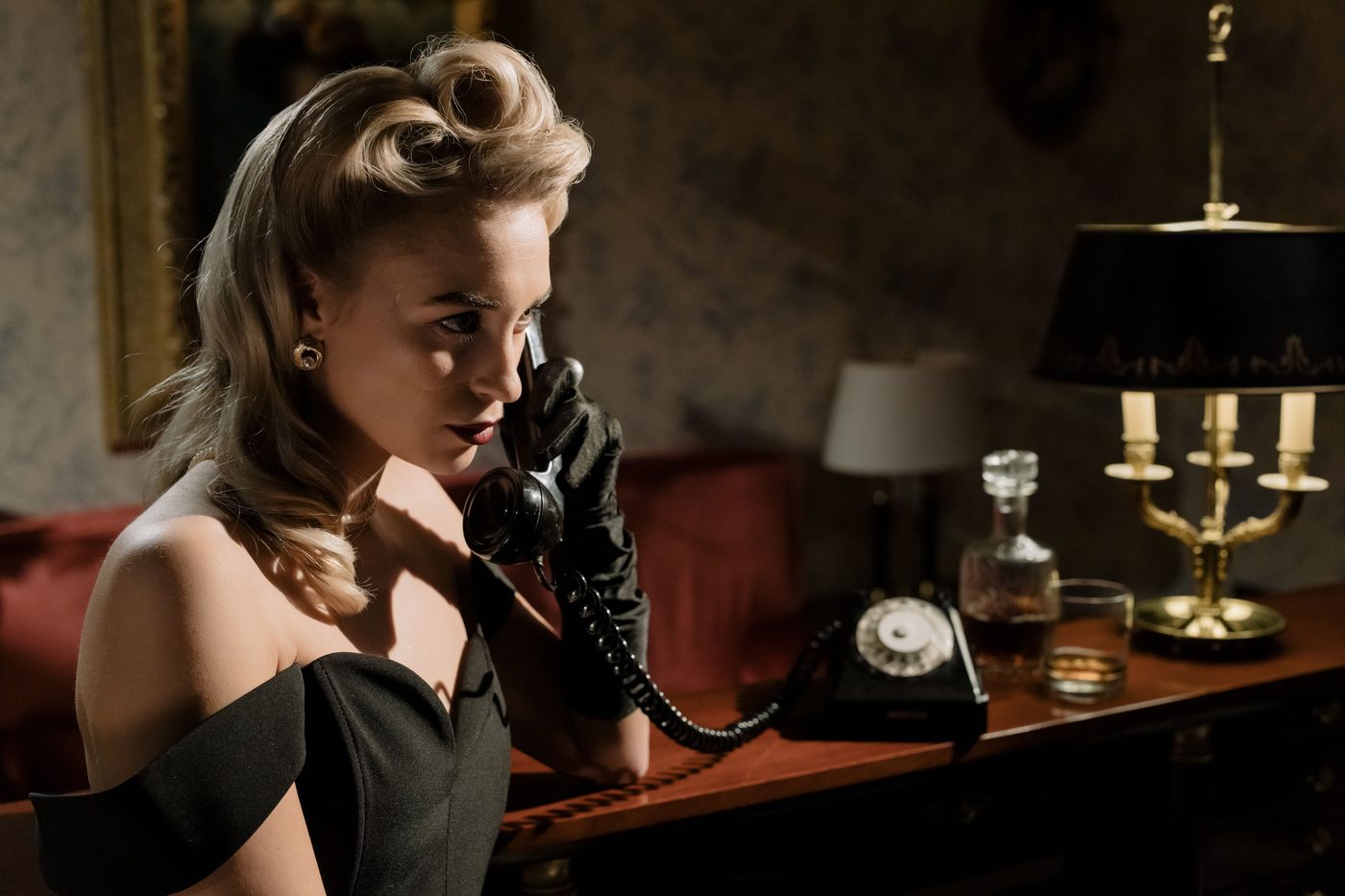
Most people who recognize Hedy Lamarr's name know her as a Golden Age Hollywood star, once marketed by MGM as “the most beautiful woman in the world.” Almost nobody knows that during the Second World War, she co-invented a frequency-hopping radio guidance system with composer George Antheil -- a real, patented technology whose underlying principles later fed into Wi-Fi, GPS, and Bluetooth. Marie Benedict's 2019 historical novel fictionalizes Lamarr's life from her first marriage to an Austrian arms dealer through her escape to Hollywood and her wartime invention, told in Lamarr's own imagined first-person voice. This review works from what critics and more than 98,000 Goodreads raters actually said, including the specific pushback on dialogue and pacing that comes up repeatedly in reader reviews.
What The Only Woman in the Room Actually Is
The novel opens with a young Hedwig Kiesler in 1930s Vienna, already a rising actress, being married off to Friedrich Mandl, a wealthy arms manufacturer with ties to fascist Italy and Nazi Germany. Much of the first half unfolds inside Mandl's world -- dinner parties where European military and political figures discuss weapons technology openly in front of Hedy, who is expected to be decorative and silent but is, in Benedict's telling, absorbing detailed technical knowledge the men in the room don't realize she's retaining. After escaping the marriage and fleeing to Hollywood, where she's remade into “Hedy Lamarr” and typecast for her looks, the novel's second half follows her push to be taken seriously as an inventor, culminating in the real frequency-hopping patent she filed with Antheil in 1942 as a contribution to the American war effort.
About Marie Benedict and Why She Wrote This
Benedict is a magna cum laude graduate of Boston College, where she focused on history and art history, and a cum laude graduate of Boston University School of Law. Before turning to fiction, she spent more than a decade as a litigator at two major law firms. In interviews, Benedict has said she was often the only woman in the room during that legal career -- a phrase she later used directly as this novel's title. She's described being drawn since childhood to the hidden or overlooked stories of historical women, and has said the idea for this specific book came from an anthropologist friend who mentioned, almost in passing, that a famous Golden Age Hollywood star had also been a serious inventor. That detail stayed with her until it became the novel. Benedict has built her broader career, including The Other Einstein and later The Personal Librarian, around excavating exactly this kind of erased contribution -- women whose real accomplishments got overshadowed by how they were publicly perceived.
How It Compares to The Other Einstein
The Only Woman in the Room is the second entry in what became an informal, connected series of Benedict novels about overlooked women in male-dominated fields, following The Other Einstein, her 2016 debut about Mileva Marić, Albert Einstein's first wife and a physicist in her own right. The two books share a template: a real, talented woman, a famous or powerful man whose reputation eclipses hers, and a first-person narrative reconstructing what her actual experience might have been. Reader response to the pairing has been mixed in a specific, consistent way -- more than one reviewer who read both books noted that the female leads in each can come across as somewhat similarly drawn, subjected to abuse or dismissal by powerful men without always getting the deeper interior complexity the premise promises. If you found The Other Einstein's characterization thin, that same critique is likely to apply here too.
What Critics Actually Said
Rather than inventing a verdict, here's what was actually published about it:
“Benedict paints a shining portrait of a complicated woman...Readers will be enthralled.”— Publishers Weekly
“A captivating story of a complicated woman blazing new trails.”— Kirkus Reviews
“A compelling fictionalized biography...pays tribute to the overlooked scientific contributions and the hidden depths of a stunning beauty and beloved movie star.”— Booklist
The novel became a New York Times bestseller and a Barnes & Noble Book Club pick following its January 2019 release, part of a wider wave of renewed public interest in Lamarr's real scientific legacy around the same period.
And the aggregate reader picture, for what it's worth:
Where Real Reviews Pushed Back
The most specific, recurring criticism in reader reviews concerns dialogue: multiple readers have pointed out that conversations, particularly among the 1930s Viennese elite, don't always ring historically authentic, reading more like modern speech patterns dressed in period costume. A second common complaint is repetition in Lamarr's internal monologue -- the same frustrations about being underestimated recur across chapters in ways some readers found belabored rather than building. A smaller but notable group of reviewers has also said the novel closely follows publicly available biographical facts about Lamarr without adding much interpretive depth beyond what's already documented on record, making it feel to those readers like a dramatized Wikipedia summary rather than a fully imagined inner life. Pacing opinions are genuinely split: some readers found the day-by-day detail in the Vienna sections slow going, while others read the entire novel in a single evening.
On the Real Science Behind the Frequency-Hopping Patent
It's worth being precise about what's documented fact versus novelistic embellishment here, because this is the part of Lamarr's story most likely to surprise readers. The frequency-hopping spread spectrum patent Lamarr filed with George Antheil in 1942 was real and specific: a system designed to prevent enemy forces from jamming radio-guided torpedoes by rapidly switching transmission frequencies in a pattern only the sender and receiver would know. The Navy didn't adopt it during the war, and the patent expired before Lamarr saw any commercial benefit from it, but the underlying frequency-hopping concept became foundational to later spread-spectrum technologies used in Wi-Fi, GPS, and Bluetooth. Lamarr was posthumously inducted into the National Inventors Hall of Fame in 2014, more than a decade after her death -- real, documented recognition that arrived far too late for her to see it.
On Being Seen as Beautiful Instead of Being Heard as Capable
The novel's central tension, and its clearest link to Benedict's own stated motivation for writing it, is the gap between how Lamarr was publicly perceived and what she was actually capable of. Hollywood built her entire career around her looks while having essentially no interest in her technical mind; the men at Mandl's dinner parties spoke freely about weapons technology in front of her precisely because they didn't consider her someone who might understand or remember it. Benedict uses that gap -- being underestimated specifically because of appearance -- as the novel's connective thread between a 1930s Vienna dinner party and Benedict's own account of being the only woman in a room full of corporate lawyers six decades later.
Key Takeaways
- Hedy Lamarr's frequency-hopping patent with George Antheil is real, documented history, not a fictional invention layered onto her biography
- Benedict has said the book's title comes directly from her own experience as a corporate lawyer, frequently the only woman in the room
- Lamarr was posthumously inducted into the National Inventors Hall of Fame in 2014, decades after her invention and years after her death
- The most consistent reader criticism concerns dialogue that doesn't always feel period-authentic, and internal monologue that repeats across chapters
- The novel closely tracks Lamarr's publicly documented biography, which some readers found limiting and others found reassuringly grounded
Who This Book Is Actually For
Readers who want an accessible, fast-reading entry point into a genuinely underrecognized piece of scientific and Hollywood history, especially anyone who enjoys Benedict's broader project of fictionalizing overlooked women's real accomplishments. It works well as a book club pick given its combination of glamour, science, and history.
Who Should Read Something Else Instead
If stylized, less period-accurate dialogue tends to pull you out of historical fiction, or you'd prefer deeper interpretive invention rather than a novel that closely tracks documented biography, this may frustrate more than satisfy. Readers wanting the driest, most sourced version of Lamarr's story might do better with a straight biography instead.
Pros and Cons
Pros:
- Built around a genuinely surprising, well-documented true story most readers have never heard
- Positive notices from Publishers Weekly, Kirkus Reviews, and Booklist
- New York Times bestseller and Barnes & Noble Book Club pick on release
- Fast, accessible pacing that works well for readers newer to historical fiction
- Clear, personal throughline from Benedict's own career to the novel's central theme
Cons:
- Dialogue doesn't always read as period-accurate, according to multiple independent reader reviews
- Internal monologue repeats similar frustrations across chapters rather than building new depth
- Stays close to publicly documented biographical facts, which some readers found limited the sense of discovery
Frequently Asked Questions
Did Hedy Lamarr really co-invent frequency-hopping technology?
Yes -- this is documented history, not novelistic invention. Lamarr and composer George Antheil patented a frequency-hopping spread spectrum system in 1942, intended to make radio-guided torpedoes resistant to jamming. The technology's underlying principles later influenced Wi-Fi, GPS, and Bluetooth, and Lamarr was posthumously inducted into the National Inventors Hall of Fame in 2014.
What's the actual Goodreads rating?
3.87 out of 5 from roughly 98,000 ratings as of this writing -- solid but noticeably lower than some of Benedict's other historical novels. Check the live number yourself, since it will keep moving.
Why did Marie Benedict want to write about Hedy Lamarr specifically?
Benedict has said an anthropologist friend first mentioned that a famous Golden Age Hollywood star was also a serious inventor, which struck her as exactly the kind of overlooked women's story she'd built her writing career around finding. As a former corporate lawyer who was frequently the only woman in a room full of men herself, she's said she felt a personal connection to Lamarr's experience.
What's the most common criticism of this book?
That the dialogue doesn't always feel period-accurate, and that some readers found the internal monologue repetitive across chapters. A number of reviewers also noted the novel closely tracks publicly available biographical facts about Lamarr rather than adding much beyond what's already documented.
Sources & Further Reading
- Goodreads — The Only Woman in the Room (aggregate rating, reader reviews)
- Publishers Weekly — review
- Kirkus Reviews — review
- Booklist — review
- authormariebenedict.com — author's own account of her career and motivation
- PositiveLifes.com — free inspirational and life-changing PDF books
Final Verdict
The Only Woman in the Room succeeds most as an introduction: it takes a genuinely astonishing, underrecognized true story and makes it fast and accessible, which is exactly what pulled it onto bestseller lists and into book clubs. The dialogue and repetition criticisms from readers are real and worth knowing going in, and if you want deeper interpretive invention, this stays closer to the documented record than some historical fiction does. But as a doorway into Hedy Lamarr's actual, patented scientific contribution, it does its job well.
Buy Day rating: 7.9/10