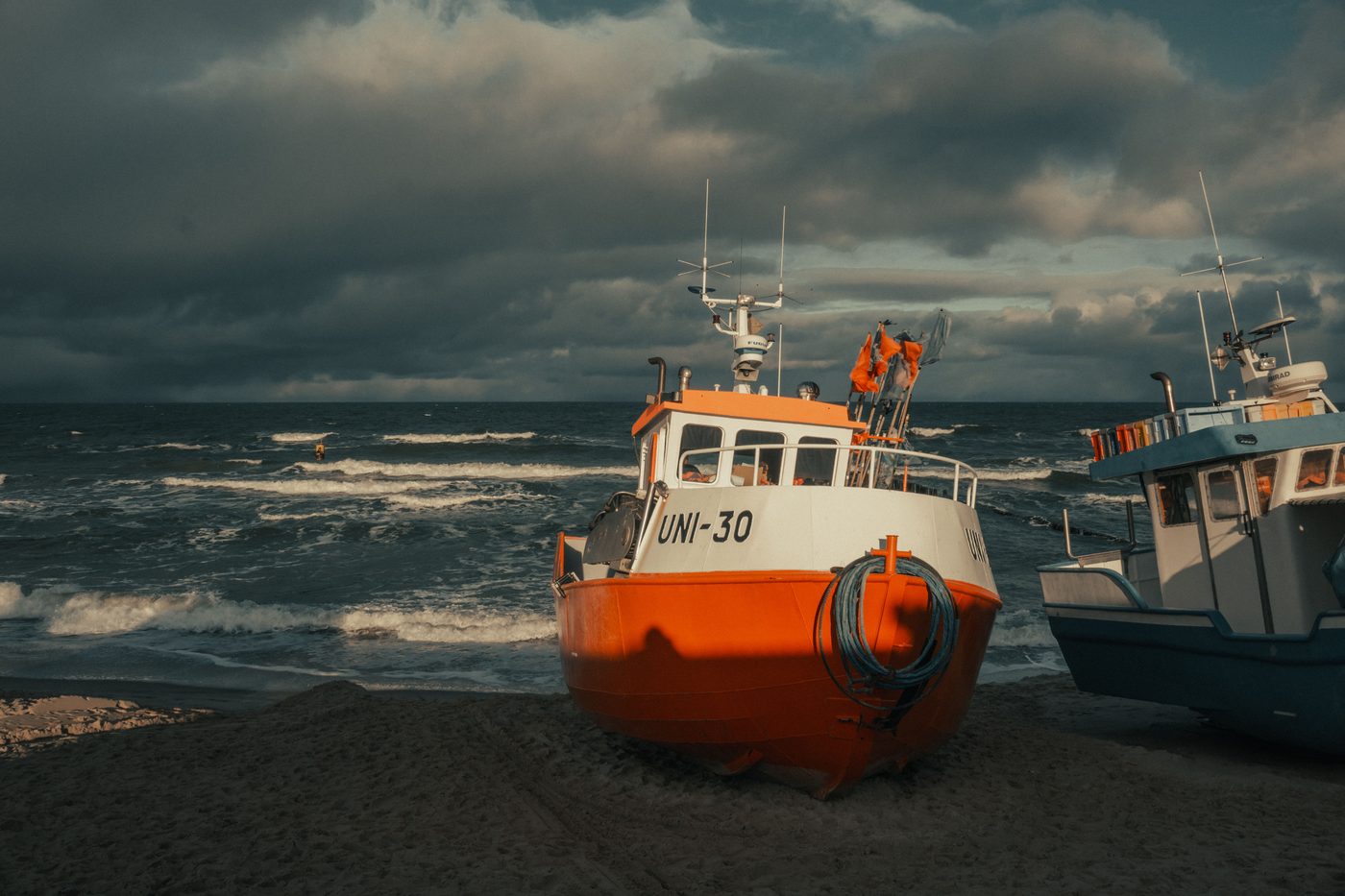
The Perfect Storm faces an unusual narrative problem head-on: the crew of the Andrea Gail, the swordfishing boat at the center of the book, never made it back to tell their story, and no one else witnessed their final hours. Sebastian Junger doesn't pretend otherwise. Instead, he builds the book around what can actually be known - meteorology, the physics of ships and waves, radio transmissions, the accounts of the fishing community in Gloucester, Massachusetts, and the testimony of others who survived the same storm on different vessels - and uses that foundation to construct an informed, honest reconstruction of what the Andrea Gail's final hours likely involved. The result is a hybrid of science writing, oral history, and speculative narrative that's more intellectually honest than a more confidently fictionalized account would have been.
Gloucester as a Working Fishing Town
Before the storm itself, Junger spends significant time establishing Gloucester, Massachusetts as a real, specific fishing community with its own economics, dangers, and culture, tracing the town's long relationship with commercial fishing and the routine risk that comes with it. This grounding matters because it establishes the Andrea Gail's crew not as abstract victims but as working men embedded in a specific, recognizable economic reality, one where the financial pressure to fish through marginal weather conditions was a constant, ordinary part of the job rather than an unusual risk.
The Science of a 'Perfect' Storm
The book's title refers to a specific meteorological phenomenon - the convergence of three separate weather systems that combined to create an extraordinarily powerful and unusual storm in October 1991. Junger explains the atmospheric science behind this convergence in detail accessible to non-specialist readers, making the case that this wasn't simply a bad storm but a genuinely rare confluence of conditions, which helps explain why experienced fishermen and forecasters alike were caught off guard by its severity.
Reconstructing the Unknown With Intellectual Honesty
Because no one survived to describe the Andrea Gail's final hours directly, Junger is careful throughout to distinguish between what is documented fact - the last known radio contact, the boat's last known position, the physics of what waves of that size would have done to a vessel of that design - and what is necessarily informed speculation about the crew's specific final experience. This honesty about the limits of the account, rather than undermining the narrative, actually strengthens its credibility, since Junger never overclaims certainty he doesn't have.
The Physics of Drowning and Wave Mechanics
In one of the book's more technically detailed and unusual sections, Junger explains the physiological process of drowning and the physics of how massive waves interact with and can capsize a fishing vessel, drawing on interviews with medical experts and naval engineers. This level of technical specificity is unusual for a popular nonfiction narrative, but it serves the book's larger purpose of taking the crew's likely fate seriously rather than treating it as an abstract tragedy, forcing readers to sit with the concrete reality of what the men aboard the Andrea Gail were facing.
Parallel Stories of Survival
Alongside the Andrea Gail's story, Junger weaves in accounts of other vessels and a Coast Guard helicopter crew caught in the same storm who did survive, providing a crucial narrative counterpoint and additional firsthand testimony about conditions on the water that night. These survival accounts serve a dual purpose - they add genuine suspense and specificity to a book largely built around an unknowable central event, and they provide corroborating detail that makes the speculative reconstruction of the Andrea Gail's fate more credible.
The Economics of Dangerous Work
Junger doesn't shy away from examining the financial pressures that pushed swordfishing crews to fish in increasingly marginal and dangerous conditions, tracing how declining fish stocks and competitive economic pressure incentivized captains to take greater risks than they might have in a less pressured industry. This economic context reframes the tragedy as connected to systemic industry pressures, not merely individual bad luck or poor judgment, adding a dimension of social critique to what could otherwise have been a purely adventure-focused narrative.
The Human Cost Beyond the Six Crew Members
Beyond the immediate crew of the Andrea Gail, Junger documents the storm's broader human toll, including other boats and individuals affected by the same weather system along the Eastern Seaboard, situating the central tragedy within a larger, historically significant meteorological event. This wider lens prevents the book from feeling narrowly focused on a single incident, instead using the Andrea Gail as a specific, human anchor point for understanding the storm's much larger geographic and human impact.
Interviews With Grieving Families
Junger conducted extensive interviews with the families and loved ones of the Andrea Gail's crew, and their voices and memories are woven throughout the book, providing the emotional and biographical texture that the purely scientific and speculative sections necessarily lack. This combination - hard science paired with genuine grief and memory - is part of what distinguishes the book from either a pure disaster-science account or a pure tearjerker, landing instead somewhere more textured and honest between the two.
A Book That Inspired a Genre of Its Own
The Perfect Storm's specific hybrid approach - meticulous scientific reconstruction combined with narrative nonfiction storytelling about an event with an unknowable center - influenced a wave of similar disaster and adventure nonfiction that followed its publication. Junger's willingness to be transparent about the limits of what could be known, rather than fabricating a falsely confident narrative, set a standard that many subsequent books in the genre have tried, with varying success, to match.
Why the Book Outlasted Its Own Film Adaptation
The 2000 film adaptation starring George Clooney brought the story to a much wider audience but necessarily simplified and dramatized elements that the book treats with more scientific rigor and honest uncertainty. Reading the source material after seeing the film reveals how much careful, restrained reconstruction underlies a story that Hollywood inevitably rendered more conventionally dramatic. The book's patient commitment to what can actually be verified is precisely what gives it lasting credibility as a work of journalism, not just entertainment.
Pros and Cons
Pros:
- Intellectually honest about the limits of what can actually be known or verified
- Combines meteorological science, economics, and oral history into a coherent narrative
- Technical sections on storm physics and drowning add genuine depth, not just drama
- Parallel survival accounts provide crucial corroborating detail and narrative tension
- Grounds the tragedy in real economic pressures facing the fishing industry
Cons:
- Speculative reconstruction of the crew's final hours may frustrate readers wanting more certainty
- Technical sections on physics and meteorology require sustained attention
- Some readers may find the wider geographic scope dilutes focus on the central crew
Frequently Asked Questions
Is The Perfect Storm based on a true story?
Yes, it's a nonfiction account of the 1991 Halloween Nor'easter and the swordfishing boat Andrea Gail, which was lost with all six crew members during the storm.
How much of the book is speculation versus fact?
Junger is transparent throughout about distinguishing documented facts, like weather data and last radio contact, from informed speculation about details that couldn't be directly witnessed.
Do I need to have seen the movie first?
No, the book stands independently and provides more scientific depth and honest uncertainty than the 2000 film adaptation, which dramatized and simplified several elements.
Is this a technical book or an emotional one?
Both. It combines detailed meteorological and physiological science with genuine emotional weight drawn from interviews with the crew's families and other storm survivors.
Final Verdict
The Perfect Storm succeeds because Sebastian Junger refuses to fabricate false certainty about an event whose central subjects couldn't survive to tell their own story. By grounding his account in verifiable science, economics, and corroborating testimony, and being honest about where speculation begins, he produces a narrative that's more trustworthy, and ultimately more moving, than a more conventionally dramatized version could have been. It remains one of the finest examples of narrative nonfiction built around genuine intellectual honesty about its own limits.
Rating: 4.6/10