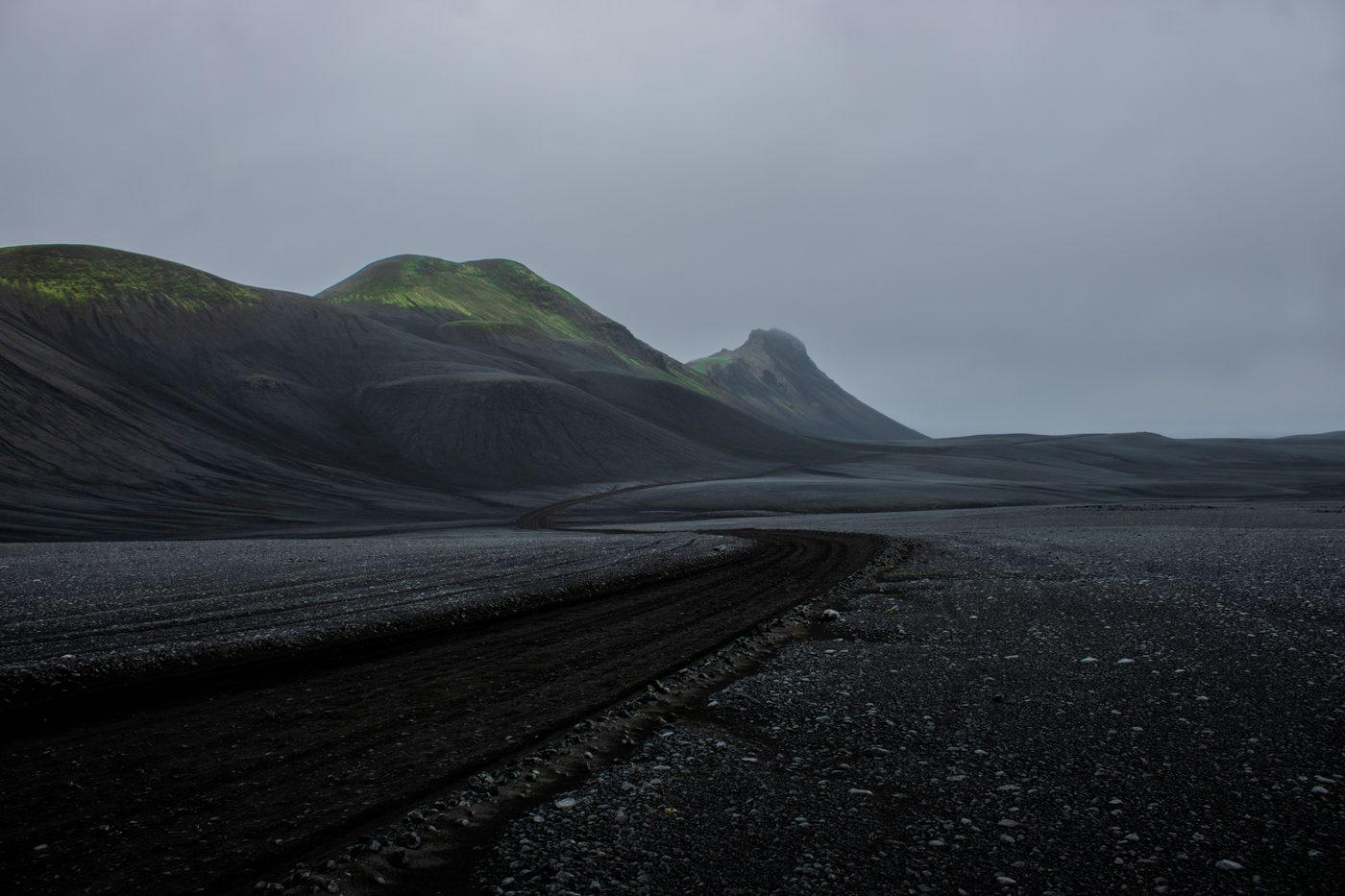
I put off reading The Road for years because everyone described it as devastating, and I didn't feel like being devastated on purpose. When I finally read it, in a single overnight sitting because putting it down felt impossible, I understood why the warnings existed and why they weren't enough to actually prepare me. Cormac McCarthy strips his prose down to almost nothing here - no chapter breaks, minimal punctuation, dialogue without quotation marks - and somehow that austerity makes the story of a father and son walking south through a scorched, dying America hit harder than more decorated writing could have. It's bleak in ways that are hard to overstate. It's also, underneath that bleakness, one of the most direct portraits of parental love I've encountered in fiction.
A World Without Explanation
McCarthy never explains what caused the catastrophe that destroyed civilization - no war is named, no disaster dated, no cause given at all. Ash covers everything, the sun is perpetually obscured, nothing grows, and most people left alive have turned to violence and cannibalism to survive. This absence of explanation is a deliberate choice; the book isn't interested in the mechanics of apocalypse, only in what remains of a person, and of a relationship, once everything external has been stripped away. The effect is to make the setting feel less like a specific disaster scenario and more like an abstract test of what survives when nothing else does.
Prose Stripped to the Bone
McCarthy's sentences here are shorter and sparer than in almost any of his other novels, often fragments, frequently without conventional punctuation. There are no quotation marks around dialogue, forcing the reader to track who's speaking through context and rhythm alone. This isn't a gimmick - the stripped-down prose mirrors the stripped-down world the characters inhabit, a landscape and a language both reduced to only what's essential for survival. Reading it, you feel the absence of ornamentation as its own kind of meaning.
The Father's Singular, Consuming Purpose
The unnamed father's entire remaining identity is organized around keeping his son alive and, more specifically, keeping him fundamentally good in a world that has stopped rewarding goodness. McCarthy renders the father's exhaustion, his physical deterioration, and his moral compromises with unflinching honesty, never letting the character become a simple hero. He steals when he has to, threatens when he has to, and carries a devastating private calculation about what he'll do if they're ever truly cornered by the wrong people. The love is never sentimental. It's load-bearing, and the weight shows.
The Boy as Moral Compass
In stark contrast to his father's hardened pragmatism, the boy repeatedly insists on helping strangers, sharing food, and extending trust his father considers suicidal given the state of the world. Rather than reading as naive, the boy's insistence on remaining 'one of the good guys' functions as the novel's moral center, a reminder of a version of humanity the father is trying to protect even as circumstances push him toward abandoning it himself. Their repeated disagreements over whether to help other survivors form the book's quiet ethical argument, playing out in small, specific moments rather than speeches.
Cannibalism and the Limits of Civilization
McCarthy doesn't soften the horror of what people have become in this world - organized groups of cannibals, a locked basement of captives kept as food, the constant threat these encounters pose to the father and son. These scenes are among the most disturbing in contemporary literary fiction, and McCarthy includes them not for shock value but to establish the actual stakes of the father's protectiveness and the boy's insistence on remaining good. Without this horror clearly established, the tenderness between father and son wouldn't carry the same weight.
The Recurring Symbol of Carrying the Fire
Throughout the novel, the father tells his son that they are 'carrying the fire,' a recurring phrase that comes to represent an abstract commitment to remaining human, moral, and hopeful despite overwhelming reasons not to be. The phrase is never fully explained or defined within the text, which is precisely why it works - it functions as a private language between father and son, a shared belief sturdy enough to survive without needing external justification, and readers are left to fill in its meaning through the accumulated weight of the story.
A Mother's Absence and Its Own Kind of Argument
Early in the book, through brief flashback, we learn the boy's mother chose suicide rather than continue facing the world's brutality, a decision the father clearly disagrees with but doesn't condemn outright. This absence hangs over the entire narrative, offering a kind of counter-argument to the father's relentless insistence on survival - a reminder that the choice to keep going, rather than being obviously correct, is a choice the father has made and continues to make, day after exhausting day, against a real alternative.
The Ocean as an Anticlimax
The father and son's entire journey is oriented toward reaching the coast, described throughout as a destination that might offer warmth, resources, or simply a change from the ash-covered landscape they've been traversing. When they finally arrive, the ocean is gray, cold, and unremarkable - not a salvation, just another version of the same exhausted world. McCarthy's refusal to reward the journey with a triumphant destination is consistent with the book's larger refusal of easy comfort, insisting that meaning has to come from the relationship itself, not from any external endpoint.
An Ending That Earns Its Emotion Without Manipulating It
Without spoiling specifics, the novel's final pages shift the emotional register in a way that has generated significant discussion among readers - some finding genuine, hard-won hope, others finding it too abrupt a tonal shift after everything preceding it. What's notable is that McCarthy doesn't undercut the horror that came before to arrive at this ending; whatever comfort the final pages offer is built directly on top of the accumulated weight of the father's sacrifice, not in spite of it.
Why The Road Endures as More Than a Bleak Read
It would be easy to categorize The Road as simply a grim post-apocalyptic novel, and plenty of readers approach it that way and come away shaken but unmoved. What makes it endure, and what earned it the Pulitzer Prize, is that the apocalyptic setting is ultimately a vehicle for an extraordinarily direct examination of what parents do for children, stripped of every social convenience and comfort that usually makes that love easy to take for granted. Reading it as a parent, or even just imagining being one, changes how the entire book lands, and that's precisely the effect McCarthy seems to have been aiming for.
Pros and Cons
Pros:
- Spare, stripped-down prose that mirrors the novel's devastated world
- One of the most direct, unsentimental portraits of parental love in modern fiction
- The boy's moral insistence provides genuine ethical weight, not just plot tension
- Refuses easy comfort while still earning its emotional final pages
- Short enough to read in one or two sittings, with enormous impact for its length
Cons:
- Extremely bleak and disturbing content, including graphic depictions of violence
- Minimal punctuation and unconventional dialogue formatting take adjustment
- The lack of explanation for the apocalypse frustrates some readers seeking more context
Frequently Asked Questions
Is The Road too disturbing to read?
It contains genuinely disturbing content, including implied cannibalism and violence. It's appropriate for mature readers prepared for a heavy emotional experience, not a casual or light read.
What caused the apocalypse in the book?
McCarthy never explains the cause. The ambiguity is deliberate, keeping the focus on the father-son relationship rather than any specific disaster scenario.
Is this a good book for parents specifically?
Many readers report the book lands differently and more powerfully once they have children of their own, given its central focus on parental sacrifice and protection.
Is there a movie adaptation?
Yes, a 2009 film adaptation exists starring Viggo Mortensen, though the novel's spare prose style is difficult to fully translate to screen.
Final Verdict
The Road earns every ounce of its reputation as one of the most powerful novels of the twenty-first century by refusing to soften either its horror or its tenderness. McCarthy's stripped-down prose forces total attention onto the relationship at the book's center, and the result is a story that stays with readers long after its unremarkable, gray ocean fails to deliver the relief the characters were hoping for. It's not an easy read, but it's an essential one for anyone willing to sit with what it's actually arguing.
Rating: 4.7/10