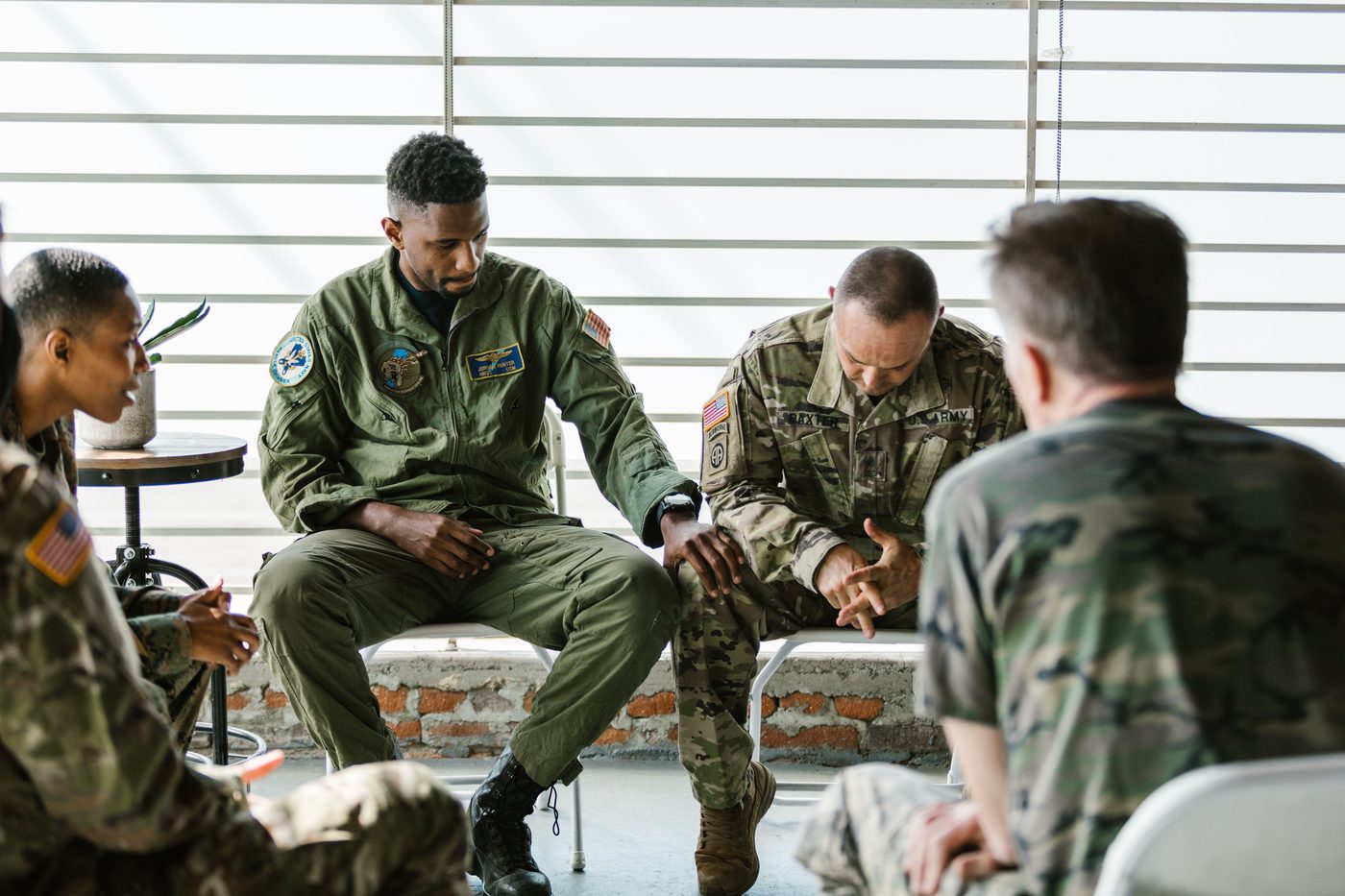
Sebastian Junger came home from Afghanistan and started having panic attacks on the New York City subway. He'd spent years reporting from combat zones without a scratch on his psyche, by his own account, and yet ordinary city life was what finally got to him. That contradiction -- soldiers and reporters who function fine in danger and fall apart in safety -- became the seed of a 7,000-word Vanity Fair article on veteran PTSD, which grew into Tribe: On Homecoming and Belonging, a slim 2016 book arguing that modern, affluent, individualistic society has stripped away something humans evolved to need: tight, interdependent community. This review covers what critics actually said about a book that got real, specific praise for its ambition and just as real criticism for trying to cover too much ground in too few pages.
What Tribe Actually Is
Tribe is short -- well under 200 pages -- and it isn't a traditional memoir or a straightforward policy book, even though it touches both registers. Junger opens with historical accounts of colonial-era American and European settlers who, given the choice, repeatedly chose to live among Native tribes rather than return to "civilized" society, and uses that as his entry point into a broader argument: that humans evolved for small, interdependent groups where everyone's contribution mattered and mutual reliance was constant, and that modern life, for all its comfort and safety, has quietly stripped that structure away. From there the book moves through disaster research showing that crime rates and reported mental illness often drop during wars, sieges, and natural disasters -- not despite the danger, but because shared adversity rebuilds exactly the kind of cohesive community modern peacetime lacks -- before landing on its central case study: why so many veterans report missing their deployment, not because they miss violence, but because they miss belonging to something that needed them completely.
About Sebastian Junger and Why He Wrote This
Junger is the number-one New York Times bestselling author of The Perfect Storm, War, Fire, and A Death in Belmont, and an award-winning journalist who has received both a National Magazine Award and a Peabody. He co-directed the documentary Restrepo with Tim Hetherington, an unflinching account of a US Army platoon's deployment in Afghanistan's Korengal Valley that was nominated for an Academy Award and won the Grand Jury Prize at Sundance. It was in the aftermath of that reporting -- after months embedded with combat troops -- that Junger began experiencing what he later understood to be PTSD-related panic attacks on the subway back home, a disorienting reaction to safety rather than danger. Digging into the data, he found American troops were experiencing PTSD at markedly higher rates than in previous generations, which he first explored in a long Vanity Fair piece before expanding the argument into Tribe.
How It Compares to The Perfect Storm
The Perfect Storm, Junger's 1997 debut, is narrative nonfiction built around a single dramatic event -- a doomed fishing crew caught in a historic storm -- reconstructed with novelistic detail. Tribe is a different kind of book entirely: an argument-driven essay pulling from anthropology, military history, and disaster psychology rather than a sustained narrative following specific people through a crisis. If The Perfect Storm proved Junger could make a true story read like a thriller, Tribe proves he can also work as a synthesizer of research and argument, compressing a wide-ranging thesis into a compact, urgent case. Readers who loved the narrative immersion of his earlier book should know Tribe asks for a different kind of attention -- closer to an extended magazine essay than a plotted story.
What Critics Actually Said
The New York Times praised "the clarity of his thought, the elegance of his prose, and the provocativeness of his chosen subject," adding that "within a compact space, the sheer range of his inquiry is astounding." The Guardian called it "an electrifying tapestry of history, anthropology, psychology and memoir that punctures the stereotype of the veteran as a war-damaged victim in need of salvation." The Washington Post's assessment was blunt and positive: "Thought-provoking . . . a gem." Kirkus Reviews summed up the book's relationship to Junger's earlier work directly: "The themes implicit in the author's bestsellers are explicit in this slim yet illuminating volume."
And the aggregate reader picture, for what it's worth:
Where Real Reviews Pushed Back
The most substantive criticism aimed at Tribe is about scope versus length: several reviewers noted the book "would have benefited from some expansion," with one assessment putting it plainly, that "Junger seems to try to do too much with too little." A more pointed line of criticism argues that Junger's fast survey of violence, trauma, and modern social fragmentation leaves out important context available in other, more specialized books, and as a result "ends up on shaky ground, failing to consider counterpoints or bring its own arguments to a close." The Times Literary Supplement took a more measured, though still critical, stance, describing Junger as having "identified one of the last cohesive tribes in America" while grasping "for a remedy" without fully landing it. None of this is a rejection of the book's core argument -- it's a consistent complaint that a genuinely big idea got compressed into a genuinely small book.
On Veterans, PTSD, and Missing the Wrong Thing
Junger's central, most-discussed claim is counterintuitive: many veterans who report missing their deployment aren't missing combat itself, they're missing the total, mutual dependence that combat units require to survive, a form of belonging most peacetime civilian life simply doesn't offer. He backs this with research suggesting that PTSD rates correlate less with combat intensity alone and more with how disconnected and unsupported veterans feel once they return to an atomized, individualistic society. That reframing -- treating some post-deployment struggle as a loss of community rather than purely a trauma response -- is the specific idea The Guardian credited with puncturing the "war-damaged victim" stereotype, and it's the single most influential idea to come out of the book.
On Disaster, Crisis, and Why Hard Times Can Feel Better
The book's most surprising research thread covers what happens to communities during wars, sieges, and natural disasters: Junger cites data showing that reported crime and certain mental illness rates can actually drop during periods of severe collective hardship, as neighbors who normally have little to do with each other become mutually dependent almost overnight. Junger's argument is that this isn't perverse nostalgia for suffering, it's evidence that humans are wired to feel most functional and most needed inside tight, high-stakes cooperation, and that modern comfort, for all its obvious benefits, has quietly removed the circumstances that make people feel indispensable to each other.
Key Takeaways
- The book's core claim: modern affluence and individualism have eroded a communal, mutually dependent structure humans evolved to need
- Veterans missing deployment are often missing belonging and mutual reliance, not violence -- a reframing multiple critics singled out as the book's sharpest idea
- Disaster and wartime research suggests hardship can paradoxically increase social cohesion and reduce certain mental health problems
- The book's brevity is both its accessibility and its most consistent criticism -- expect a compressed argument, not an exhaustive one
Who This Book Is Actually For
Readers who want a fast, idea-dense read connecting military psychology, anthropology, and modern social isolation -- particularly useful for anyone trying to understand veteran reintegration, or anyone who's felt a strange, hard-to-name loneliness inside an otherwise comfortable modern life and wants a framework for why.
Who Should Read Something Else Instead
If you want a fully developed, heavily sourced deep dive rather than a compact essay-length argument, the documented criticism above about the book trying to do too much in too little space is a fair warning. Readers who want Junger's immersive narrative nonfiction rather than an argument-driven book should start with The Perfect Storm instead.
Pros and Cons
Pros:
- Strong critical reception from The New York Times, The Guardian, The Washington Post, and Kirkus Reviews
- A genuinely original, well-supported reframing of veteran PTSD around lost belonging rather than only combat trauma
- Short and fast-moving, making a dense set of ideas accessible in a single sitting or two
- Grounded in Junger's own firsthand reporting experience and personal post-deployment reaction
- Strong reader reception, with an aggregate Goodreads rating around 4.0 out of 5 across tens of thousands of ratings
Cons:
- Multiple reviewers felt the book's ambitious claims needed more room than its short length allows
- Criticized for omitting counterpoints and relevant context available in more specialized sources
- Reads more like an extended essay than a fully developed book-length argument
Frequently Asked Questions
Is Tribe only about military veterans?
No. Veteran reintegration is the book's throughline, but Junger widens out to disaster survivors, historical accounts of colonial settlers choosing to live among Native tribes, and broader claims about modern, affluent society eroding a basic human need for close-knit community.
What's the actual Goodreads rating?
Around 4.0 out of 5 from tens of thousands of ratings, with the exact figure varying slightly by edition — the hardcover and Kindle editions each carry tens of thousands of ratings on their own. Check the live number yourself, since it will keep moving.
How long is this book?
It's short by design — under 200 pages. That brevity is also the book's most common criticism: several reviewers felt its ambitious claims needed more room to be fully argued.
Did Junger write this from personal experience?
Partly. After returning from reporting trips to Afghanistan, Junger experienced panic attacks on the New York City subway that he later connected to PTSD, and that experience, along with a Vanity Fair article he wrote on veteran PTSD rates, became the direct seed for this book.
Sources & Further Reading
- Goodreads — Tribe: On Homecoming and Belonging (aggregate rating, reader reviews)
- The New York Times — review
- The Guardian — review
- The Washington Post — review
- Kirkus Reviews — review
- SebastianJunger.com — author page for Tribe
- PositiveLifes.com — free inspirational and life-changing PDF books
Final Verdict
Tribe earns its praise for ambition and clarity -- major outlets from The New York Times to The Guardian to The Washington Post all responded to how much ground it covers in so few pages, and its reframing of veteran PTSD around lost belonging has genuinely shaped how the topic gets discussed. The flip side of that ambition is real: this is a fast, compressed argument, not an exhaustive one, and the documented criticism that it tries to do too much with too little is fair. Read it for the ideas, not for exhaustive proof of every claim, and it delivers exactly what it promises in exactly the space it gives itself.
Buy Day rating: 8.1/10