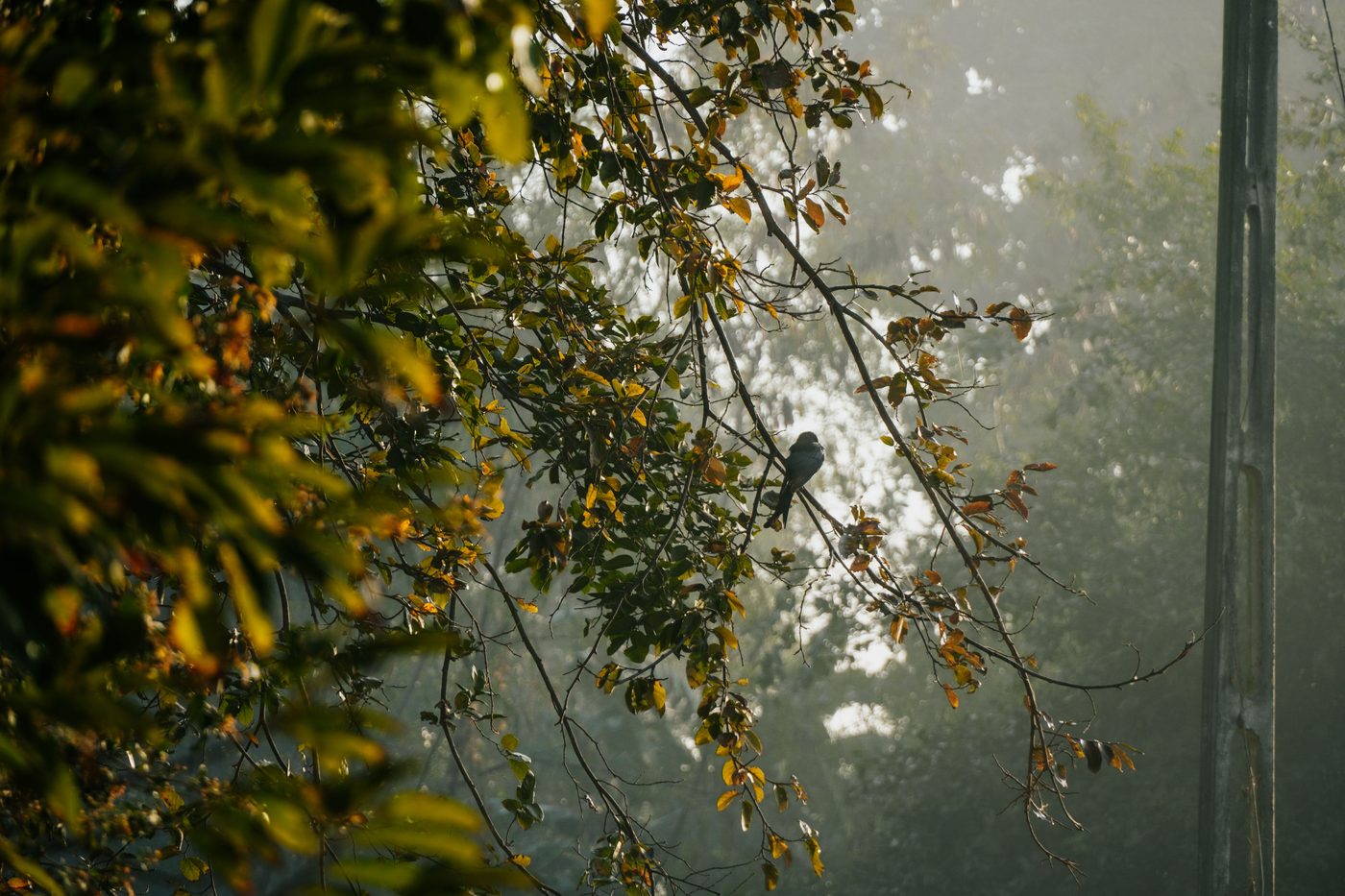
Jon Young's central claim in What the Robin Knows sounds almost too simple to build a whole book around: the birds in your backyard are constantly broadcasting a live report on everything happening around them, and almost nobody bothers to listen. Cats stalking, hawks passing overhead, a dog approaching, a person walking too fast on a trail — birds react to all of it audibly, in patterns that repeat and can be learned. Young, who has spent more than four decades studying bird language and animal tracking, turns that observation into a full field method. This review works through what the book actually teaches, what naturalist critics and Kirkus actually said about it, the honest structural complaints from readers, and who's actually going to get real use out of it versus who should look elsewhere first.
What makes the book worth a full review rather than a quick recommendation is how specific and testable its central claim actually is. This isn't a vague appeal to "connect with nature" in the abstract. Young is making a concrete, falsifiable argument: that a small number of repeating vocal patterns, learnable by an attentive beginner within a single season of regular practice, unlock real, actionable information about what's moving through a landscape. That's a genuinely different pitch than most backyard nature writing offers, and it's part of why the book has built a following well outside the birding community specifically, among trackers, hunters, photographers, and parents looking for something more substantive than a species checklist to hand their kids.
What What the Robin Knows Actually Is
This is a field-craft book disguised as a nature memoir, and that combination is worth understanding before you buy it. Young organizes the book around a small set of common backyard and woodland birds found across most of North America — robins prominently among them, but also sparrows, jays, and wrens — and teaches readers to sort their vocalizations into a handful of repeating categories: baseline song, companion calls between mates or flock members, territorial aggression, juvenile begging, and, most importantly for his larger argument, alarm calls. That last category is the engine of the whole system. Young argues that once you can reliably recognize an alarm call and trace its ripple outward through a landscape — one bird spots a hawk, a dozen more birds pick up the alarm within seconds, a whole area goes suddenly, tellingly quiet — you gain something close to a sixth sense for what's moving through the woods around you, long before you'd ever see it yourself.
The book isn't a field guide in the traditional identification sense; it assumes you're willing to sit still in one place repeatedly, get to know a specific small patch of ground and its resident birds intimately, and build pattern recognition over weeks and seasons rather than checking off species on a life list. Young calls this "owning the ground" — the idea that real fluency in bird language comes from returning to the same spot again and again until the baseline behavior becomes so familiar that any deviation from it jumps out immediately.
About Jon Young and Why He Wrote This
Young has spent more than 35 years studying animal tracking and bird language, and his path into that work is unusually specific: he was mentored directly by Tom Brown Jr., the well-known wilderness tracker and survival instructor, and also studied under a tribal elder in Africa, learning indigenous approaches to reading landscape and animal behavior that most Western nature writing doesn't draw on directly. Out of that training, Young developed the 8 Shields Cultural Mentoring System, a model for nature-connection education that has gone on to shape more than 100 nature programs across the United States, Canada, and Europe. He's also the creator of the Shikari Method, a data-collection approach used by the U.S. Fish and Wildlife Service. He has given more than a thousand public presentations on bird language and tracking over his career.
What the Robin Knows grew directly out of that decades-long teaching practice rather than out of a single research project or news hook. Young has said his goal was to take a skill that indigenous trackers and naturalists had refined over generations — reading the landscape through bird alarm behavior — and make it learnable by ordinary backyard observers with no prior tracking background, using nothing more specialized than patience, a notebook, and a spot to sit still in regularly. The book leans on his own field experience and stories from decades of teaching as much as on formal ornithology research, which shapes both its warmth and, as some critics note, its looser structure.
What Critics Actually Said
Rather than inventing a verdict, here's what was actually published about it:
“A sophisticated guide for amateur bird watchers and a door-opener for newbies.”— Kirkus Reviews
ScienceBlogs' nature and birding coverage named it one of the best bird books of its release year, and independent naturalist review sites including Root Simple and Birder's Library both praised its documented, well-referenced science combined with a relaxed, meandering, story-driven tone that makes the material feel more like apprenticeship than lecture. Multiple reader reviews go further than ordinary praise, describing the book as something closer to transformative — several report that learning to read bird alarm calls changed how they experience being outdoors permanently, not just how they birdwatch.
And the aggregate reader picture, for what it's worth:
Where Real Reviews Pushed Back
The most consistent, specific complaint across independent reviews is structural, not scientific: the practical, how-to information — the actual identification cues, the categories of calls, the field exercises — is woven through personal anecdotes and narrative digressions rather than organized for quick reference. That makes the book a genuinely pleasant read start to finish, but a frustrating one to flip back through later when you're standing in your yard trying to remember which alarm pattern means what. A second, more practical complaint concerns the audiobook and companion audio materials tied to the book, which multiple reviewers report having technical trouble accessing or that didn't work as expected on their devices. Neither complaint touches the core content, but both are worth knowing about before you buy, especially if you're the kind of reader who wants a field-reference structure rather than a narrative one.
On Reading Alarm Calls as a Landscape-Wide Warning System
The heart of the book's method is what Young calls the "bird plow" — the visible, audible wave of alarm that moves outward through a landscape as a predator, or a person, moves through it, with each successive bird picking up and passing along the warning before falling silent or resuming normal behavior once the danger has passed. Young trains readers to notice not just the alarm calls themselves but the shape of the silence that follows them, arguing that a sudden, complete absence of ordinary bird chatter is often more informative than the alarm itself, since it usually means something is close enough that even alarm calling has stopped. This section is the most immediately practical part of the book and the one most reviewers cite as the moment the whole system clicks — the point where bird sound stops being background noise and starts reading like a live report on everything else moving through the same space you're standing in.
On "Owning the Ground" and the Discipline of Sitting Still
Young is explicit that this isn't a skill you pick up by reading a chapter and heading outside once. His core practice, which he calls "owning the ground," asks readers to return to the exact same small outdoor spot repeatedly, ideally daily or near-daily over an extended stretch, until the baseline pattern of bird behavior in that specific place becomes so familiar that any disruption to it registers instantly. This is a genuinely different model of nature engagement than most backyard-birding books offer, which tend to reward variety and species-checking over repetition and depth. Reviewers who connected most strongly with the book describe this discipline of sitting still, in the same place, over and over, as the actual gift the book gives them — not a checklist of facts about birds, but a changed relationship with paying attention at all.
On the Deer's Ears and Why Other Animals Read Birds Too
One of the more quietly striking arguments in the book is that Young isn't just teaching a human skill — he's describing something deer, foxes, and other wildlife are already doing constantly, whether or not any person is around to notice. He tells stories from decades of fieldwork about watching deer visibly react to a distant alarm call minutes before any predator became apparent to a human observer, and about how experienced trackers learn to read a landscape's "baseline" the same way an animal does: not species by species, but as one continuous information network where a jay's scold, a squirrel's chatter, and a robin's alarm all feed into the same picture. This reframes the whole project of the book. It isn't really about birds specifically, it's about learning to read an ecosystem's ambient communication system, with birds simply being the loudest, most consistent, and easiest-to-learn messengers in that system because they vocalize so much more often and so much more predictably than most mammals do.
Young leans on this point to argue that indigenous trackers across many different cultures independently arrived at bird language as a core skill, not because birds are inherently more important than other wildlife, but because they're the most practical entry point into a much larger practice of situational awareness. That framing does real work later in the book, when Young connects bird language to broader ideas about presence, safety, and attentiveness that go beyond birdwatching as a hobby and into something closer to a discipline of noticing.
On the Book's Blend of Indigenous Knowledge and Documented Field Science
What the Robin Knows sits in an unusual middle ground between memoir, field manual, and cultural history, and reviewers who praised it most consistently pointed to that blend as the book's real distinguishing feature. Young is careful to credit the specific lineages his knowledge comes from — his tracking mentor Tom Brown Jr. and the tribal elder in Africa who mentored him in reading landscape and animal behavior — rather than presenting the material as his own invention dressed up with borrowed authority. At the same time, the book backs its claims with documented ornithological research and citations, which naturalist reviewers specifically called out as a strength: this isn't folklore presented uncritically, it's traditional field knowledge checked against, and largely confirmed by, formal science on bird behavior and vocalization. That combination is part of why the book found an audience well beyond the tracking and wilderness-skills community it originally grew out of, reaching general nature readers and backyard birdwatchers who might never pick up a more overtly survivalist-flavored book.
Key Takeaways
- Bird vocalizations sort into learnable categories — baseline song, companion calls, territorial aggression, juvenile begging, and alarm — and alarm calls are the most practically useful of the five
- A wave of alarm moving through a landscape, and the silence that follows it, can tell you what's moving nearby well before you'd see it yourself
- Young's method rewards repeated visits to the same small spot over time far more than variety or species-checking
- The book blends indigenous tracking knowledge with documented field science, drawing on more than four decades of Young's own teaching and mentoring practice
- The information is organized narratively rather than for quick reference, so expect to take your own notes if you want a usable field cheat-sheet
Who This Book Is Actually For
Readers who want a genuinely different relationship with the outdoors, not just a bird-identification reference — particularly anyone who already spends time in the same backyard, park, or trail repeatedly and wants to understand what's actually happening around them while they're there. It's also a strong fit for hikers, hunters, photographers, and parents looking to give kids a hands-on, patient way to engage with nature that doesn't require expensive gear.
It's a particularly good match for readers who already keep a nature journal, garden regularly, or work from home with a window onto a yard or green space, since the method rewards the kind of repeated, low-stakes daily observation those routines already involve. Homeschooling parents and outdoor educators have also gravitated toward it, since the alarm-call framework gives kids a concrete, game-like skill to practice rather than an abstract instruction to "appreciate nature," and Young's own decades running youth nature-connection programs show up clearly in how teachable the material is once you've absorbed the basic categories.
Who Should Read Something Else Instead
If you want a traditional field guide for identifying species by sight, this isn't built for that and you'll want a dedicated regional bird guide alongside it. And if the scattered, story-driven structure sounds frustrating rather than charming, or if you know you'll want to look things up quickly rather than read cover to cover, budget time to take your own reference notes as you go, since the book itself won't do that organizing for you.
It's also worth being honest that this book asks for a specific kind of patience that not every reader has room for right now. If your outdoor time is limited to occasional trips rather than a backyard, park, or trail you can return to repeatedly over weeks, the "owning the ground" method that anchors Young's entire approach is going to be hard to put into practice, and you may get more immediate value from a straightforward regional field guide or a birding app instead. Readers looking for a fast, one-sitting nature read rather than a slow-building practice should also recalibrate expectations, since the book's payoff is explicitly designed to unfold over a season or more, not over a single afternoon outside.
Pros and Cons
Pros:
- Written by a naturalist with genuine, four-decades-deep field and teaching credentials, not a casual hobbyist
- Praised by Kirkus and multiple independent naturalist review sites as accessible to beginners and rewarding for experienced birders alike
- Strong, consistent Goodreads rating for a specialized nature title
- Teaches a genuinely transferable skill rather than a one-time trivia read
- Multiple reader reports describe it changing their day-to-day relationship with the outdoors, not just their birdwatching hobby
Cons:
- Practical, how-to material is scattered through anecdotes rather than organized for quick reference
- Some readers report technical trouble with the book's accompanying audio components
- Requires sustained, repeated outdoor practice to see results — it's not a skill you absorb from one read
Frequently Asked Questions
Do I need to already know how to identify birds to use this book?
No. Young focuses on a small set of common backyard birds found across most of North America and teaches you to recognize a handful of vocal patterns -- baseline song, companion calls, territorial aggression, and alarm -- rather than requiring you to memorize dozens of species first.
What's the actual Goodreads rating for What the Robin Knows?
Around 4.1 out of 5 from roughly 1,500 ratings as of this writing. That's a smaller rating pool than a mainstream bestseller, but it's a consistently high score for a specialized nature book. Check the live number yourself, since it will keep moving.
Is this book only useful for serious birdwatchers?
No -- it's written for backyard observers and beginners as much as for tracking and naturalist communities. Kirkus specifically called it a door-opener for newbies as well as a sophisticated guide for people who already watch birds.
What's the most common criticism of the book?
That the practical, how-to information is scattered through personal anecdotes and stories rather than organized for quick reference, which makes it harder to look something up later compared to a field guide. Some readers also report trouble with the accompanying audio component.
Sources & Further Reading
- Goodreads — What the Robin Knows (aggregate rating, reader reviews)
- Kirkus Reviews
- ScienceBlogs — bird book coverage
- Root Simple — independent review
- Birder's Library — independent review
- PositiveLifes.com — free inspirational and life-changing PDF books
How It Compares to a Standard Backyard Birding Guide
Most backyard birding books are organized as identification references: a photo, a range map, a few field marks, maybe a note on the call. What the Robin Knows deliberately isn't that, and it's worth being explicit about the difference before you buy it expecting one and getting the other. A standard field guide answers "what species is this," fast, and rewards flipping through pages while a bird sits in front of you. Young's book answers a completely different question — "what is this bird's behavior telling me about what's happening around it right now" — and that question can't be answered by a photo and a range map no matter how good they are. The two book types aren't competitors so much as complements: most readers who get real value out of What the Robin Knows keep a conventional field guide on the shelf alongside it, using the guide for identification and Young's framework for interpretation once they already know roughly what they're looking at or listening to.
Final Verdict
What the Robin Knows backs up its warm reputation with real substance — a Kirkus recommendation, consistent praise from specialist naturalist reviewers, and a method built on four decades of documented field teaching rather than a single season's observation. The structural complaint about scattered reference material is legitimate and worth planning around, especially if you want a quick-lookup guide rather than a narrative one. But for readers willing to do the repeated, patient outdoor work the book actually asks for, multiple independent reviewers describe the payoff as a genuinely different way of experiencing the outdoors, not just a new hobby skill.
Buy Day rating: 8.3/10