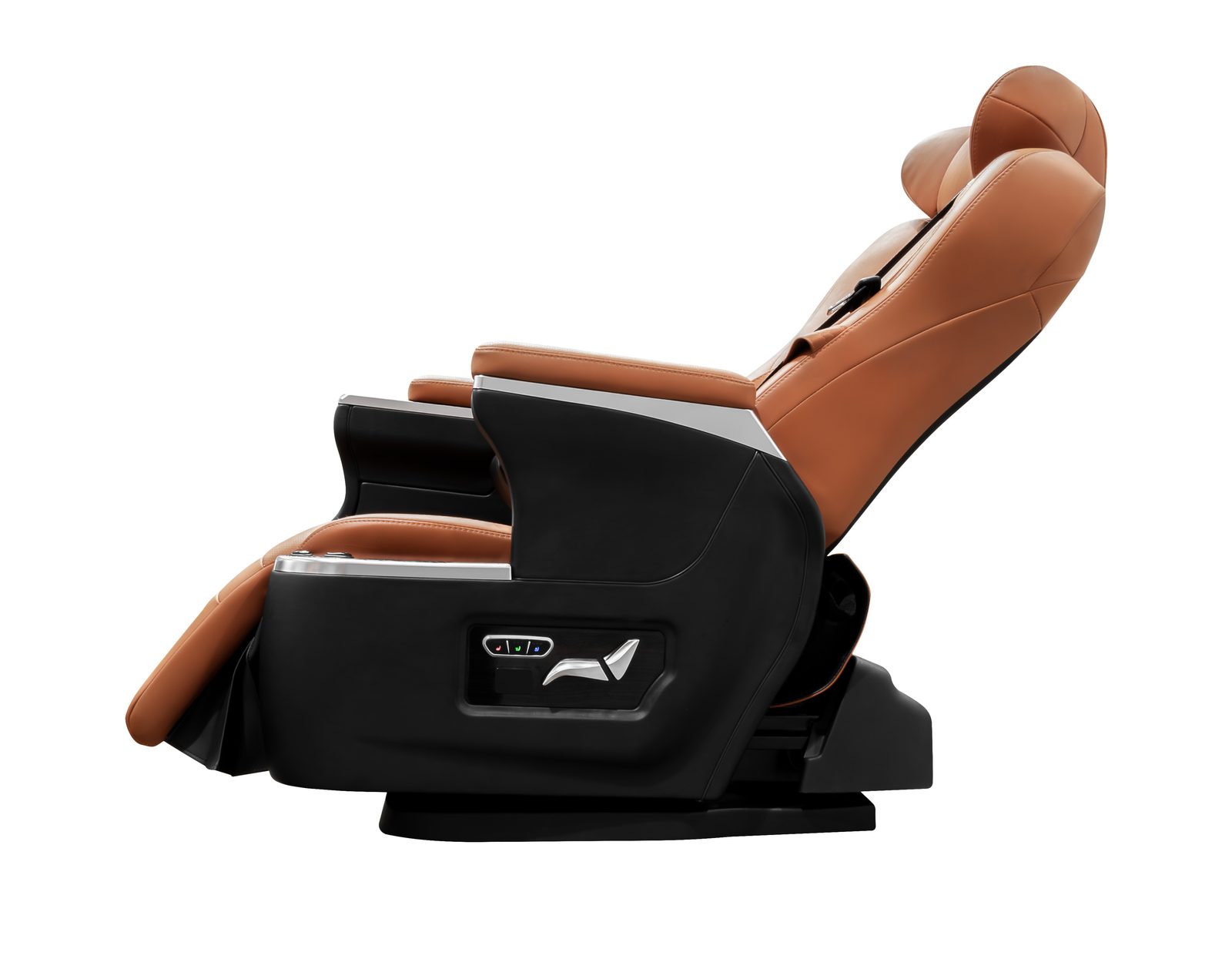
I was skeptical about the body scan claims before I sat in the Osaki OS-Pro Maestro 4D for the first time. Every massage chair brand claims to 'find your pressure points,' and most of them just mean the rollers move up and down a fixed track. Then the chair spent about thirty seconds mapping my shoulders, found the exact spot where a desk job has been quietly ruining my right trapezius for years, and I stopped being skeptical.
The Body Scan Actually Does Something
Before the massage starts, the Maestro 4D runs a body scan sequence, using sensors along the L-Track to map your specific shoulder height, back curvature, and body length. Rather than applying a generic program calibrated for an "average" body, it adjusts roller position and intensity to your actual frame. For anyone who's used a cheaper chair and found the rollers hitting the wrong spot on their neck or missing their lower back entirely, this is the single biggest quality-of-life improvement the Maestro offers.
4D Rollers: What the Extra Dimension Means
2D massage chairs move rollers up, down, left, and right. 3D chairs add adjustable depth — how far the rollers push in. 4D adds speed and rhythm variation to that depth control, so the rollers can mimic a human therapist's varying pressure and pace rather than a mechanically consistent push. In practice, this is what separates the Maestro from feeling like a machine and starting to feel like an actual massage — the intensity ebbs and flows instead of holding one constant pressure throughout a session.
The L-Track design (as opposed to cheaper S-Track chairs) extends the roller path from your neck all the way down through your glutes, rather than stopping at the lower back. If you carry tension in your glutes and hamstrings from sitting all day — and most desk workers do — this is a meaningful upgrade over shorter track designs.
Heat Therapy Where It Actually Matters
Full-body heat therapy runs through the back, seat, and calf areas rather than being limited to the lumbar region like many chairs in this category. Heat combined with the rolling and kneading action noticeably improves how deeply the massage can work into tight muscle without discomfort — it's a genuinely different experience than a cold-start massage on tense muscles.
Zero Gravity and Space Efficiency
The zero-gravity recline positions your body with legs elevated to roughly heart level, reducing spinal pressure and letting the back rollers work with less resistance from your own body weight pressing back against them. Osaki's space-saving design also means the chair only needs a few inches of clearance from the wall to fully recline, which matters more than it sounds like when you're planning where this substantial piece of furniture actually goes in a real room.
Programs and Customization
Multiple preset programs target specific goals — recovery after exercise, stress relief, deep tissue focus — while manual mode lets you dial in roller position, speed, intensity, and airbag compression independently. The touchscreen remote is intuitive enough that guests figure it out within a minute or two, which isn't nothing if you're planning to actually let people use this thing.
Airbag compression covers arms, shoulders, hips, and calves, working alongside the roller system rather than as an afterthought, which adds a genuine full-body element rather than leaving your limbs untouched while your back gets all the attention.
Who Should Buy This Chair
If you deal with chronic shoulder, neck, or lower back tension from a desk job, train hard enough to need real recovery tools, or simply value daily stress relief enough to invest in it, the Maestro 4D earns its keep quickly compared to the cost of regular professional massage over a year or two. It's a significant furniture investment, so measure your space carefully and think through where a chair this substantial actually lives day to day.
Pros and Cons
Pros:
- Body scan technology genuinely tailors the massage to your specific frame
- 4D rollers add realistic rhythm and depth variation over standard 3D chairs
- L-Track design covers glutes and hamstrings, not just the back
- Full-body heat therapy noticeably deepens muscle relaxation
- Space-saving zero-gravity recline needs minimal wall clearance
Cons:
- Large, heavy piece of furniture that needs real planning to place
- Significant investment compared to basic massage chairs
- Some preset programs feel repetitive after extended use
- Full recline still requires more room than the "space-saving" marketing suggests for larger frames
Frequently Asked Questions
How much space does the Maestro 4D actually need?
Osaki's space-saving track lets it fully recline with just a few inches of wall clearance, but you'll still want to measure your ceiling height and total footprint carefully — this is a large chair even before it reclines.
Is the body scan accurate for taller or shorter users?
Yes — the scan adjusts to a range of body heights and proportions each session, which is exactly the problem it's designed to solve versus fixed-program chairs.
Final Verdict
The Osaki OS-Pro Maestro 4D is one of the more convincing arguments I've encountered for a home massage chair actually being worth the money, rather than an expensive novelty that gets used twice and then becomes a coat rack. The body scan and 4D roller system make a real, noticeable difference.
Rating: 8.9/10 — Genuinely smart, full-body relief for anyone who carries tension for a living.