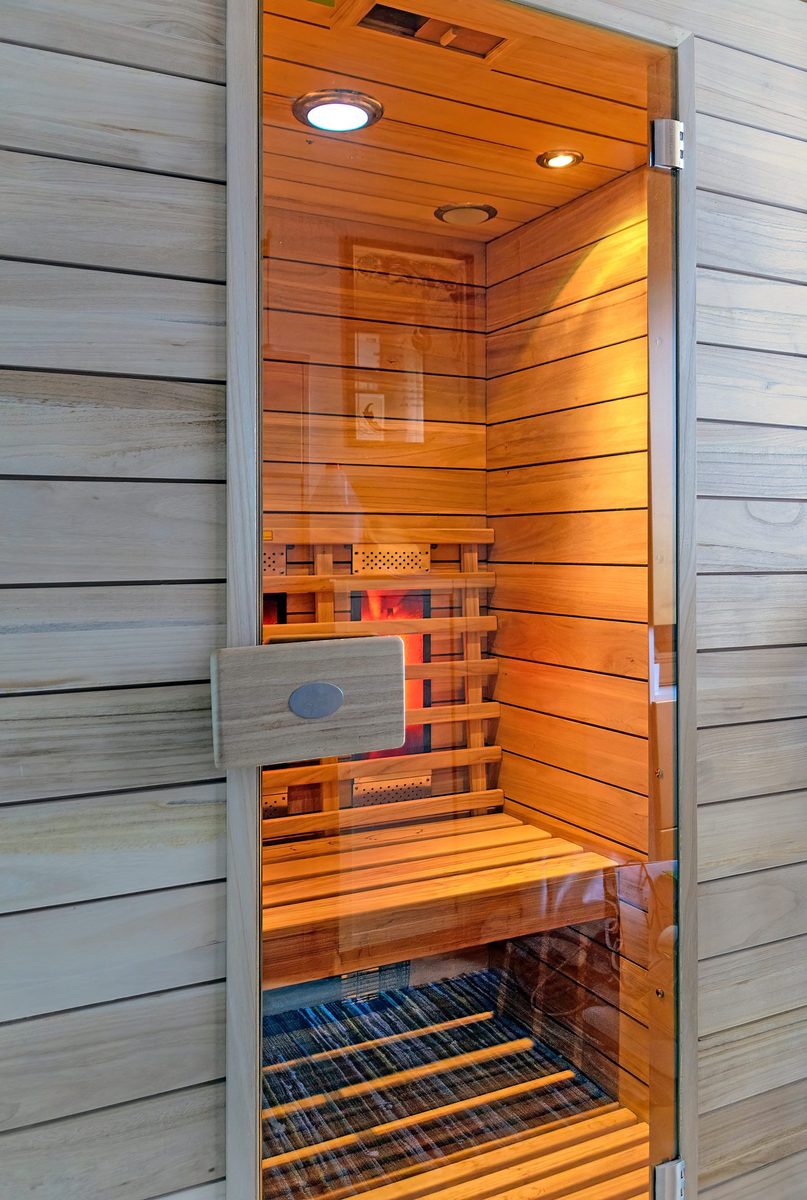
Home saunas used to mean a wood-paneled box with rocks and a bucket, mostly a novelty for people with the space and money to spare. The Sunlighten mPulse is a different proposition entirely — a full-spectrum infrared system built around specific, well-studied wavelengths, with enough data tracking to feel less like a spa amenity and more like a piece of health equipment that happens to be extremely relaxing.
Three Infrared Wavelengths, Three Different Jobs
The mPulse's defining feature is its full-spectrum approach, combining near, mid, and far infrared in a single cabin rather than the single-wavelength far-infrared systems that dominate the budget end of the home sauna market. Near infrared penetrates skin superficially and is associated with cellular health and skin benefits; mid infrared penetrates deeper into soft tissue for pain relief and circulation; far infrared, the most familiar wavelength, is what drives the deep core heating and heavy sweating people associate with sauna use generally.
Being able to select or blend these based on what you're actually trying to accomplish — a gentle skin-focused session versus a deep detox sweat versus targeted muscle recovery after a hard workout — is a genuinely different experience from a single-wavelength sauna, and it's the reason Sunlighten's systems show up in physical therapy and recovery-focused settings, not just spas.
Biometric Tracking Is the Unexpected Highlight
The touchscreen control panel tracks heart rate through a Bluetooth-connected sensor during sessions, calculating caloric burn and letting you monitor your body's actual response rather than just guessing at intensity from how hot you feel. Combined with Sunlighten's app, you can track session history and correlate different infrared programs with how you actually feel and perform afterward — data that turns "I think this helps my recovery" into something you can actually verify for yourself over weeks of use.
Red Light Therapy Add-On
Higher configurations of the mPulse integrate red and near-infrared LED light therapy panels alongside the infrared heating — a legitimately separate wellness modality (photobiomodulation) that's associated with skin health, inflammation reduction, and recovery benefits independent of the heat itself. Running both simultaneously turns a session into two therapies in the same time investment, which is a meaningful value-add if you were already considering a separate red light therapy panel.
Build Quality and Real-World Space Needs
Cabin construction uses low-EMF heating technology (a genuine differentiator — cheap infrared saunas can have surprisingly high EMF output at the heating panels, which matters if you're spending 30-45 minutes in close proximity to them regularly) and sustainably sourced wood options. The two- and three-person configurations require real floor space and ceiling height — measure your intended spot carefully, including doorway clearance for installation, before ordering.
Power requirements are also worth checking ahead of time: larger configurations may need a dedicated 220V circuit, which means an electrician visit if your space doesn't already have one nearby.
Who This Is Actually For
This makes the most sense for people who already have a consistent recovery or wellness routine — athletes, people managing chronic pain, or anyone who has used sauna therapy enough to know they'll actually use one multiple times a week rather than a handful of times before it becomes a very expensive closet. If you're sauna-curious but unproven, a gym or spa membership with sauna access is a much cheaper way to find out before committing five figures to a home installation.
Pros and Cons
Pros:
- Full-spectrum near/mid/far infrared covers a genuinely wider range of use cases than single-wavelength saunas
- Biometric heart rate tracking turns sessions into measurable, trackable data
- Low-EMF heating technology addresses a real concern with budget infrared saunas
- Optional red light therapy panels add a legitimately separate wellness modality
- App-based session history helps correlate specific programs with how you actually feel
Cons:
- Significant investment relative to standard far-infrared-only home saunas
- Larger configurations may require a dedicated 220V electrical circuit
- Real space and ceiling-height requirements limit where it can be installed
- Value depends heavily on actually using it consistently, not occasionally
Frequently Asked Questions
How is this different from a traditional steam or rock sauna?
Traditional saunas heat the air around you to very high temperatures; infrared saunas heat your body directly at a lower ambient air temperature, which many people find more tolerable for longer sessions while still achieving a deep sweat.
Does it need a special electrical setup?
Smaller single-person configurations often run on standard household power, but larger multi-person cabins with full heating and red light therapy typically need a dedicated 220V circuit — confirm your specific configuration's requirements before ordering.
Final Verdict
The Sunlighten mPulse treats home sauna use as a genuine wellness tool rather than a spa-day novelty, and the tracking and multi-wavelength approach back that up with real substance. For committed users, it's a serious, defensible investment in recovery.
Rating: 8.9/10 — Recovery-focused sauna technology for people who will actually use it.